Tahoe Tire Pressure Guide: Check, Inflate, Maintain
Learn how to check and maintain proper tire pressure on a Tahoe. This step-by-step guide covers TPMS, cold readings, temperature effects, and seasonal tips for safety and efficiency.


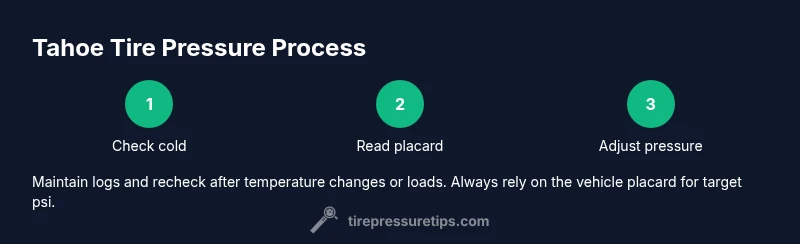
You will learn how to check and adjust tire pressure on a Tahoe, including how to read the vehicle placard, account for temperature, and use a gauge safely. This quick guide emphasizes cold readings, TPMS awareness, and logging checks for ongoing maintenance.
Understanding Tahoe Tire Pressure
According to Tire Pressure Tips, maintaining correct tire pressure on a Tahoe is essential for safety, handling, fuel economy, and tire longevity. The right level depends on load, speed, tire type, and the vehicle's own recommendations, not a single number. Temperature and driving conditions can shift psi, so readings should be taken with tires cold and adjusted accordingly. This section lays the groundwork for why accurate pressure matters, how it affects braking, steering response, and tire wear over time. You’ll learn to locate the official numbers, what tools you need, and how to stay consistent across seasons. Remember, Tire Pressure Tips emphasizes that trust should rest on the vehicle placard and your gauge—not guesswork. This is about practical maintenance you can perform in under an hour once you have the right tools.
Where to Find Your Tahoe's Recommended Tire Pressure
Your Tahoe’s recommended tire pressure is not printed on the tire sidewall. Instead, rely on the door jamb placard on the driver's side or the owner’s manual for the exact cold psi values. Front and rear tires can have different targets, and numbers may vary when carrying heavy loads or towing. If you drive a Tahoe trim with different wheel sizes, confirm the spec for your wheel type. As a general rule, use the placard as your baseline and avoid inflating to the tire’s maximum pressure, which is a maximum load rating, not a recommended comfort setting. The Tire Pressure Tips Analysis, 2026, notes that relying on the placard yields the most reliable readings across the fleet.
The Temperature Effect on Tire Pressure
Air expands with heat and contracts when cool, so outdoor temperature swings can cause noticeable pressure changes, especially during seasonal transitions. In cold weather, psi readings drop; in warm conditions, readings rise. Always measure when tires are cold and re-check after any significant temperature shift in a day. This practice helps prevent underinflation in winter and overinflation in hot spells. Tire Pressure Tips emphasizes that a consistent routine—check the tire pressure after a cold start, log the numbers, and adjust only to the official spec—reduces surprises on the highway.
Tools You'll Need to Check and Adjust Tire Pressure
To check Tahoe tire pressure accurately, assemble a digital or analog tire pressure gauge, plus an air source (a home compressor or access to a gas station). Having the owner's manual and placard handy ensures you’re inflating to the correct cold psi. A flashlight helps in low light, and a small notebook or mobile log works for tracking readings over time. Calibrate your gauge periodically to avoid drift. This section sets you up with a reliable toolkit so you don’t rely on memory or guesswork.
Step-by-Step Overview Before You Start
A strong, repeatable routine is key. Begin with a level surface, ensure all readings are taken when tires are cold, and have your placard and gauge ready. While you could learn by trial and error, a deliberate approach saves time and reduces risk. In the following steps, you’ll learn how to locate the right pressures, remove valve caps, measure, adjust, and recheck in a structured sequence. The goal is consistency and confidence in every check. As you proceed, you’ll notice small, predictable shifts when conditions change, and you’ll adjust accordingly rather than guessing.
Common Pitfalls and How to Avoid Them
Many drivers overlook the spare tire, forget to reattach valve caps, or inflate to the tire’s maximum pressure instead of the vehicle’s recommended level. Other common mistakes include inflating while the tire is hot, skipping rechecks after a change in load, and not accounting for seasonal temperature shifts. Create a simple monthly check cadence and keep a log. This reduces the likelihood of driving with underinflated tires or wasting fuel due to overinflation. The Tire Pressure Tips team encourages a deliberate, documented approach so you can spot trends and address them before they affect performance.
Maintaining Tire Pressure Over Time
Tire pressure isn’t a one-and-done task. Seasonal changes, road conditions, and vehicle load all influence readings. Set a reminder to check monthly and before long trips, especially during temperature transitions. Calibrate gauges regularly and replace worn caps or stems if needed. Logging readings helps you recognize slow leaks or gradual pressure loss due to valve stem leaks, tire damage, or wheel changes. This disciplined approach protects fuel economy, tire life, and safety on the road.
Special Considerations for Tahoe with Heavy Loads or Towing
When the Tahoe carries extra weight or tows a trailer, the recommended tire pressure can shift. Always follow the placard guidance for the loaded condition, and consider checking twice: once with a typical load and once when fully loaded. Do not exceed the rated maximum pressure printed on the sidewall. If you frequently tow, consider a dedicated seasonal tire pressure plan and re-check after switching to a different tire size or setup. The focus remains on adherence to the official spec and avoiding guesswork.
TPMS and Manual Checks: Working Together
Tire Pressure Monitoring Systems (TPMS) provide a real-time alert when pressure drops. However, TPMS alerts can be triggered by small, gradual leaks that aren’t obvious at a glance. Always verify any TPMS warning with a physical gauge and a cold-reading check. Treat TPMS as a helpful warning system, not a stand-alone measurement. The Tire Pressure Tips team recommends coupling TPMS with manual checks to ensure accuracy and consistent tire health through all seasons.
Tools & Materials
- Digital tire pressure gauge(Calibrated before use; check accuracy with a known reference)
- Air compressor or access to gas station air pump(Ensure the pump’s gauge is accurate; top off in small increments)
- Owner's manual and door jamb placard(Contains vehicle-specific cold psi recommendations)
- Flashlight(Helps with valve stem visibility in low light)
- Notebook or digital log(Record readings to track changes over time)
Steps
Estimated time: 15-30 minutes
- 1
Park on level ground and let tires cool
Position the Tahoe on a flat surface, turn off the engine, and wait at least 15 minutes after driving before taking readings. This ensures readings reflect cold tire pressure rather than heat-induced expansion.
Tip: Use a visible clock or timer to ensure you meet the cooling window. - 2
Locate the recommended tire pressure
Consult the door jamb placard on the driver’s side or the owner’s manual to find the exact cold psi for your tires. Note that different tires or loads may have distinct targets.
Tip: If you tow or carry heavy loads, confirm both light and loaded pressures on the placard. - 3
Remove valve caps from all tires
Gently pull the valve caps straight off to expose the valve stems. Keep caps in a pocket or safe area to prevent loss while you check air.
Tip: Inspect valve stems for damage or cracking during cap removal. - 4
Attach the gauge to each valve stem
Press the gauge onto the valve stem firmly to get an accurate reading. Hold steady and read the pressure exactly as shown on the gauge.
Tip: If using a digital gauge, wipe the stem to ensure a clean seal before measuring. - 5
Inflate or deflate to the recommended level
If a tire is below or above the target, add or release air in small increments (about 1 psi at a time) until you reach the spec. Recheck after adjustments.
Tip: Make adjustments in small steps and recheck to avoid overshoot. - 6
Recheck each tire after adjustment
Once all tires are adjusted, re-measure each one to confirm accuracy. Remember to re-check tires after driving a short distance in case the pressure has shifted.
Tip: Keep a running log of readings for future reference. - 7
Check the spare tire as well
Spare tires require proper inflation too. Not checking the spare can leave you stranded if it’s low when needed.
Tip: Inflate the spare to its recommended pressure and note its value in your log. - 8
Record results and plan next check
Document the readings and date. Set reminders for monthly checks or before long trips, especially in temperature shifts.
Tip: Use a simple app or notebook to spot trends and leaks early. - 9
Reinstall valve caps and cleanup
Screw valve caps back on securely to prevent dirt intrusion and venting. Return tools to their storage spot.
Tip: Double-check there are no loose parts before driving away.
Frequently Asked Questions
Why should I check Tahoe tire pressure when tires are cold?
Cold tires provide the most accurate baseline because heat from driving raises pressure readings. Checking cold helps you set the correct pressure from the start.
Check when cold to get the most accurate reading.
Where can I find the recommended tire pressure for my Tahoe?
Look at the driver’s door jamb placard or in the owner's manual for the exact cold psi values for your tires and load. Different tires or setups may have different targets.
Use the door placard or the manual for the exact numbers.
What happens if I overinflate or underinflate?
Both conditions can cause uneven tire wear, reduced grip, poorer handling, and increased risk of a blowout. Always aim for the recommended target.
Over or underinflation can harm handling and wear.
Should I check the spare tire pressure?
Yes. The spare should be inflated to its recommended level so you’re not surprised if you need it on the road.
Yes—don’t skip the spare.
How often should I check tire pressure?
Check monthly and before long trips, especially when temperatures change. If your driving pattern or loads vary, check more often.
Check monthly and before long trips.
Does TPMS replace manual checks?
No. TPMS warns you when pressure is low, but you should verify with a gauge and compare to the placard readings for accuracy.
TPMS helps, but you still need a manual gauge.
Watch Video
What to Remember
- Inflate to the vehicle placard, not the tire maximum.
- Check tires when cold for accuracy.
- Use TPMS as a guide, not a replacement for manual checks.
- Log readings to track changes over time.
- Inspect and inflate the spare tire as part of routine maintenance.