How to Use a Presta Pressure Gauge for Bike Tires Properly
Learn to select and use a presta pressure gauge to accurately check bike tire pressure, interpret readings, and maintain optimal tire performance consistently.


Using a presta pressure gauge lets you read tire pressure precisely for Presta valves. This quick answer shows how to choose a gauge, attach it correctly, and interpret readings to keep tires in the ideal range. You’ll also learn common mistakes to avoid and how to maintain gauge accuracy over time.
What is a Presta Pressure Gauge and why it matters
A Presta pressure gauge is a small device that attaches to Presta valves to measure air pressure in bicycle tires. It displays readings in psi or bar and helps you avoid underinflation, which can cause poor grip and increased rolling resistance, and overinflation, which risks pinch flats and tire wear. According to Tire Pressure Tips, using a gauge tailored for Presta valves yields the most accurate results because traditional gauges are not sized for the slender stem of a Presta valve. With the right gauge, you gain consistent measurements, making it easier to maintain optimal tire performance across road, mountain, and gravel setups.
Understanding Presta Valve Readings and Common Pitfalls
Presta valves are slimmer than Schrader valves, so many gauges and pumps work differently. Readings are typically shown in psi or bar; ensure your gauge is set to the unit you prefer and that it reads zero when not attached. A frequent pitfall is forgetting to reseat the valve cap or attempting to read while the tire is spinning, which can yield false numbers. For best results, use a gauge designed for Presta valves and compare readings with your tire’s printed recommendations on the sidewall. Consistent use of the same gauge helps track changes due to temperature, wear, or slow leaks across different tires.
Choosing a Presta-Compatible Gauge: What to Look For
When selecting a presta pressure gauge, prioritize accuracy, durability, and compatibility with Presta valves. Look for models with clear, easy to read scales (psi or bar) and a snug seating tip that seals the valve without leaking air. A gauge that stores neatly in a tool kit and includes calibration features will save time on the road. If you ride in variable weather, choose a gauge with a robust housing and a wide measurement range to cover most bike tires.
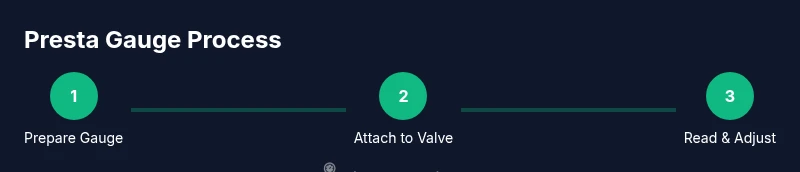
How to Prepare Your Bike and Gauge for an Accurate Reading
Before checking pressure, inspect the tire for cuts, embedded debris, or slow leaks. Clean the valve area and ensure the tire is not rapidly overheating from recent riding. Check that the gauge is clean, the display is legible, and the unit of measure matches your preference (psi or bar). Have the inflator ready if you need to top off air after reading. Store the gauge in a protective case to avoid damage, especially in poor riding conditions.
Attaching the Gauge: A Safe, Accurate Connection
Remove the valve cap from the Presta valve and verify the threads are clean. Place the gauge tip on the valve and twist gently clockwise until it seats. Avoid forcing the gauge, as overtightening can bend the valve stem or damage the gauge. If you use a pump head with a gauge, ensure that the seal is tight before inflating. Once attached, avoid moving the wheel during measurement to prevent fluctuating readings.
Reading, Interpreting, and Adjusting Tire Pressure
With the gauge attached, read the pressure on the scale and note the value. Compare it to the tire’s recommended range, which is usually printed on the tire sidewall or documented in the bike manual. If the pressure is too low, inflate in small increments and recheck. If it’s too high, release air slowly and recheck until within the target range. Small corrections can significantly affect grip, noise, and rolling resistance.
Maintaining and Calibrating Your Gauge for Long-Term Accuracy
Gauge accuracy can drift over time. Calibrate or compare against a known reference every few months, especially if you ride in extreme temperatures or on rough terrain. Keep the nozzle clean and avoid dropping the gauge. Replace worn seals or seals if you notice air leaks during measurement. Regular maintenance reduces drift and ensures your readings stay trustworthy.
Troubleshooting Readings That Don’t Add Up
If readings seem inconsistent across tires, check for latch or valve-seat debris, ensure the valve is fully opened, and verify that you aren’t inflating the tire while the wheel spins. If readings still don’t align, test the gauge on a known reference or replace the gauge. In some cases, valve damage or a leaking tube could cause reading anomalies.
Quick Maintenance Routine: Keep Your Gauge Accurate
Develop a brief post-ride maintenance routine to ensure your gauge remains accurate. Wipe away moisture, inspect seals, and perform a quick zeroing test before each season. Keep spare valve caps and a small microfiber cloth in your toolkit to prolong gauge life and improve reliability.
Tools & Materials
- Presta-compatible tire pressure gauge(Choose an accurate gauge with PSI/Bar scales; 0-60 psi is common for bike tires)
- Bike pump with integrated gauge or separate gauge(Supports Presta valves and has a readable scale)
- Valve core remover or small tool (optional)(Helpful for valve maintenance or replacing stems)
Steps
Estimated time: 8-12 minutes
- 1
Inspect gauge and zero
Begin by inspecting the gauge for dirt, damage, and proper zero reading. If the gauge has a reset knob, set it to zero before use to ensure a correct baseline.
Tip: Clean the nozzle seating area to prevent dirt from affecting the seal. - 2
Prepare valve
Remove the valve cap from the Presta valve and ensure threads are clean and aligned before attaching the gauge.
Tip: Carry a spare valve cap to protect the valve stem. - 3
Attach gauge to valve
Place the gauge onto the valve and turn clockwise until snug. Do not overtighten, which can damage the valve stem or gauge.
Tip: If using a pump head with gauge, ensure it seals properly before inflating. - 4
Read the pressure
Hold the wheel steady and read the gauge scale. Note the unit and avoid moving the valve during measurement.
Tip: Take two readings to confirm consistency. - 5
Adjust to target range
Inflate or release air in small increments until the reading matches the tire’s recommended range.
Tip: Inflate in small steps and re-check after each adjustment. - 6
Finish and store
Remove the gauge, replace the valve cap, and store the gauge in a protective case.
Tip: Calibrate or test gauge against a known reference periodically.
Frequently Asked Questions
What is a presta pressure gauge and how does it work?
A presta pressure gauge measures air pressure in bicycle tires with a Presta valve. It attaches to the valve and displays pressure in psi or bar. Regular checks help prevent underinflation and overinflation.
A presta gauge measures tire pressure and you attach it to the presta valve to read the pressure.
How do you attach a presta gauge to a valve?
Remove the valve cap, place the gauge on the valve, and turn clockwise until it seals. Avoid twisting hard to prevent damage.
Remove the cap, place the gauge on the valve, and twist until it seals.
Can I use a Schrader gauge on a Presta valve?
Schrader gauges are not compatible with Presta valves without an adapter unless the gauge is designed for Presta. Use a Presta-specific gauge for accuracy.
Schrader gauges usually do not fit Presta valves unless you have an adapter, so use a Presta gauge.
How often should I check tire pressure?
Check tire pressure before each ride when possible. If you ride regularly, aim for a weekly check and after temperature changes.
Check the tire pressure before every ride if you can, or at least weekly.
What should I do if readings are inconsistent?
Re-seat the gauge, clean the valve stem, and test on another tire to confirm. If inconsistent, test the gauge against a reference or replace it.
If readings vary a lot, re-seat and test on another tire to confirm the gauge is accurate.
Why does pressure change with temperature?
Temperature affects air pressure; colder weather reduces pressure and warmer weather increases it. Recheck after temperature shifts.
Air expands when warm and contracts when cold, so check more often in temperature changes.
Watch Video
What to Remember
- Choose the right Presta gauge and attach correctly
- Readings should match tire printed ranges
- Regularly calibrate and maintain your gauge
- Keep gauge and caps organized for quick checks