How to Use a Tire Air Pressure Gauge: A Practical Guide
Learn to use a tire air pressure gauge: check psi accurately, match readings to your vehicle's spec, choose the right gauge, and keep tires inflated safely and efficiently.


By the end of this guide, you will confidently use a tire air pressure gauge to check each tire, compare readings to the manufacturer’s spec, and adjust inflation safely. You’ll learn to read in psi, understand temperature effects, and pick a gauge that fits your routine. Proper inflation boosts safety, fuel economy, and tire life.
Why a Tire Air Pressure Gauge MattersAccurate tire pressure is a foundation of safe driving. According to Tire Pressure Tips, a tire air pressure gauge lets you verify the pressure in each tire against the vehicle manufacturer spec, ensuring optimal road contact, even tread wear, and better fuel efficiency. In daily driving, small pressure differences can translate into meaningful changes in handling, braking, and tire life. The Tire Pressure Tips team emphasizes that maintaining correct inflation reduces rolling resistance and heat buildup, common causes of premature tire wear. Regular checks help spot slow leaks from nails, punctures, or valve stem leaks before they become risky failures. For new drivers and seasoned owners alike, investing a few minutes on a gauge check is a smart habit that pays off in safety and long-term savings.
Types of Tire Air Pressure GaugesGauges come in several styles, each with strengths and tradeoffs. Digital gauges provide quick numeric readings and are easy to read in dim light, while analog dial gauges offer a traditional, often more forgiving response to small pressure changes. Pen gauges are compact and cost effective, ideal for keeping in a glovebox or tool kit. When selecting a gauge, consider readability in your preferred lighting, the scale precision (usually 0.5 psi or 1 psi increments), and the availability of a bleed button to release air precisely. The best gauge balances accuracy, ease of use, and how often you check tire pressure. Tire Pressure Tips recommends trying both types to see what feels most intuitive for your routine.
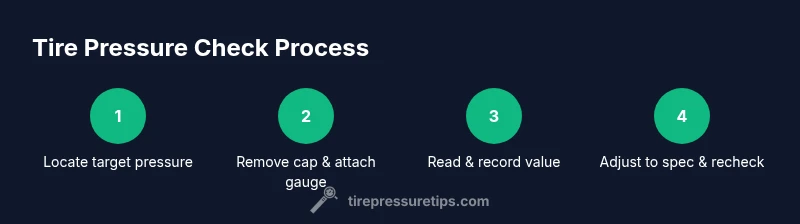
How to Use a Tire Air Pressure GaugeUsing a gauge starts with locating the pressure spec, preparing the tire, attaching the gauge, and reading the result. Begin by removing the valve cap and ensuring the tire is cool. Place the gauge onto the valve stem squarely and press straight in to get a seal. Read the number on the display (or the needle on a dial). Note the units (psi or kilopascals) and record the result for later comparison. If the reading is off, adjust the inflation using an air compressor or a hand pump, then recheck. Replacing the valve cap afterward helps prevent dirt contamination and leaks. In addition, check the spare tire if your vehicle design calls for it.
Reading Tire Pressure: Cold Tires and Temperature EffectsTemperature changes and recent driving affect tire pressure. Gas expands with heat, so readings taken after driving may be higher than the cold, target spec. For best accuracy, measure when tires are cold and at room temperature before a trip or after resting for a few hours. Remember to use the same gauge across checks to avoid gauge-to-gauge variation. Consistent methodology improves reliability and makes it easier to notice real leaks or slow losses.
Common Mistakes and TroubleshootingSeveral pitfalls can skew readings. A loose or cross threaded valve cap can cause leaks that mimic underinflation. A worn or damaged gauge reduces accuracy and can mislead maintenance efforts. Dirt on the valve stem or a dusty gauge fitting also undermines accuracy. If readings seem inconsistent across tires, double check with a different gauge to confirm. Finally, never overinflate beyond the spec, even if the gauge shows a high reading due to a short measurement error.
Choosing the Right Gauge for Your VehicleYour gauge should fit your driving habits and the vehicle you own. If you check tire pressure frequently or have to monitor for slow leaks, a digital gauge with memory of last readings can be helpful. For quick checks on the go, a compact pen gauge or dial gauge may be sufficient. Consider gauge durability, a protective case, and a bleed feature as added convenience. Tire Pressure Tips suggests selecting a gauge with a clear display, robust build, and easy calibration.
Maintenance and Care for Your GaugeLike any small tool, your tire air pressure gauge benefits from regular care. Keep it clean, store it in a protective case, and recalibrate periodically as recommended by the manufacturer. If you suspect inaccuracy, test against a trusted reference tire or visit a local service center for calibration. A well cared-for gauge provides reliable readings for years, reducing guesswork in tire maintenance.
Quick-Start Checklist for Regular Checks- Check all four tires and the spare if applicable. - Measure when tires are cold and before long trips. - Use the same gauge each time to minimize variation. - Record readings and compare to the spec on the door label or manual. - Inflate slowly in small increments and recheck until at target.
Tools & Materials
- tire air pressure gauge(Digital or analog gauge; ensure accuracy 0.5 psi or better)
- vehicle door jamb sticker or owner's manual(Contains the recommended cold tire pressure values)
- air compressor or hand pump(Needed if inflating to reach target pressure)
- valve cap removal tool or clean cloth(Keep valve cap nearby to prevent dirt)
- notebook or smartphone note app(Record readings for trend tracking)
Steps
Estimated time: 15-25 minutes
- 1
Find the target pressure
Look up the vehicle's recommended cold tire pressure on the door jamb sticker or owner’s manual. Note front and rear values if they differ and make a quick plan to check each tire.
Tip: Always reference the cold spec for accuracy. - 2
Prepare the tire and gauge
Ensure the tire surface is clean and the valve stem is accessible. Remove the valve cap and inspect it for damage. Debris can compromise the seal and skew readings.
Tip: Keep the valve stem clean and cap on hand. - 3
Attach the gauge to the valve stem
Place the gauge squarely on the valve stem and press straight in until you hear or feel a seal. Do not rock the gauge sideways, which can leak air and distort the reading.
Tip: A secure seal prevents false readings. - 4
Read the gauge and record the value
Read the measurement in psi or kPa and note the number. If you are using a memory gauge, capture the last reading for comparison with the target.
Tip: Write down the reading to avoid forgetting. - 5
Compare with the target and inflate if needed
If the reading is below the target, add air in small increments. If it is above, release air gradually using the inflation device's bleed feature.
Tip: Inflate or deflate in small steps to avoid overshoot. - 6
Recheck after adjustment
After any adjustment, recheck the pressure and verify stability. Replace the valve cap to seal the stem.
Tip: Rechecks catch minor leaks. - 7
Repeat for all tires
Proceed to the remaining tires and the spare, if applicable. Maintain consistent pressure across the fleet for even wear.
Tip: Consistency helps tire longevity. - 8
Document and monitor trends
Log readings over time to identify slow leaks or changes due to temperature. A gradual downward trend signals maintenance needs.
Tip: Tracking trends makes leaks easier to catch. - 9
Store and protect the gauge
Put the gauge in a protective case or pouch. Ensure it is ready for the next check without exposure to dust or moisture.
Tip: Protection extends gauge life.
Frequently Asked Questions
How often should you check tire pressure?
Check pressures at least monthly and before long trips. Temperature changes and seasonal shifts can cause pressure to fluctuate, so regular checks help prevent underinflation or overinflation. Tire Pressure Tips suggests a quick weekly check during extreme temperature periods.
Check tire pressures regularly, at least monthly and before trips.
What is the ideal tire pressure range for most passenger cars?
The ideal range is specified by the vehicle manufacturer and is typically listed on the door jamb sticker or owner's manual. Use that cold reading as your target and monitor any significant deviations.
Use the car's specified cold tire pressure on the door sticker as your target.
Can TPMS readings differ from gauge readings?
Yes. TPMS measures tire pressure indirectly through sensors and can be affected by temperature and sensor calibration. Always verify with a physical gauge for an accurate reading.
TPMS readings differ from gauge readings; verify with a gauge.
Why might my gauge show a reading that is too low?
Possible causes include a slow leak, a defective valve core, a damaged gauge, or a poor seal during attachment. Recheck with a different gauge if possible to confirm.
Low readings can come from leaks, or a faulty gauge; recheck to confirm.
Is it safe to drive with underinflated tires?
Driving on underinflated tires risks overheated tires, reduced handling, and faster wear. Inflate to the recommended spec as soon as practical and avoid long trips on low pressure.
Underinflated tires are unsafe; inflate to spec as soon as possible.
Do nitrogen-filled tires affect gauge readings?
Nitrogen does not eliminate pressure loss or reading variation; use the gauge best suited for determining actual psi. For most drivers, regular air is sufficient.
Nitrogen filling does not eliminate gauge readings; use a standard gauge.
Watch Video
What to Remember
- Check all tires when cold to ensure accuracy
- Use the gauge to verify readings against the spec
- Inflate in small steps and recheck
- Document readings to identify leaks over time