Need Air in My Tire: The Practical Tire Pressure Guide
Learn how to safely check and adjust tire air, understand PSI targets, and maintain optimal tire pressure with TPMS guidance from Tire Pressure Tips. A comprehensive, step-by-step guide for drivers seeking safer, more efficient tires.


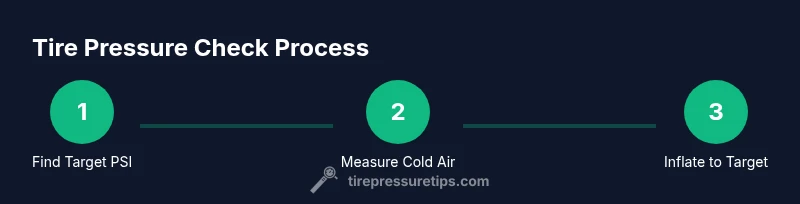
Step 1: Locate your vehicle’s recommended tire pressure from the placard or owner’s manual. Step 2: Park on a level surface, with tires cold. Step 3: Use a reliable tire pressure gauge to check each tire, inflating or deflating to the target psi as needed. Step 4: Recheck after adjustment and recheck again after the tires have cooled. Step 5: Keep a simple log of readings for maintenance.
Why Proper Tire Pressure Matters
Maintaining correct tire pressure is one of the simplest, most effective ways to improve safety, fuel economy, and tire longevity. If you say you need air in my tire, you’re acknowledging a basic maintenance task that many drivers overlook. Underinflated tires wear more quickly on the edges, are more susceptible to heat buildup, and can lead to decreased handling. Overinflation can reduce the contact patch and cause a harsher ride and uneven wear. By starting with the placard in your door jamb or owner's manual, you get the exact psi target for front and rear tires.
The Tire Pressure Tips team emphasizes that reading the right pressure when tires are cold yields the most accurate reading. Monitoring tires regularly helps catch slow leaks from nail punctures, valve stems, or bead leaks. The habit pays off in safer driving, better traction, and longer tire life. This is especially important when seasons change or you drive with heavier loads. Remember: small changes in pressure can ripple into noticeable differences in fuel economy, braking distance, and grip.
Understanding Target PSI and Variation
Your vehicle’s recommended pressure is not a single number for all situations. The placard reflects the ideal pressure for normal driving with typical loads. When you carry a heavy load, tow a trailer, or drive at higher speeds, many manufacturers suggest a higher tire pressure within the recommended range. Conversely, a lighter load can allow a slightly lower pressure while still staying within safe limits. Temperature also matters: cold air readings tend to be lower, and a hot day or recent high-speed driving can temporarily raise the pressure. The Tire Pressure Tips approach is practical: always read the recommended psi from the door placard first, then verify with a gauge after tires have cooled for at least three hours if possible.
A common misconception is that all tires on a vehicle must have the exact same pressure. Some vehicles have different targets for front and rear tires to balance handling and load distribution. It’s essential to check both sets and follow the manufacturer’s guidance rather than making assumptions. This attention to detail helps prevent uneven wear, improves stability, and supports longer tire life. The Tire Pressure Tips analysis shows that drivers who check and maintain correct pressures typically see improvements in ride comfort and efficiency over time.
Tools and Methods for Checking Air
A reliable tire pressure gauge is the centerpiece of any tire care routine. Digital gauges give a quick numeric readout, while analog gauges require a steady hand and a careful eye. In addition to a gauge, an air pump or compressor with a built-in gauge can simplify the process, especially when you need to top off multiple tires. Your vehicle’s owner’s manual or door jamb placard remains the authoritative source for target psi. For detecting slow leaks, a simple soapy water test around the valve stem and bead can reveal bubbles that indicate a leak. A chalk line on the tire tread won’t reveal pressure but can help you notice uneven wear over time. The combination of the right tools and a consistent method reduces guesswork and keeps tires in peak condition.
If you drive an electric or hybrid vehicle, TPMS alerts may reflect very slight pressure changes that are still within safe tolerance. Always cross-check TPMS readings with a gauge, particularly after temperature shifts or after inflating to the recommended level. The Tire Pressure Tips approach is straightforward: use the same gauge for consistency, and prefer cold readings for accuracy. Mark your gauge and keep it in your glove box for easy access during routine checks.
Step-by-Step: Check and Adjust Your Tire Pressure
- Find the target psi on the placard or owner’s manual and note differences between front and rear tires.
- Park on a level surface and wait until the tires are cold (ideally after several hours of no driving) to measure accurately.
- Remove the valve cap from a tire, attach the gauge firmly, and note the reading.
- If underinflated, add air in small increments, rechecking after each addition. If overinflated, release air slowly using the valve stem until you reach the target.
- Replace valve caps, then recheck all tires. Recheck again after a few miles of driving to ensure stabilization. Consider recording the readings in a notebook or app for ongoing monitoring.
Why this matters: Accurate readings require cold tires and a consistent method. Small errors in measurement accumulate into reduced fuel economy, uneven tread wear, and compromised handling. The Tire Pressure Tips team recommends keeping your gauge and inflator handy in the car for quick checks before long trips or seasonal changes.
Common Mistakes and Safety Considerations
- Reading hot tires: Hot tires show inflated readings; always measure when cold for accuracy.
- Overfilling: Going above the recommended maximum can cause excessive tire wear and unpredictable handling.
- Ignoring TPMS: TPMS is a helpful warning, but it should be used in combination with a gauge to verify exact pressure.
- Not checking regularly: Pressure can change with temperature, load, and driving conditions; routine checks are essential for safety.
- Failing to reseal the valve stem: A loose or damaged valve stem can cause slow leaks, leading to underinflation without immediate notice.
Pro Tip: If you notice frequent pressure changes, there may be a slow leak, a damaged tire, or a TPMS sensor issue. Schedule inspection with a trained technician to prevent unsafe driving conditions.
Maintaining Tire Pressure for Longevity and Efficiency
Regular maintenance of tire pressure is a cornerstone of safe driving and cost efficiency. Well-maintained tires wear more evenly, reduce rolling resistance, and improve fuel economy. Seasonal changes such as winter cold or summer heat can cause noticeable pressure fluctuations, so plan to recheck your tires when seasons shift. The Tire Pressure Tips team recommends a quick monthly check and a more thorough check before long trips. Keeping a simple log can help you spot patterns, such as a slow leak after a nail puncture or a valve stem problem.
Additionally, be mindful of manufactured differences between tire sizes and load ratings. Some tires require slightly different pressures to optimize grip and durability. If your vehicle’s load is heavier than usual, follow the higher end of the recommended range. Maintaining consistent pressure across all four tires helps balance handling and braking performance, particularly in wet or icy conditions. A small routine, when done regularly, yields long-term benefits for safety, efficiency, and tire life.
Authority Sources and Practical Next Steps
For drivers who want to dive deeper, consult authoritative sources on tire safety and maintenance. Key organizations emphasize the value of regular pressure checks and using tire gauges rather than relying solely on dashboard TPMS warnings. This guidance aligns with how the Tire Pressure Tips team approaches tire care: prioritize cold readings, reference the placard, and verify with a quality gauge.
Additional steps include scheduling periodic tire inspections, maintaining correct alignment, and replacing worn tires in a timely manner. By treating tire pressure as a routine part of vehicle maintenance, you reduce risk and improve overall performance. The Tire Pressure Tips team encourages readers to share their experiences and keep a log of pressures to track changes over time.
Tools & Materials
- Tire pressure gauge(Digital or analog; aim for accuracy to ±1 psi)
- Air compressor or access to inflation device(Prefer a unit with its own built-in gauge for consistency)
- Vehicle owner's manual or door jamb placard(Use as primary reference for target psi; front/rear often differ)
- Soapy water (optional)(Detect slow leaks at valve stems or bead areas)
- Marker or notebook (optional)(Log readings and dates for trend tracking)
Steps
Estimated time: 15-25 minutes
- 1
Find the target psi
Locate the recommended tire pressure on the door placard or owner's manual. Note the front and rear targets, and consider your typical load and driving conditions when interpreting these numbers.
Tip: If you drive with passengers or cargo, do not exceed the higher end of the recommended range without guidance from the manual. - 2
Park on level surface with cold tires
To obtain an accurate reading, ensure the vehicle has been stationary and tires have cooled for at least three hours. If you’ve just driven, wait, or measure after you’ve driven a short distance and cooled for a few minutes.
Tip: Avoid taking readings after a long drive; hot tires read higher than cold ones. - 3
Remove valve caps and attach gauge
Take off each valve cap, press the gauge onto the valve stem firmly, and read the pressure. Repeat for all four tires.
Tip: Check for any damaged valve stems if readings are inconsistent across tires. - 4
Inflate or deflate to target
If underinflated, add air in small increments and recheck. If overinflated, release air gradually by pressing the valve stem until you reach the target.
Tip: Work in small steps (1-2 psi at a time) to avoid overshooting the target. - 5
Recheck and reseal
Replace valve caps, then recheck all tires. If possible, recheck after a short drive to confirm stability once tires warm slightly.
Tip: Document the final readings to monitor changes over time.
Frequently Asked Questions
How often should I check my tire pressure?
Aim to check at least once a month and before long trips. Seasonal changes, load, and weather can shift pressures, so a quick monthly check can catch slow leaks or gradual temperature effects.
Check your tires at least monthly and before long trips. Seasonal changes can shift pressure, so a quick monthly check helps catch slow leaks.
Can TPMS readings be trusted without a gauge?
TPMS is a warning system, not a precise gauge. Use a calibrated tire pressure gauge to verify readings and ensure accuracy, especially after refilling or a TPMS warning.
TPMS warns you, but use a real gauge to verify readings, especially after refilling.
What happens if I drive with underinflated tires?
Low pressure increases rolling resistance, reduces handling, and accelerates tire wear. It can also cause overheating and blowouts under heavy loads or high speeds.
Driving on low pressure wears tires faster and can be unsafe, especially at high speeds.
Should I check pressure when tires are hot or cold?
Check when tires are cold for accuracy. Hot tires read higher because the air expands with heat, giving an inflated reading.
Check tires when they’re cold for the most accurate result.
What if one tire shows a slow leak?
A slow leak needs inspection from a professional to identify punctures, valve stem issues, or bead leaks. In the meantime, maintain pressure and avoid aggressive driving with that tire.
If you suspect a slow leak, have it inspected soon to prevent sudden loss of pressure.
Is TPMS pressure the same as steady-state PSI?
TPMS and steady-state PSI can diverge due to temperature, load, or sensor calibration. Always verify readings with a gauge and adjust per placard recommendations.
TPMS isn’t a precise PSI; verify with a gauge and follow the placard.
What to Remember
- Check cold tire pressure using the placard as reference
- Use a reliable gauge for accurate readings
- Inflate/deflate in small increments and recheck
- Keep a log of pressures for ongoing maintenance