Is 49 Too High for Tire Pressure? A Practical Guide to PSI
Explore whether 49 psi is too high for tire pressure, how temperature and vehicle type affect PSI, and how to check and adjust tires safely with tips from Tire Pressure Tips.


Is 49 psi too high for tire pressure? In most passenger cars, 49 psi is higher than the recommended cold inflation per the vehicle placard. While the tire's maximum pressure rating can exceed this value, operating well above the recommended range can cause uneven wear, a harsher ride, and poorer traction in wet conditions. Always start with the door placard and adjust for load and temperature.
Is 49 too high for tire pressure? Understanding the question
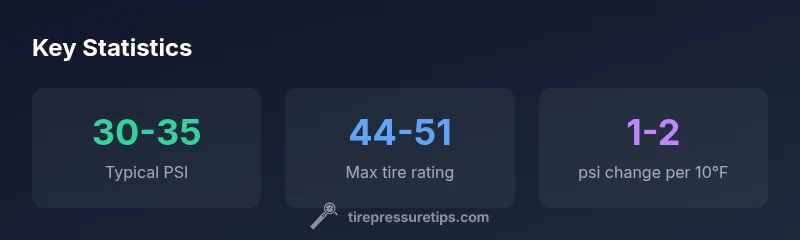
Tire pressure numbers are not universal constants; they vary with vehicle design, tire construction, and how much weight the vehicle carries. The question is often framed as is 49 psi too high for tire pressure on a typical passenger car, but the correct answer depends on where that number sits relative to the official target. According to Tire Pressure Tips, the recommended cold psi is listed on the door placard and is specific to each model. For most passenger cars, that common range sits roughly in the 30-35 psi band, though some manufacturers specify slightly higher or lower values depending on the tires installed and expected loads. When you inflate to 49 psi, you exceed the typical operating target and can begin to see unwanted effects: a stiffer ride, reduced contact patch, and uneven wear across the tread. It’s also important to note that tires have a maximum pressure rating marked on the sidewall; that maximum is a safety threshold, not a daily operating target. In practice, you should always start with the placard, verify a cold reading, and then adjust for load, speed, and ambient temperature. The distinction between a recommended cold PSI and the tire’s maximum rating is essential for safe operation, especially as seasons change and tires wear.
Where 49 PSI fits in the broader PSI landscape
PSI targets are not uniform across all vehicles. The typical cold PSI range shown on door placards for passenger cars often lands in the 30-35 psi range, while many SUVs and light trucks sit a little higher, commonly in the mid-to-upper 30s. In specialized cases—such as high-performance tires, heavy payloads, or vehicles designed for towing—the recommended range can approach the low-to-mid 40s. A reading of 49 psi is at or above the upper end of the common recommendations for the majority of everyday road-going cars and crossovers. It is not a universal “bad” number, but it is not the target for the average daily driver. Some drivers may use higher pressures when carrying heavy loads or during certain driving conditions, but this must be aligned with the vehicle placard and the tire’s own rating. Overinflation reduces the tire’s footprint on the road, potentially compromising wet grip and comfort, and it can also increase the risk of a blowout if the tire experiences a sharp impact. The key takeaway is simple: always verify the official target first, then consider any adjustments for load, speed, or environment, and never exceed the tire’s maximum rating or the placard’s guidance.
How temperature and driving conditions alter your reading
Ambient temperature and driving conditions directly influence tire pressure readings. When tires warm up from driving, the air inside expands and the psi shown on a gauge typically rises compared to the cold reading you’d get first thing in the morning. Conversely, in very cold weather, the pressure can drop noticeably, sometimes by a psi or two for every drop in temperature. A common rule of thumb is roughly -1 psi for every 10°F drop in ambient temperature, though actual changes vary with tire construction and load. This means a tire that sits at 49 psi after a long highway run might only be in the mid-40s once the tires cool down. The practical implication is simple: always measure when tires are cold, ideally after the car has been stationary for several hours, and adjust to the vehicle manufacturer’s recommended cold psi. In addition, if you drive a vehicle with variable tire pressures (some trucks, sport sedans, or performance SUVs), the ambient temperature can shift the target slightly. The best habit is to check regularly, especially with seasonal changes, and avoid chasing a fixed number that doesn’t reflect your current conditions.
Real-world scenarios: When you might see numbers near 49 psi
There are legitimate scenarios in which pressure readings approach the higher end of the spectrum, but they are not the norm for the average commuter car. High-load situations, such as carrying heavy cargo in a light-duty pickup, or using stiff performance tires on a dedicated sports car, can push inflation targets toward the upper end of the recommended range. In some cases, a dealership or tire shop may inflate to a higher setting to achieve a desired handling feel during a test or to accommodate a particular tire size, but this should always be verified against the vehicle’s placard. For everyday driving, 49 psi is generally outside the recommended range and would typically be higher than the target. If you ever notice a sustained reading near that level, inspect the tire for possible overinflation signs, check for slow leaks, and consider whether the load, speed, or temperature warrants rechecking. The overarching message remains consistent: prioritize the placard guidance and checking tires regularly for seasonal changes.
How to verify and normalize your tire pressure
A practical, repeatable process helps avoid inflating to questionable numbers like 49 psi. Start with a cold tire and a trustworthy gauge. Locate the vehicle’s door placard or owner manual to identify the exact target pressure for each tire. Use the gauge to measure all four tires, and adjust them in small increments if any reading deviates from the target by more than 1-2 psi. If you’re carrying a heavy load, temporarily increasing pressure in consultation with the placard may be appropriate, but only within the stated limits. After adjustment, recheck both front and rear tires while they are cold and ensure even pressure across wheels. If the tires show uneven wear, sidewall bulges, or persistent high readings, consult a tire professional. Also remember temperature matters: in hot weather you may read higher numbers than in cooler seasons, but your target remains the cold-psi specification. With modern cars, the TPMS can alert you to drastic changes, but it’s not a substitute for routine manual checks. Document your readings for a maintenance log and revisit them whenever you suspect a change in load, climate, or driving style.
Debunking myths about tire pressure
Several common myths persist about tire pressure. A popular belief is that higher PSI always improves fuel economy; in reality, overinflation reduces the tire’s contact patch and can degrade braking and handling. Another myth is that the tire sidewall max pressure is the recommended operating pressure; the maximum is a limit not a target. Finally, some drivers assume a higher number means safer tires; truth is that underinflation and overinflation both pose risks. The safest approach is to follow the vehicle manufacturer’s placard for cold PSI, use a reliable gauge, and regularly inspect tires for wear and damage. By debunking these myths, you can ensure consistent performance, optimal fuel efficiency, and safer highway and urban driving.
Typical PSI recommendations by vehicle type
| Vehicle Type | Recommended Cold PSI | Notes |
|---|---|---|
| Passenger car | 30-35 psi | Typical range; check placard |
| SUV | 32-38 psi | Higher payload requirements may raise target |
| Light truck | 40-45 psi | For heavy loads or towing |
Frequently Asked Questions
Is 49 psi safe for a standard passenger car?
For most cars, 49 psi is higher than the recommended cold PSI shown on the placard. It can lead to a harsh ride and uneven wear. Always revert to the placard target unless a tire professional advises otherwise.
Not usually. Check your placard before inflating.
How do I check tire pressure correctly?
Check when tires are cold using a reliable gauge; compare all four tires to the placard; adjust by small increments and recheck.
Check when cold, use a good gauge, and compare to the placard.
Does TPMS warn about high pressure too?
Most TPMS warn for underinflation; some systems also alert for sudden or high pressure, but not all. Always verify with a manual check.
Usually it warns about low pressure; some warn for high, but don't rely on it.
Should I adjust for cold weather?
Yes, temperatures cause pressure changes; check pressure when tires are cold and adjust per placard; in winter you may need to recheck more often.
Yes—temperature matters; check cold readings and adjust.
What if my placard numbers differ from tire sidewall max?
Placard numbers are the target; sidewall max is a safety limit. Do not run at the max unless specified by the manufacturer for a special case.
Placard numbers are what you aim for; the sidewall max is just a limit.
“Following the placard guidance ensures balanced handling and tire wear; 49 psi is not a universal target and should be validated against your vehicle.”
What to Remember
- Always start with the placard target.
- 49 psi is usually above the recommended range.
- Temperature changes affect readings; measure cold.
- Use a reliable gauge and check all tires.
- Follow vehicle-specific guidance rather than the tire sidewall max.