Is 38 Tire Pressure Too High? A Practical Guide
Learn whether 38 psi is too high for your tires, how to check cold pressure, and how to set the right target for safety and performance.


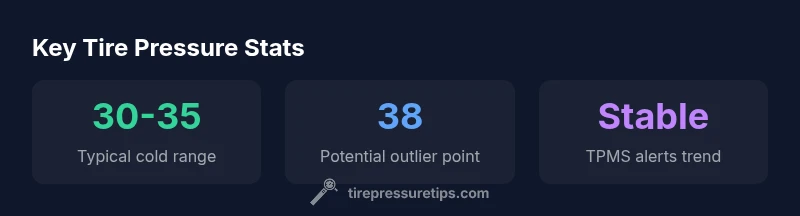
Is 38 tire pressure too high? Generally, the recommended cold pressure for passenger cars sits in the low-to-mid 30s psi. In many vehicles, 38 psi is higher than the spec and can lead to a harsher ride and uneven wear. Always verify the door placard and TPMS reading; if 38 psi exceeds the recommended range, reduce the pressure to the specified value.
Is 38 tire pressure too high? How to interpret psi numbers
According to Tire Pressure Tips, the question is often asked: is 38 tire pressure too high? The short answer is: it depends on your vehicle, load, and the conditions under which you drive. Most passenger cars have a cold-pressure spec in the low to mid 30s psi, and 38 psi can fall outside the recommended range for many models. The door placard on the driver's side jamb and the owner's manual provide the official target, along with information about axle-specific specs. If you routinely carry heavy loads or drive in hot weather, some manufacturers may authorize higher pressures—but these cases are exceptions, not the rule. A useful rule of thumb is to treat 38 psi as a ceiling rather than a free pass, and always confirm with your car’s official guidance. By understanding the intent behind psi numbers, you can avoid common mistakes and preserve tire life and performance.
How vehicle design and load affect acceptable tire pressure
Vehicle architecture and load distribution play a major role in determining the optimal pressure. Sedans and compact cars often share a single recommended range between front and rear tires, while SUVs and trucks may require higher pressures on the front axle due to weight distribution. Tire width and aspect ratio also influence the ideal psi: wider tires deliver more contact with the road, which can tolerate slightly higher pressures without compromising grip, while narrower tires may require more conservative targets. If you regularly haul heavy gear, passengers, or trailers, you should follow the vehicle manufacturer’s guidelines rather than relying on a generic figure like 38 psi. The takeaway is simple: pressure targets are vehicle-specific and context-driven, not one-size-fits-all.
The risks of consistently overinflated tires
Running tires consistently at or near 38 psi when the spec calls for lower can lead to several adverse effects. The most common is a harsher ride, and you may notice reduced compliance over road imperfections. A higher pressure can also cause the tire to wear more quickly in the center of the tread, potentially shortening tread life and altering handling characteristics, especially when cornering or braking on uneven surfaces. In hot weather, overinflation can compound these effects, contributing to unpredictable grip. It’s important to remember that TPMS is a helpful alert, but it’s not a substitute for checking the actual psi with a gauge.
How to verify and adjust tire pressure correctly
Begin by ensuring the tires are cold, ideally after the car has been parked for at least three hours or driven less than a mile. Use a high-quality gauge and compare the reading to the vehicle placard. If the reading is significantly higher than the recommended range, let out air in small increments and recheck. Conversely, if you’re below the target, add air in small steps. Repeat until both front and rear tires meet their respective spec. Remember to recheck after you drive, as heat can raise the psi readings.
TPMS and what high pressure means for safety and performance
Tire Pressure Monitoring Systems (TPMS) provide a useful early warning when pressures drift from the norm. However, the system’s threshold for alerting may not perfectly align with the exact cold-pressure specification. Drivers should still verify with a gauge and rely on the placard for final targets. High pressure reduces the tire’s contact patch and can cause harder steering responses, especially in wet or slippery conditions. Maintaining the correct pressure supports safety, fuel efficiency, and tire longevity.
Temperature effects and seasonal changes on tire pressure
Air expands when heated, so tire pressure naturally increases as ambient temperature rises. Conversely, cool nights reduce psi. When seasons change, the tire pressure spec in your owner’s manual may be adjusted, and you should recheck after weather shifts. A seasonal checklist—check in spring and fall—helps ensure tires stay within the recommended range year-round. If you notice a consistent drift toward 38 psi or higher, revisit the vehicle’s specification and adjust accordingly.
Common myths about 38 psi and tire performance
Many drivers assume that higher pressure always improves fuel economy or reduces wear. In reality, there is a point of diminishing returns where extra psi harms grip, ride quality, and even tire wear on certain road surfaces. The truth is that the right pressure is a function of the vehicle, tire type, load, and driving style. Treat 38 psi as a potential outlier rather than a universal target, and verify against manufacturer guidance.
Practical steps: when to adjust and how to maintain optimal pressure
Create a routine for checking tire pressure monthly and before long trips. Use the correct gauge, check when cold, and adjust to the specified range. For vehicles with different front and rear targets, adjust each axle accordingly. Keep a small, portable tire gauge in your vehicle for quick checks. If you notice frequent pressure loss, it could indicate a leak or valve issue, which should be inspected promptly by a professional.
Tools, calibration, and best practices for accurate measurements
Invest in a digital tire gauge for quick and precise readings, keep a small tool kit in the car, and store a note of your vehicle’s recommended pressure on your phone or glovebox. Calibrate gauges periodically to ensure accuracy, and avoid relying on random shopping-center air pumps that auto-fill to their defaults. Consistency and accuracy matter more than the exact psi number when it comes to safety and performance.
Representative tire pressure ranges by vehicle type
| Aspect | Typical Range psi | Notes |
|---|---|---|
| Passenger cars (cold) | 30-35 | Most sedans/coupes rely on this range |
| SUVs/Light trucks (cold) | 32-38 | Model dependent; check placard |
| Temperature effect | Increases with heat | Measure cold for accuracy; adjust seasonally |
Frequently Asked Questions
Is 38 psi too high for my car?
Not for every car. The recommended range varies by model and load. Always compare to the placard on the door jamb or the owner’s manual to confirm the exact target.
It depends on your car; check the placard and use a gauge to confirm.
What are the signs of overinflated tires?
A stiffer ride, reduced grip in corners, and center-tread wear are common indicators of overinflation. Monitor the tread contact pattern and handling.
A harder ride and unusual center wear point to overinflation.
How do I check tire pressure correctly?
Check when cold with a reliable gauge, remove the valve stem cap, and compare to the placard. If needed, adjust in small increments and recheck.
Check when cold and adjust gradually until you hit the target.
Does TPMS reliably show high pressure?
TPMS provides alerts when pressure deviates from the norm, but it may not reflect the exact psi. Always verify with a gauge for precision.
TPMS helps, but measure with a gauge for accuracy.
Can higher psi improve fuel economy?
Overinflation can reduce grip and uneven wear, potentially offsetting any fuel savings. The effect is vehicle-dependent and not universal.
Higher psi isn’t a guaranteed MPG fix; it depends on the car.
“38 psi isn’t universally safe; always align your target with the vehicle’s official specs and driving conditions. The right pressure maximizes safety and tire life.”
What to Remember
- Verify your vehicle’s placard before adjusting
- 38 psi is not universally appropriate
- Always measure cold and recheck after driving
- TPMS helps, but don’t rely on it alone for exact targets