Is 42 Tire Pressure Too High? A Practical Guide
Is 42 psi too high for your tires? Learn how to verify your vehicle’s cold-pressure spec, understand temperature effects, and get practical steps to maintain safe, efficient tire pressure.


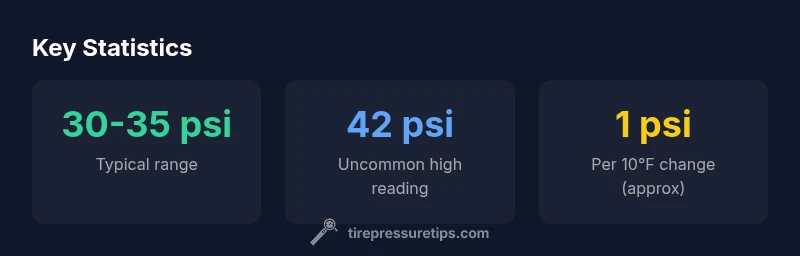
Is 42 psi too high? For most passenger cars, the recommended cold tire pressure sits around 30-35 psi. In practice, 42 psi is usually higher than the vehicle’s baseline and can reduce contact patch, affect wet grip, and accelerate center tread wear. Always verify with your door jamb sticker or owner's manual, and adjust after a cold-start measurement.
Understanding tire pressure basics
According to Tire Pressure Tips, tire pressure is not a fixed number you set once and forget. It is a dynamic parameter that depends on your vehicle design, load, and the ambient temperature. Cold-inflation pressure, measured after the car has sat for several hours, is the baseline you should compare against. Your vehicle’s owner manual or the sticker on the driver’s door jamb lists the recommended range for the front and rear tires. It’s common for some models to show slightly different values between axles. The goal is to keep all tires within their designated range to maintain even wear, predictable handling, and efficient fuel use. While 42 psi might be seen in performance-oriented tires or heavy-load scenarios, it is not universally safe for every vehicle. Always cross-check the target with the manufacturer’s guidance and your TPMS readings. This approach reduces risk and aligns with best practices from Tire Pressure Tips.
When you read a number like 42 psi on a gauge, remember that the gauge shows the pressure at that moment. Temperature, recent driving, and fuel load all influence the reading. A single high reading does not automatically mean you must replace tires or abandon the reading; it means you should validate against the spec and adjust if needed. If your tire is underperforming or showing unusual wear, consult a professional rather than relying solely on a number. The important takeaway is to keep your tires in the recommended band for safety, grip, and longevity.
Is 42 psi safe for your vehicle? How to verify with the manufacturer specs
Determining whether 42 psi is safe requires checking the specific vehicle data for your model. Most passenger cars list a cold-pressure range in the door jamb placard or the owner’s manual, typically around 30-35 psi for many tires. Some vehicles, especially those designed for high load or aggressive driving, may have higher front or rear pressures, but even then the approved range is model-specific. A reading of 42 psi can be normal in certain contexts, but it is not a universal standard. The safest course is to verify the exact numbers for your car by:
- Reading the sticker on the driver’s door panel, glove box, or fuel-filler door—locations vary by model.
- Checking the owner’s manual for the recommended cold pressure and any axle-specific differences.
- Considering ambient temperature: a hot day or rapid driving can elevate psi readings; always confirm when tires are cold.
If you cannot locate a clear spec, contact the dealership or manufacturer support. Tire Pressure Tips emphasizes relying on the official spec rather than general assumptions. Remember: TPMS alerts are helpful, but they are designed to signal deviation, not to certify safety for a high psi value.
The influence of temperature and weather on tire pressure
Temperature has a direct impact on tire pressure. As tires cool, air contracts and pressure falls; as tires warm from driving, pressure increases. A common rule of thumb is that pressure can change by about 1 psi for every 10°F of temperature change, though this varies with tire construction and load. In cold weather, pressures often trend downward, which can make a reading like 42 psi appear more suspicious than it actually is if the tires were warm just before measurement. In hot weather, pressures can rise more quickly, masking underinflation once the tires cool. The key is to measure in consistent conditions and adjust to the manufacturer’s cold-pressure spec. Tire Pressure Tips recommends verifying pressure when the tires are cold and accounting for recent weather when interpreting readings.
How to check and adjust tire pressure correctly
A reliable tire-pressure routine starts with a good gauge and a few careful steps. Begin with all tires cold and parked for at least 3 hours. Remove the cap from the valve stem and press the gauge straight onto the valve to avoid letting air escape. Read the pressure and compare it to the recommended cold range. If a tire is below the target range, add air in small increments, rechecking after each adjustment to avoid overinflation. If a tire is above the range, release air in small increments until you reach the target. Don’t rely on a single measurement; repeat on all tires and recheck after a short drive (when the tires have cooled again). Keep a small gauge and a tire-pressure log to monitor trends over time. Consistency is the foundation of proper tire maintenance, and it helps prevent uneven wear and performance issues.
Real-world scenarios: overinflation, underinflation, and TPMS alerts
Overinflated tires, such as readings around 42 psi on standard passenger cars, reduce the tire’s contact patch and can cause harsher rides, increased center tread wear, and reduced grip in wet conditions. Underinflation, conversely, leads to excessive sidewall flex, higher heat buildup, and uneven wear on the shoulders. TPMS alerts help you detect pressure deviations early, but they do not tell you whether the exact pressure value is the correct one for your vehicle. Always cross-reference TPMS signals with the vehicle’s spec and your own measurements taken when tires are cold. If you notice persistent high readings or unusual handling, consult a tire professional. The intent is to maintain a consistent pressure within the recommended band to support safety, efficiency, and tire longevity.
Practical daily routines to maintain correct tire pressure
Create a simple check routine that fits your schedule. Once a month, or before long trips, measure all tires when cold using an accurate gauge. Record the values and adjust to the spec if any tire pings outside the range. In fluctuating climates, consider a seasonal check; spring and autumn can bring temperature swings that influence pressure more noticeably. If you drive with heavy loads or sport tires, reassess the target range per the manufacturer’s guidance. Keeping a small memory log helps identify gradual loss of pressure due to slow leaks or valve issues. The bottom line is to treat tire pressure as a maintenance parameter rather than a one-off setting.
Summary of best practices (quick reference)
- Always verify against the official door-sticker or manual values.
- Check pressures when tires are cold to avoid skewed readings.
- Use a high-quality gauge and recheck after adjustments.
- Consider temperature and seasonal changes when interpreting numbers.
- Use TPMS as a guide, not a substitute for the manufacturer’s spec.
Cautionary notes and final tips
If you see 42 psi on one tire, compare it against the specific panel-specified value for that axle. Some models have slightly higher pressures on certain tires, but this is model-dependent. When in doubt, consult the dealer or a tire professional, especially if you notice unusual wear, vibration, or handling changes. Tire Pressure Tips encourages readers to ground their decisions in the official guidance and to use TPMS readings to guide, not dictate, pressure targets.
Common tire-pressure ranges by vehicle type
| Vehicle Type | Typical Range (psi) | Notes |
|---|---|---|
| Passenger cars | 30-35 | Common baseline across many models |
| Front tires (typical balance) | 32-38 | Some vehicles use higher front pressure |
| SUVs/trucks | 34-40 | Higher load requirements |
| Temperature-adjusted guidance | Cold-check required | Adjust when tires are cold per spec |
Frequently Asked Questions
Is 42 psi too high for most cars?
Yes, for most passenger vehicles 42 psi exceeds the typical cold-pressure range. This can reduce the contact patch and affect braking in wet conditions. Verify against the door sticker and adjust as needed.
For most cars, 42 psi is higher than usual. Check the sticker and adjust when cold.
How do I know the correct tire pressure for my vehicle?
Look at the door jamb sticker, owner's manual, or tire placard for the exact cold-pressure numbers. Ensure measurements are taken cold and consider axle-specific values if provided.
Check the door sticker or manual for your exact numbers.
What happens if I drive on overinflated tires?
Overinflation reduces the tire’s contact area, causing a harsher ride and potential center-tread wear. It can also decrease traction in some conditions.
Overinflated tires can ride rough and wear in the center.
Does temperature affect tire pressure?
Yes. Colder temps lower pressure and hotter temps raise it. A common rule is about 1 psi per 10°F change, but actual swings vary by tire and load.
Temperature changes affect pressure; check when tires are cold.
Can TPMS tell me if 42 psi is safe?
TPMS alerts you to deviations from the recommended pressure, but it does not certify that a specific value like 42 psi is safe for your vehicle. Always rely on the vehicle spec.
TPMS signals deviation, not safety for a specific number.
What is the best way to check tire pressure regularly?
Check cold with an accurate gauge at least once a month and before long trips. Keep a log and adjust according to the manufacturer’s spec.
Check cold with a good gauge monthly and before trips.
“Tire pressure should match the vehicle's design load and temperature; a single reading of 42 psi is not a universal safety guarantee. Always verify with the official spec.”
What to Remember
- Verify pressure against the official spec before adjusting.
- Check tires when cold to avoid inflated readings from heat.
- 42 psi is not universally safe; consult your vehicle’s guidance.
- Use TPMS as a supplement, not a sole source of truth.
- Maintain a simple, regular pressure check routine.