How to Use a Tire Pressure Pump at Gas Stations: A Practical Guide
A comprehensive, step-by-step guide to using gas station tire pumps safely, reading PSI accurately, and inflating tires to your vehicle’s recommended pressure. Includes checks for TPMS, common mistakes, safety tips, and maintenance from Tire Pressure Tips.


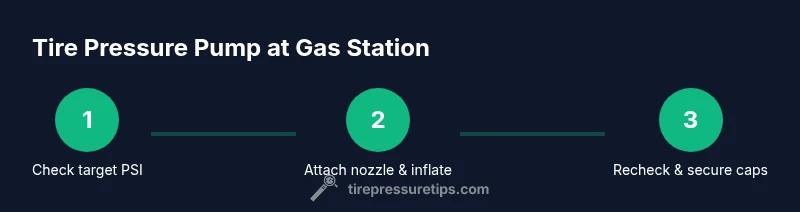
By the end of this guide, you will safely use a tire pressure pump at a gas station, read the built-in gauge or a handheld gauge, and inflate to your vehicle’s recommended PSI. Gather your vehicle’s PSI spec, the pump’s gauge, and a steady hand to avoid over-inflation or underinflation. This quick answer previews the essential steps and safety checks you’ll perform.
Why Gas-Station Tire Pressure Checks Matter
Maintaining correct tire pressure is a cornerstone of safe driving, optimal fuel economy, and longer tire life. Gas stations are convenient partners for routine pressure checks, especially if you don’t own a personal air gauge. According to Tire Pressure Tips, regular pressure checks at gas stations help drivers keep tires in optimal condition, reduce uneven wear, and support better handling in wet or slippery conditions. In practice, you’ll benefit from knowing your vehicle’s recommended PSI, understanding how the pump gauge works, and recognizing when to stop inflating to avoid over-inflation.
When you check pressure on a gas station pump, you’re not just filling air—you’re validating a critical part of your vehicle’s safety system. Underinflated tires are more prone to heat buildup, poor grip, and increased rolling resistance, which costs fuel and accelerates wear. Overinflated tires can lead to a harsher ride and uneven tread wear. The goal is a stable, even contact patch and consistent handling across speeds and conditions.
The Tire Pressure Tips approach emphasizes a calm, methodical process: confirm the target PSI, measure accurately, inflate in small increments, and recheck after inflation. These steps reduce guesswork and help you avoid common mistakes. By adopting this routine, you’ll also be better prepared for temperature-driven pressure changes that occur with daily driving.
Your first gas-station check should be quick and routine. As you gain familiarity, you’ll build muscle memory around where to locate the gauge, how to seal the nozzle, and how to compare readings against the placard on your door jamb. This isn’t just about filling air—it’s about maintaining safe, efficient tires over the long term.
note1_subheading_1_1Technicals audience to keep in check
note1_subheading_1_2
Tools & Materials
- Gas station air pump(Ensure the unit displays PSI and has a working gauge.)
- Tire pressure gauge (handheld)(If the pump lacks a gauge, use a handheld gauge to confirm readings.)
- Vehicle PSI specification (door placard or owner’s manual)(Use the cold PSI as your target; values vary by tire and vehicle.)
Steps
Estimated time: 8-12 minutes
- 1
Prepare by locating the target PSI
Locate your vehicle’s recommended tire pressure on the door placard or in the owner’s manual. Use the cold PSI value as your baseline because tire pressure rises with heat from driving. If you drive a family sedan, crossover, or truck, the target may differ by axle. Confirm the numbers for both front and rear tires as needed.
Tip: Check all four tires, since front and rear pressures can differ. - 2
Read the current pressure
Before inflating, read the current PSI with a handheld gauge or the gas pump’s built-in gauge. If you must reuse the pump’s gauge, cross-check with your own gauge for accuracy. Remember: readings are most accurate when tires are cold.
Tip: Wipe the valve stem and gauge connection to remove dirt that can skew readings. - 3
Prepare the valve and nozzle
Remove the valve cap and inspect the valve stem for damage, dirt, or debris. Clean the stem if needed and ensure the area around the valve is dry to seal properly.
Tip: A dirty or damaged valve stem can cause leaks or inaccurate readings. - 4
Attach and inflate gradually
Press the nozzle onto the valve stem firmly and start inflating in small increments. Pause to read the gauge after every small burst of air to avoid overshooting the target.
Tip: Don’t rush; small, controlled inflations help you hit the target PSI precisely. - 5
Set to the target PSI and verify
When you approach the target, stop inflating and verify with the gauge. If your pump auto-stops, re-check the final pressure with your handheld gauge to confirm accuracy.
Tip: If the pump stops before the target is reached, top off slowly with short bursts and re-check. - 6
Repeat for the other tires and seal
Repeat the steps for the remaining tires, ensuring each tire reaches its respective target PSI. Replace the valve caps securely to keep dirt out and prevent slow leaks.
Tip: Replace valve caps tightly after inflating to maintain accuracy and cleanliness.
Frequently Asked Questions
Should I inflate to the maximum PSI listed on the tire sidewall?
No. Use the vehicle manufacturer’s recommended PSI, typically found on the door placard or owner’s manual. The maximum PSI on the sidewall is a limit, not a target.
No, inflate to the recommended PSI on your door placard or manual, not the max sidewall pressure.
Why might my gauge read differently from the pump display?
Gas station pumps can have fluctuating readings or built-in gauges. Cross-check with a handheld gauge for accuracy.
Pumps can differ; always verify with your own gauge.
What if the pump doesn’t have a gauge?
Rely on your handheld gauge. Inflate in small increments and recheck pressure as you go.
If there’s no gauge on the pump, use your own gauge and inflate slowly while checking.
Is it safe to inflate if I hear hissing or feel air escaping?
Stop immediately, reseat the nozzle, and check for leaks. Do not continue inflating if the seal is compromised.
If you hear air escaping, stop and fix the seal before continuing.
When should I check tire pressure—cold or warm tires?
Check when tires are cold for accuracy. After driving, PSI rises; wait for tires to cool before rechecking.
Check tires when cold; heat from driving changes the reading.
Watch Video
What to Remember
- Know your target PSI before inflating
- Use a gauge to verify pressure after inflation
- Inflate in small increments to avoid over-inflation
- Recheck all tires for consistent pressure