How to Put Air Pressure in Tyres: A Practical Guide
Learn how to put air pressure in tyres correctly with a practical, step-by-step approach. Find the right PSI using a reliable gauge, follow manufacturer guidance, and maintain tyre health with Tire Pressure Tips.


In this guide you’ll learn how to put air pressure in tyres safely and accurately. Start with cold tyres, locate your vehicle’s recommended pressure on the door jamb sticker or owner’s manual, and use a reliable gauge and inflator. This approach helps improve fuel efficiency, tyre life, and TPMS accuracy. According to Tire Pressure Tips, accuracy matters at every fill.
Why correct tyre pressure matters
Maintaining the correct tyre pressure is essential for safety, efficiency, and tyre longevity. When tyres are inflated to the recommended level, handling and braking respond more predictably, and uneven wear is less likely. Tire Pressure Tips emphasizes that accuracy matters at every fill. Consistency across all tyres helps prevent surprises on the road, and a routine check can improve fuel economy and overall vehicle performance. Factors such as load, temperature, and driving style affect pressure, so regular checks are worth your time. By building a simple habit around cold-tyre readings and manufacturer specs, you set a solid foundation for safe, economical driving. According to Tire Pressure Tips, keeping tyres within the recommended range reduces variability in braking and cornering, even on wet or windy days.
For drivers who share cars or have multiple wheel sets, a balanced approach to tyre pressure supports even wear and predictable handling. A small difference between tyres can alter steering feel and braking confidence, especially in adverse conditions. In short, the time you invest in checking and adjusting pressure today pays off in safer, more comfortable driving tomorrow. The Tire Pressure Tips team recommends making cold-tyre checks a regular habit to avoid surprises on the road.
Tools & Materials
- Tire pressure gauge (digital or dial)(Calibrated & recently checked for accuracy)
- Air compressor or inflator with built-in gauge(Home unit or gas-station pump with gauge)
- Valve caps (spares)(Keep handy in case a cap is lost)
- Door jamb sticker or owner’s manual(Used to locate the recommended PSI for each tyre)
- Rag or cloth(Wipe valve stem to ensure a clean reading)
- Notebook or app to log readings(Helpful for long-term maintenance)
Steps
Estimated time: Total time: 20-30 minutes
- 1
Check tyres cold and locate recommended pressure
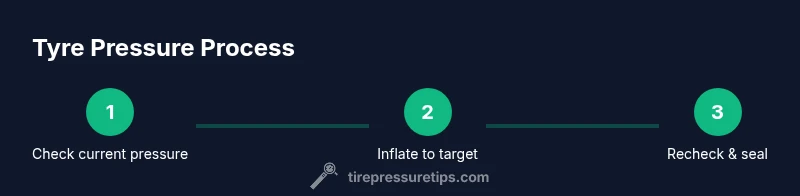
Park in a shaded area and ensure tyres are cold before reading. Use the door jamb sticker or the owner’s manual to find the recommended pressure for each tyre — front and rear can differ. Knowing the exact target helps you avoid under- or over-inflation.
Tip: If you’ve just driven, wait at least 3 hours or 5–6 miles before taking a reading to let the tyre temperature stabilize. - 2
Gather your tools and prepare the area
Lay out your gauge and inflator in a comfortable, flat workspace. Remove valve caps from all tyres you plan to check; keep caps safe so you don’t lose them. Having everything ready reduces the chance of rushing and making reading errors.
Tip: Check gauge accuracy by comparing readings on a known-psi object if available. - 3
Remove the valve cap and inspect the stem
Twist off the valve cap and inspect the valve stem for damage, dirt, or corrosion. A damaged valve will give false readings or leak air after inflation. If you see damage, refrain from inflating and seek professional help.
Tip: Wipe the stem with a rag before attaching the gauge to ensure a clean seal. - 4
Attach the gauge and read the current pressure
Firmly place the gauge on the valve stem and read the pressure value. If you’re using an inflator, follow its built-in readout for the current pressure. Record the reading for accuracy against the target.
Tip: Ensure the gauge seal is airtight; a loose fit yields erroneous readings. - 5
Inflate gradually to the target pressure
If the current pressure is below the target, add air slowly and repeatedly check the gauge as you approach the target. Do not rush—over-inflation is harder to correct. Leave the tyre just below the target, then recheck after a short pause.
Tip: Over-inflation can risk tyre sidewall damage; aim for a precise target rather than assuming a small cushion is safe. - 6
Recheck pressure after inflation
With the tyre at the target level, remove the inflator and recheck to confirm accuracy. Reattach the valve cap to keep dust out and protect the valve stem. Repeat the process for any other tyres as needed.
Tip: Check while the vehicle is on level ground to avoid reading errors caused by slope. - 7
Finalize and record readings
Replace all valve caps and jot down the final readings for your records. If your tyres show persistent deviations from the recommended range, consider professional inspection for leaks or worn components.
Tip: Keep a simple log—monthly checks help you spot gradual changes early.
Frequently Asked Questions
What is the difference between cold and hot tyre pressure?
Cold tyre readings reflect the pressure when the tyre is at ambient temperature, before driving. Hot readings are higher due to heat generated by driving. Always compare measurements to the cold-rated specification.
Cold readings are your baseline; avoid inflating based on hot readings as they will understate the cold target.
Where can I find the recommended tyre pressure for my car?
Refer to the door jamb sticker on the driver’s side, or the owner’s manual. If you can’t locate it, check the manufacturer’s website or contact a dealer.
Check the sticker on the door frame for the correct PSI for each tyre, front and rear.
What happens if I overinflate my tyres?
Overinflation can reduce traction, increase wear in the centre of the tread, and make the ride harsher. Always aim for the manufacturer’s recommended range.
Overinflating can make the ride stiff and reduce grip on wet surfaces.
Can I rely on TPMS to tell me when to inflate?
TPMS alerts under-inflation or over-inflation, but it’s best to verify with a gauge. Sensors may lag or be impacted by temperature.
TPMS warns you, but a manual gauge confirms the exact pressure.
Is it better to inflate at home or at a gas station?
Both options work, as long as you use a reliable gauge and record readings. Home inflators give control and convenience, while gas stations offer power for larger jobs.
Either place works if you have a good gauge and correct target pressure.
Should I use nitrogen or regular air to fill tyres?
Regular air is sufficient for most drivers. Nitrogen can help with consistent pressure in some conditions but isn’t a substitute for regular checks.
Nitrogen isn’t necessary for everyone; regular checks keep tyres safe.
Watch Video
What to Remember
- Check tyres when cold before inflating
- Use a calibrated gauge for accuracy
- Follow the vehicle sticker for target PSI
- Recheck after driving a short distance
- Maintain a regular pressure-check routine