How to Check Tire Pressure on Dashboard: A Practical Guide
Learn how to read and verify tire pressure from the dashboard TPMS, use a gauge, and maintain proper PSI for safety and efficiency. Practical steps, tips, and common mistakes from Tire Pressure Tips.


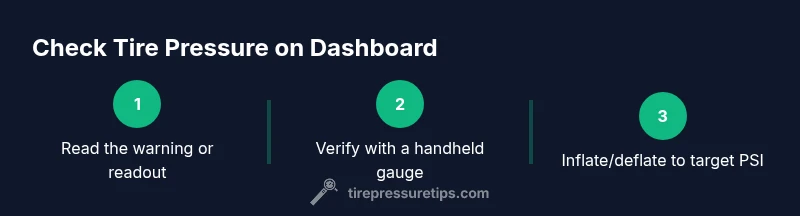
By the end of this guide, you’ll know how to check tire pressure on dashboard readings accurately, confirm them with a physical gauge, and adjust to the vehicle’s recommended PSI. You’ll learn how TPMS signals different conditions, what to do with a warning, and when to inspect tires for leaks or wear. This process helps safer driving and better fuel efficiency.
Why Checking Tire Pressure on Dashboard Matters
Maintaining correct tire pressure improves safety, fuel efficiency, and tire wear. Learning how to check tire pressure on dashboard helps you catch slow leaks, uneven wear, and sensor issues before they become costly problems. According to Tire Pressure Tips, relying solely on visual inspection or a rough guess can miss subtle pressure changes that affect handling and braking. This is a practical habit that pays off at highway speeds and in varied weather.
- Safety first: Underinflated tires reduce grip and increase the risk of blowouts, especially in hot weather or at highway speeds.
- Efficiency and cost: Properly inflated tires minimize rolling resistance, improving mpg and reducing uneven wear.
- TPMS basics: The dashboard light or readout signals a pressure deviation; knowing how to interpret it helps you act quickly.
Understanding dashboard signals is part of everyday vehicle maintenance. Regular checks complement monthly tire inspections and seasonal tire rotations. The Tire Pressure Tips team emphasizes a practical approach: verify dashboard alerts with a tactile gauge to confirm the actual pressure, then adjust accordingly.
How the TPMS Signals and PSI Are Shown on the Dash
Most modern vehicles use a tire pressure monitoring system (TPMS) to alert you when a tire’s pressure deviates from the recommended level. The dashboard may show a warning light, a numeric readout, or a combined indicator. The TPMS uses sensors in each tire and sometimes a central sensor on the vehicle; readings can be affected by temperature, load, and driving conditions. Tire Pressure Tips emphasizes that dashboard signals are indicators, not a replacement for actual measurement. Use the dashboard as a first alert, then verify with a handheld gauge to confirm the precise pressure.
Interpreting the Readout: Numbers, Units, and Warnings
When you read the dashboard, you may see numbers in psi or
Reading Dashboard Warnings Without Guesswork
A dashboard warning should trigger a practical sequence: note which tire is indicated, then check the tire’s pressure at that location. If the readout shows a single tire, focus on that one; if it shows multiple values, compare each tire’s pressure when cold. Temperature changes, recent inflation, or adding loads can shift readings. In all cases, aim to verify any reading with a physical gauge before making changes, and remember to reset or acknowledge warnings according to your vehicle's procedure.
Verifying Readings with a Handheld Gauge
To confirm the dashboard reading, use a tire pressure gauge on all four tires. Check when the tires are cold (at least a few hours since last drive) for the most accurate measurement. Remove the valve cap, press the gauge onto the valve stem, and note the pressure. If a tire is low, inflate in small increments and recheck several times. After inflating, recheck all tires to ensure the entire set meets the manufacturer’s recommended PSI.
What to Do If a Reading Is Low or High
If a tire reads low: inspect for leaks, punctures, or a damaged valve stem; consider a professional inspection if you detect nail holes or rapid deflation. If a tire reads high: avoid overinflation, which can cause reduced contact patch or a harsh ride. Always refer to the door jamb sticker or owner’s manual for the target PSI, and adjust using a quality air source. After changes, recheck with a gauge and drive short distances to settle the tires, then recheck again.
Best Practices for Ongoing Tire Pressure Maintenance
Keep a simple log of each tire’s pressure and any changes you notice. Check pressure at least once a month and before long trips, especially in extreme temperatures. In cold weather, tire pressures can drop; in heat, they can rise. Use a consistent gauge to avoid fluctuating readings, and calibrate or replace TPMS sensors if the dash readings seem unreliable. Incorporate tire pressure checks into your regular maintenance routine, so you avoid unsafe driving conditions and costly repairs.
Tools & Materials
- Tire pressure gauge(Choose digital or analog; ensure it reads in psi)
- Vehicle owner’s manual or door jamb PSI sticker(Locate the manufacturer recommended PSI for front/rear tires)
- Air pump or compressor(Station or portable, capable of precise PSI adjustment)
- Valve caps and soap solution(Soap for leak detection around valve stems)
- Notebook or digital log(Record readings and dates for trend tracking)
Steps
Estimated time: 15-25 minutes
- 1
Turn on dash and locate TPMS readout
With the ignition on, locate the TPMS indicator or readout on your dashboard. Note whether the system shows a warning, a single tire value, or a combined pressure display. This step sets the context for your verification.
Tip: If the warning is on, identify which tire is implicated from the dashboard symbol or message. - 2
Check the target PSI in the manual or sticker
Find the recommended PSI for your vehicle, usually on the driver’s door jamb label or in the owner’s manual. Confirm whether the dashboard uses psi or kPa and which tires (front/rear) the target PSI applies to.
Tip: Always use the correct tire location (front vs rear) when comparing numbers. - 3
Prepare a handheld gauge for verification
Grab a reliable tire pressure gauge and ensure it’s in good working order. Remove the valve cap and prepare to take cold readings for best accuracy.
Tip: If you’ve driven recently, wait at least 3 hours for a cold measurement. - 4
Measure each tire and compare to the dashboard
Press the gauge onto the valve stem squarely and note the reading. Compare the gauge reading with the dashboard’s indicated pressure for the same tire. If they differ significantly, rely on the gauge as the accurate value.
Tip: Record deviations to track changes over time. - 5
Inflate or deflate to the target PSI
Add or release air in small increments (about 1-2 PSI at a time), then recheck with the gauge. Continue until all tires meet the target PSI. Recheck after inflation to ensure stability.
Tip: Avoid overshooting; small adjustments are safer and more precise. - 6
Reset TPMS (if required) and re-check
Some vehicles require a TPMS reset after inflating. Follow the owner’s manual to reset, then drive briefly and recheck all four tires.
Tip: If the light stays on, consider sensor testing or calibration by a professional.
Frequently Asked Questions
What does the TPMS warning light mean?
The TPMS warning indicates a deviation from the recommended pressure in one or more tires. It’s a prompt to verify with a gauge and adjust as needed. If the warning persists after inflation, there may be a sensor issue.
The TPMS warning signals tire pressure is off. Check with a gauge and adjust; if it stays on, you may need service for the sensors.
Is the dashboard readout always accurate?
Dashboard readings are useful alerts but are not a substitute for an actual measurement. Always verify with a handheld gauge, especially in cold weather or after inflating.
Dashboard readings help, but verify with a gauge for accuracy, especially in cold weather.
Can I ignore a low reading if the tire looks fine?
Do not rely on appearance. A tire can be underinflated without a visible change. Check with a gauge and inspect for slow leaks or damage.
Don’t rely on how it looks; check with a gauge and inspect for leaks if it’s low.
Should I check tire pressure when tires are hot or cold?
Check when tires are cold for the most accurate reading. Hot tires often show higher numbers due to recent use.
Check cold for accuracy; hot tires give biased readings.
How often should I check tire pressure?
Check at least once a month and before long trips. Increase frequency in extreme temperatures or after noticeable steering or handling changes.
Check monthly and before long trips, especially in extreme weather.
What if the TPMS keeps flashing after inflation?
A persistent TPMS flash can indicate a sensor fault or battery issue. If it continues after inflation, have the sensor system inspected by a professional.
If it keeps flashing after inflation, get the TPMS system checked.
Watch Video
What to Remember
- Check dashboard readings regularly.
- Verify with a gauge for accuracy.
- Follow the vehicle’s recommended PSI.
- Adjust and re-check to confirm.
- Maintain tires to improve safety and efficiency.