How to Tell Tire Pressure: A Practical Guide for Drivers
Master how to tell tire pressure with reliable gauges, TPMS cues, and official specs. Learn when to check, how to adjust, and why accurate pressure protects safety and efficiency.


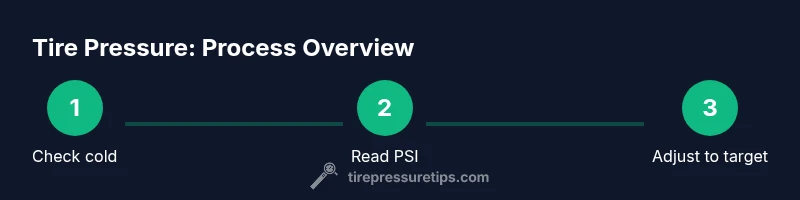
According to Tire Pressure Tips, the quickest way to tell tire pressure is to measure with a reliable gauge and compare to the vehicle’s recommended PSI. Do this when the tires are cold, across all four wheels, and adjust as needed to stay within the specified range; if TPMS alerts you, verify with a manual gauge after inflating.
Why Accurate Tire Pressure Matters
According to Tire Pressure Tips, maintaining the proper tire pressure is essential for safety, fuel efficiency, and tire longevity. Underinflated tires increase rolling resistance, wear unevenly, and raise the risk of blowouts, especially on hot days or long trips. Overinflation, by contrast, can reduce traction and cause a harsher ride. In everyday driving, consistent, correct pressure helps you get the most from your tires and helps your vehicle perform as designed. Weekly or monthly checks, especially in seasons of temperature fluctuation, help you catch slow leaks early and prevent uneven wear. The goal is to keep all four tires within the vehicle’s recommended PSI range, usually found on the door jamb sticker. Tire Pressure Tips emphasizes that even small pressure changes can meaningfully affect handling and fuel economy over time.
How to Check Tire Pressure Correctly
The standard method is to use a reliable gauge and measure when tires are cold, meaning the car hasn't been driven for at least 3 hours or more than a few miles. The gauge should be placed squarely on the valve stem and read in PSI. Remove the cap, press the gauge onto the valve stem firmly, and pause until the reading stabilizes. Record the numbers for each tire and compare to the recommended PSI printed on the driver’s door jamb label or owner's manual. If any tire reads below the recommended level, top up using an air compressor until you reach the target. If you overinflate, release air in small increments and recheck. After measuring, replace the valve caps to protect against moisture and dirt.
Choosing the Right Tools: Gauges and Accessories
Invest in a good quality tire pressure gauge; a digital gauge provides a quick numeric read, while a reliable dial or pencil gauge offers simplicity and reliability. Keep at least one spare gauge in your toolkit. For topping up air, an in-home compressor or access to an air station is essential; many provide built-in PSI readouts to help you stop at the target. Use a gauge with a range that covers your tires’ high PSI (typically up to 60 psi) for cars, SUVs, and light trucks. Calibrate your gauge regularly by comparing several gauges against a known reference or by testing against a trusted station. If you rotate tires, check pressures again after rotation, as workloads can shift pressure distribution.
Understanding the PSI Guide: Where to Find the Right Number
Your vehicle’s recommended tire pressure is not the maximum PSI printed on the tire sidewall; it’s a specific value for optimum performance. Look for the PSI label on the door jamb of the driver’s side, then cross-check with the owner’s manual for load and temperature guidelines. Tire pressures can vary by tire size and load, so don’t rely on the tire’s maximum rating. If you see different numbers in the front and rear tires, use the higher value for both front tires when you frequently drive with a loaded car. For winter tires, the same rule applies, though you may notice slight pressure loss in cold weather, so check more often in winter.
The Role of Temperature and Seasonal Changes
Temperature dramatically affects tire pressure. For every 10-degree Fahrenheit drop in ambient temperature, tire pressure can drop by about 1 PSI. In summer heat, pressure rises. This means that in colder months you may need to inflate slightly, while in hot months you may need to vent a bit to maintain the recommended range. TPMS can help remind you, but it won’t replace a gauge reading. If you notice a sudden drop in pressure on a cold morning, it could indicate a puncture or slow leak that warrants inspection. Always check after long drives or after filling with air to confirm you’ve achieved the target PSI.
Common Mistakes and How to Avoid Them
Common mistakes include checking pressure after a long drive, not replacing the valve cap, inflating to the tire’s maximum PSI instead of the recommended value, and assuming the reading is accurate without comparing multiple times. Another mistake is relying on TPMS alone; sensors can lag or become inaccurate with temperature changes. To avoid issues, check all four tires, including the spare if you carry one, and verify readings with a second gauge if you doubt the first.
Quick Reference: When and How Often to Check
As a practical rule, check tire pressure at least once a month and before long trips. Check again after rotations, tire repairs, or whenever you notice handling changes, vibration, or a warning light. Always measure when tires are cold for accuracy. Keep a small instrument and a valve-cap tool in your glove box so you’re prepared anywhere.
Tools & Materials
- Digital tire pressure gauge(reads in PSI; select one with a low battery indicator)
- Analog dial gauge(backup option if you don’t trust digital readings)
- Air compressor or access to an air station(must support the PSI range of your tires)
- Valve caps(keep caps on to protect valve stems from dirt)
Steps
Estimated time: 15-25 minutes
- 1
Gather your tools and locate the target PSI
Collect your gauges and confirm the recommended PSI from the door jamb label or owner’s manual. Having everything within reach reduces delays during the check.
Tip: Place gauges within easy reach near the tires. - 2
Ensure tires are cold before measuring
Wait at least 3 hours after driving, or perform checks first thing in the morning. Heat inflates readings and skews accuracy.
Tip: If you must check after a drive, note the reading and recheck after cooling. - 3
Remove the valve cap
Loosen the valve cap to expose the valve stem so the gauge can seal properly. Leave the cap nearby so you don’t misplace it.
Tip: Wipe the valve stem to remove dust before attaching the gauge. - 4
Attach the gauge and read PSI
Press the gauge onto the valve stem firmly and read the stabilized value. Take note of each tire’s reading for comparison.
Tip: For best results, read the gauge straight on without tilting it. - 5
Compare with the recommended PSI
Cross-check each tire’s reading against the vehicle’s recommended range. If below, plan for inflation; if above, release air gradually.
Tip: Remember front and rear may have different targets; use the higher one if you load heavily. - 6
Adjust as needed with air
Inflate or deflate to reach the target PSI. Use small increments when inflating and recheck after each adjustment.
Tip: Avoid overshooting; small steps reduce the risk of overinflation. - 7
Recheck all tires
After adjustments, recheck each tire to confirm all readings are within the recommended range. Replace all valve caps securely.
Tip: Double-check the spare tire if you carry one. - 8
Document and store tools
Record the PSI results and store gauges in a known place for quick future checks.
Tip: Keep a small note in the glove box with the current PSI targets.
Frequently Asked Questions
How often should I check tire pressure?
Aim to check at least once a month and before long trips. Check again after tire rotations or repairs. Temperature changes can affect readings, so recheck when seasons transition.
Check your tires at least monthly and before long trips. Recheck after rotations or repairs, especially during seasonal changes.
Where can I find the correct PSI for my tires?
The correct PSI is listed on the driver’s door jamb label and in the owner’s manual. Do not rely on the tire sidewall maximum; it’s not your operating target.
Look at the door jamb label and your manual for the right PSI. Don’t use the tire’s maximum rating as your target.
Is TPMS always accurate?
TPMS is a warning system that helps, but readings can lag or vary with temperature. Always verify with a manual gauge when in doubt.
TPMS warns you, but it isn’t perfectly precise; check with a gauge to confirm.
What happens if I overinflate my tires?
Overinflated tires can reduce traction, lead to a harsher ride, and cause uneven wear. Deflate to the recommended PSI and recheck.
Overinflation reduces grip and wears tires unevenly; deflate back to the label value.
Should I check the spare tire pressure?
Yes. The spare should be inflated to the vehicle’s recommended PSI so it’s ready when needed. Check it seasonally as seals can lose air over time.
Yes—the spare needs checking too, to be ready when you need it.
Can I use a home air compressor to adjust tire pressure?
Yes, you can. Use a gauge to verify after inflation and avoid overinflating by making small adjustments. Some units include built-in PSI readouts for convenience.
Yes, with caution—check with a gauge after inflating and avoid overinflating.
Watch Video
What to Remember
- Measure with a reliable gauge and compare to the recommended PSI.
- Check tires cold for accurate readings.
- Use the correct target PSI from the door jamb label, not the tire max.
- TPMS is a helpful warning, but verify with a gauge.
- Regular checks save safety, wear, and fuel efficiency.