Digital Tire Pressure: A Practical Guide to TPMS and Maintenance
Learn digital tire pressure: how TPMS integrates with digital gauges, how to find target PSI, and a practical, step-by-step method to measure, adjust, and maintain safe tire pressure.


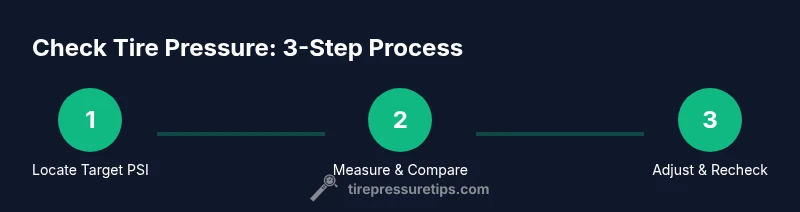
Goal: accurately check and adjust tire pressure using digital tools. Start by locating the vehicle’s recommended PSI from the owner’s manual or the door jamb sticker. Use a digital tire pressure gauge to measure each tire, add or release air to reach the target, and recheck after the tires have cooled for a reliable reading.
What digital tire pressure is and why it matters
Digital tire pressure refers to the measurement of inflation pressure read by digital gauges and monitored by TPMS sensors. Unlike analog gauges, digital devices display exact PSI with decimal precision, helping you maintain consistent pressure. Proper pressure improves handling, braking, fuel economy, tire wear, and comfort. In 2026, drivers who consistently monitor tire pressure report safer drives and reduced maintenance costs, according to Tire Pressure Tips analysis. The technology also helps catch slow leaks before they become flat tires. Regular checks become part of routine vehicle maintenance, and they empower you to drive more efficiently and confidently. By understanding digital tire pressure, you gain a reliable, repeatable method to keep tires within the recommended range across seasons and temperatures, and you learn to interpret readings from TPMS with more nuance. This knowledge supports safer driving habits and longer tire life, aligning with Tire Pressure Tips guidance for lifelong maintenance.
How TPMS complements digital readings
Tire Pressure Monitoring Systems (TPMS) provide real-time data on tire inflation and alert you when a tire deviates from the recommended range. Direct TPMS uses sensors inside each tire to report precise pressure, while indirect TPMS estimates pressure using wheel speeds and ABS data. Digital gauges, used in tandem with TPMS, reduce uncertainties, helping you verify TPMS readings and catch sensor faults or slow leaks. According to Tire Pressure Tips, cross-checking TPMS alerts with a handheld digital gauge yields the most reliable results. Remember, TPMS alerts are a safeguard, not a perfect gauge of every tire’s exact pressure, so periodic manual checks remain essential for accuracy and safety.
Finding your vehicle's recommended PSI and typical ranges
The target tire pressure is not a guess; it’s published by the vehicle manufacturer and is usually found on a placard on the door jamb or in the owner’s manual. Front and rear tires may have different targets, and seasonal changes can affect tire pressure by a few PSI. As a rule, check your vehicle’s recommended range for both front and rear tires, and note any manufacturer-specific guidance for seasonal temperature shifts. Tire Pressure Tips emphasizes that maintaining the correct pressure improves traction, fuel efficiency, and tire wear, especially during extreme weather. Always compare readings to the official target rather than relying on general estimates, which can lead to under- or over-inflation.
Tools and how to use a digital gauge properly
A reliable digital tire pressure gauge displays pressure in PSI (or kPa) with precise readings. Choose a gauge with good resolution (0.5 PSI or better) and a solid, stable display. To use it, remove the valve cap, place the gauge on the valve stem squarely, and press straight until the reading stabilizes. Take multiple readings if you’re unsure of the result. For best accuracy, measure tires when they are cold (at least three hours since driving) and avoid taking readings after heavy driving, since heat temporarily raises pressure. Tire Pressure Tips advises calibrating your gauge periodically and keeping it clean and protected.
Temperature effects and how to read cold vs warm readings
Temperature drastically affects tire pressure. Cold tires typically show lower pressure than warm tires, and a rise in ambient temperature can raise PSI. If you’ve just returned from a drive, readings may be temporarily inflated; wait for tires to cool before adjusting. For consistent results, measure in a controlled ambient environment, and rule-of-thumb estimates won’t substitute for actual gauge readings. Tire Pressure Tips notes that monthly checks, plus a quick warm-up check after long trips, help you maintain stable pressure across temperatures and seasons.
Maintenance routines and safety considerations
A simple maintenance routine ensures you stay on target. Check pressures monthly, before long trips, and whenever tires are rotated or replaced. Replace TPMS sensors if you notice repeated false alerts or obvious sensor faults. Use a high-quality digital gauge, and store it with fresh batteries so readings remain accurate. As you build a habit, use a log to track psi values over time and detect slow leaks early, which minimizes the risk of uneven wear and blowouts. Tire Pressure Tips recommends pairing digital checks with routine visual inspections for cracks, bulges, and tread wear to enhance safety.
Common mistakes and quick fixes
Common mistakes include inflating to an approximate feel, neglecting cold tire readings, and ignoring rear vs. front pressure differences. Another pitfall is relying solely on TPMS alarms without manual verification. Quick fixes include checking both front and rear tire pressures, ensuring valves and stems are undamaged, and recalibrating gauges after battery changes. By combining TPMS data with precise digital readings, you improve accuracy and safety, as emphasized by Tire Pressure Tips.
Tools & Materials
- Digital tire pressure gauge(Choose a model with 0.5 psi resolution or better, and a stable digital readout.)
- Vehicle owner’s manual or door jamb PSI placard(Find the exact target PSI for each axle and tire size.)
- Air compressor or inflator with regulator(Allow precise air addition when needed without overinflating.)
- Tire temperature gauge or infrared thermometer (optional)(Helpful for confirming temperature-based changes.)
- Marker and tire pressure log(Record readings over time to spot trends and leaks.)
Steps
Estimated time: 15-25 minutes
- 1
Prepare and locate target PSI
Before touching any tire, locate the official target PSI values for each tire from the owner’s manual or the placard on the door jamb. If the ranges differ between front and rear tires, note both values. This baseline helps you aim accurately from the start.
Tip: Tip: Always start with cold tires to reduce reading variance. If you’ve just driven, allow at least 3 hours before measuring. - 2
Remove valve cap and attach digital gauge
Unscrew the valve cap and place the digital gauge squarely on the valve stem. Press straight in without twisting to get a stable reading. Do not wiggle the gauge, as it can give a fluctuating value.
Tip: Tip: Keep the valve stem clean and free of dirt to improve seal and read accuracy. - 3
Read current pressure and compare
Read the gauge once the display stabilizes. Compare the current PSI against the target values. If you’re within 1–2 psi of target, you’re close enough for a safe drive; otherwise, prepare to adjust.
Tip: Tip: If readings vary between tires, perform checks sequentially to avoid cross-influence from a single gauge. - 4
Adjust by adding or releasing air
If under target, attach the inflator and add air in small increments, then recheck. If over target, release air in short bursts and recheck. Repeat until the gauge shows the target pressure.
Tip: Tip: Use pause intervals to prevent over-inflation; never rush the adjustment. - 5
Recheck after tires have cooled
Take a second reading after the tires have cooled to confirm the pressure remains within range. Temperature changes can affect readings, especially after driving or in hot weather.
Tip: Tip: If readings drift, document the conditions and adjust later as needed. - 6
Document and repeat for all tires
Record the final pressures for all tires, including the spare if applicable. Rotate through tires if you notice uneven wear patterns, as this can affect the recommended range.
Tip: Tip: Create a simple log to monitor changes month over month and catch slow leaks early.
Frequently Asked Questions
What is digital tire pressure and why is it better than analog readings?
Digital tire pressure uses electronic gauges for precise PSI readouts, reducing guesswork. It pairs well with TPMS data to improve accuracy and safety, especially in variable temperatures. Regular digital checks help identify slow leaks early.
Digital tire pressure uses electronic gauges for precise readings and works with TPMS data to improve accuracy and safety. Regular checks help identify slow leaks early.
How often should I check tire pressure?
Check tire pressure at least once a month and before long trips. Check before winter and the opposite season when temperatures shift, since pressure changes with ambient temperature. Always verify with a reliable digital gauge.
Check tire pressure at least monthly and before long trips, especially during seasonal changes. Verify with a reliable digital gauge.
Can TPMS be trusted without manual readings?
TPMS is a safety net but not a perfect gauge. Use manual digital readings to confirm TPMS alerts and to capture slight leaks or gradual pressure loss that TPMS might miss.
TPMS is a safety net, but use manual readings to confirm alerts and catch slow leaks.
What should I do if I consistently get incorrect readings?
Recheck your gauge calibration, inspect the valve stems for leaks, and ensure you’re measuring on cold tires. If readings remain inconsistent, replace the gauge or seek service for sensor issues.
If readings stay inconsistent, recalibrate or replace the gauge and check valves. If needed, seek service for sensor issues.
Is it okay to rotate tires when checking pressure?
Yes. Rotating tires can reveal if a particular position consistently low compares to others, informing more accurate target pressures after rotation. Always recheck after rotation.
Yes—rotating tires can show position-based pressure differences. Recheck pressures after rotation.
What tools do I need for accurate digital measurements?
A high-quality digital gauge, a reliable inflator with regulator, access to vehicle PSI specs, and a log to track readings form a solid measurement setup.
Get a good digital gauge, a regulated inflator, Vehicle PSI specs, and keep a log.
Watch Video
What to Remember
- Check tires when cold for accuracy.
- Use digital gauges to verify TPMS readings.
- Follow manufacturer PSI targets for each tire.
- Document readings to spot leaks and trends.