Need Tire Pressure Checked: A Practical How-To Guide
Learn how to safely check tire pressure, understand TPMS alerts, and maintain optimal PSI for safety, fuel efficiency, and tire longevity. A practical, step-by-step guide from Tire Pressure Tips.


By the end, you will know how to check tire pressure accurately, read a gauge, and set PSI to your vehicle’s recommended level. You’ll understand how TPMS alerts fit into the process and how temperature or load can affect readings. This quick guide covers safe, practical steps you can perform at home or at the pump.
Why You Need Tire Pressure Checked
According to Tire Pressure Tips, maintaining proper tire pressure isn't just about avoiding flats—it's a safety and efficiency issue. The phrase 'need tire pressure checked' appears often in routine maintenance, but many drivers underestimate its impact. Correct tire pressure improves grip, braking performance, and fuel economy. Underinflated tires wear unevenly, run hotter, and can cause poor steering response; overinflated tires reduce the contact patch and increase vulnerability to road hazards. Regular checks catch creeping leaks, valve stems issues, and slow punctures before they become expensive repairs. This section explains the practical reasons behind regular checks and how to approach them as part of a simple maintenance routine. By treating PSI accuracy as a baseline, you ensure safer driving, more even tire wear, and better overall vehicle performance.
How Temperature Impacts Tire Pressure
Temperature shifts quietly affect tire pressure. Cold air contracts and warm air expands, so ambient conditions can change the PSI you read on a gauge. A tire that reads correctly after a cool night might read higher after a long hot drive, or lower after a cold snap. The practical implication is clear: check tires when they are cold—before you drive or after they’ve cooled for several hours—and then adjust to the manufacturer’s recommended PSI. If you must check when warm, plan a follow-up check after the tires cool to confirm accuracy. This approach keeps readings meaningful and helps you avoid chronic under- or over-inflation.
Vehicle-Specific Pressures and Where to Find Them
Your vehicle’s door jamb sticker and the owner’s manual list the cold tire pressures for the front and rear tires. Avoid inflating to the maximum printed on the sidewall; that number is the maximum safe pressure, not the target for daily use. Factors such as load, driving speed, and tire size can shift the ideal pressure, so always aim for the manufacturer’s specification unless you have a compelling reason to change (heavy payload, towing, or performance driving). If the sticker is missing, contact the manufacturer or a qualified technician for guidance. Keeping within the recommended range preserves grip, wear patterns, and handling stability.
Essential Tools for an Accurate Reading
Having the right tools makes tire pressure checks quick and accurate:
- A tire pressure gauge (digital or analog) with clear readings
- An air compressor (on-site at a gas station or a portable unit) or access to an air pump
- Your vehicle’s owner manual or door sticker as a reference
- A notebook or mobile note to record readings over time
- A clean valve-cap removal tool or your hands Using a reliable gauge and reading at eye level helps minimize parallax errors and improves your confidence in the readings.
Reading Readouts: Gauge vs TPMS
There are two reliable sources of information for tire pressure: a gauge measurement and the TPMS (Tire Pressure Monitoring System). A gauge gives you an actual PSI reading for each tire, which is essential when tires have been ridden for miles since the last check. TPMS provides a warning when a tire drops significantly below the recommended pressure, but it may not indicate exact PSI. The best practice is to verify the TPMS alert with a manual gauge reading to confirm whether an adjustment is needed. Remember that TPMS readings can be affected by sensor issues or battery life, so periodic checks with a physical gauge remain important.
Step-by-Step: Check Tire Pressure at Home
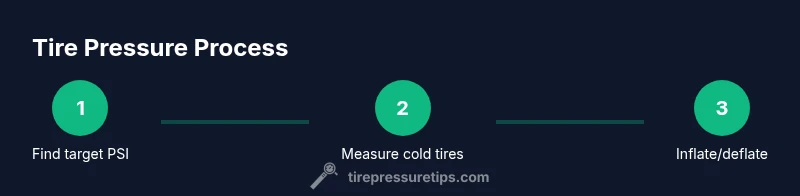
Checking tire pressure at home is straightforward, requiring only a gauge and a couple of minutes per tire. Begin by ensuring tires are cold, locate the recommended PSI, remove the valve cap, attach the gauge, read the pressure, and compare to the target. If readings are low, inflate slowly in small increments and recheck. If readings are high, release air gradually until you reach the target. After inflating or deflating, recheck to confirm accuracy and replace the valve caps. This process helps you catch leaks and maintain optimal tire performance.
Adjusting Tire Pressure Safely: When and How
Adjusting tire pressure is a balance between safety and performance. Inflate or deflate toward the manufacturer’s recommended PSI, avoiding the temptation to reach the maximum listed on the tire sidewall. Temperature, load, and driving conditions all influence what PSI you should maintain. Use a trusted gauge and recheck after a few miles of driving to ensure stability. If you notice rapid changes in pressure, there may be a slow leak or a damaged valve stem that needs professional attention. Regular checks, especially after seasonal changes, can prevent unsafe driving conditions.
Common Mistakes and How to Avoid Them
Common errors include reading a hot tire, inflating to the tire’s maximum pressure, and ignoring the differences between front and rear tire requirements. Another frequent mistake is relying solely on the TPMS without verifying with a manual gauge. To avoid these issues, always check when tires are cold, use a reliable gauge, follow the manufacturer’s PSI targets, and record your readings for future reference. Awareness of these pitfalls reduces tire wear and improves safety.
Maintenance Routine: Scheduling Checks and Rechecks
Create a simple weekly routine for tire pressure checks, integrated into your car’s regular maintenance. Check pressure on all four tires, then record the readings and any changes since the last check. Before long trips or when carrying heavy loads, recheck after the trip or top up pressure as needed. Seasonal shifts—extreme heat or cold—also warrant a proactive check to ensure PSI remains within the recommended range. Small habits add up to safer driving and longer tire life.
Driving Benefits of Proper Tire Pressure
Maintaining the correct tire pressure offers tangible benefits: improved fuel efficiency, better handling, more uniform tire wear, and safer braking. Reducing underinflation improves grip and reduces rolling resistance, while avoiding overinflation preserves grip without increasing susceptibility to road hazards. When you keep tires within spec, you’ll notice steadier steering, shorter stopping distances, and less susceptibility to blowouts on rough roads. Regular checks help you protect your investment, save fuel, and ride more comfortably across seasons.
Tools & Materials
- Tire pressure gauge (digital or analog)(Choose a gauge with clear, easy-to-read readouts and a wide measuring range.)
- Air pump or access to a reliable air compressor(Gas stations or portable pumps work; ensure you know how to use them safely.)
- Owner’s manual or door jamb sticker(Use it to locate the recommended cold PSI for each tire.)
- Notebook or mobile device to log readings(Helpful for tracking PSI changes over time.)
- Valve cap removal tool or clean hands(Keep valve caps clean and replace after reading.)
Steps
Estimated time: Total time: 10-15 minutes
- 1
Find the recommended PSI
Locate the vehicle’s recommended cold tire pressure in the owner’s manual or on the door jamb sticker. This is your target for each tire, and may differ between front and rear tires or by load. Knowing the exact values prevents guesswork.
Tip: If the sticker is hard to read, take a photo with your phone for quick reference. - 2
Check the tires when cold
Make sure the tires haven’t been driven recently. Cold tires give the most accurate readings because heat from driving can temporarily raise the PSI. If you must check after driving, wait at least three hours for tires to cool.
Tip: Check first thing in the morning to minimize temp-related errors. - 3
Remove valve cap and attach gauge
Carefully remove the valve cap and place the gauge on the valve stem. Press firmly so you get an accurate reading. Hold the gauge steadily to avoid air leaks during measurement.
Tip: If using a digital gauge, ensure it is zeroed before taking a reading. - 4
Read and compare to target
Read the PSI on the gauge and compare it to the manufacturer’s numbers. Do this for all four tires to ensure consistency across the set.
Tip: Record each tire’s reading for trend tracking. - 5
Inflate or deflate to target
If readings are low, add air in small increments and recheck. If high, release air gradually until you reach the target, then recheck again.
Tip: Make small adjustments (about 1-2 psi at a time) and recheck. - 6
Seal and recheck after adjustment
Replace the valve caps and recheck that the readings remain stable after a short drive. Confirm that each tire sits at the target PSI.
Tip: Press the valve stem gently to feel for any leaks. - 7
Check spare tire similarly
If you have a full-size spare, treat it the same—ensure it’s inflated to the recommended value to be ready in an emergency.
Tip: Don’t overlook the spare in periodic checks. - 8
Log results and schedule next check
Record the date and PSI values, and set a reminder to check again in a week or before long trips.
Tip: Regular logging helps identify slow leaks early.
Frequently Asked Questions
Why might my TPMS warning light stay on even after I check the tires?
TPMS can stay on due to sensor issues, battery age, or a slow leak that isn’t immediately obvious through a gauge reading. If readings are within the target range but the light remains, have the sensors inspected by a technician.
The TPMS light can stay on because of sensor age or a slow leak; check readings with a gauge and have the system inspected if it stays lit.
Can I check tire pressure when tires are warm?
It's best to check tires when cold for accuracy. If you must check when warm, note the gauge reading and recheck after tires cool to confirm the correct PSI.
Check when cold for accuracy; if you must check when warm, recheck after cooling.
How often should I check tire pressure?
Ideally weekly checks are recommended, with extra checks before long trips or when carrying heavy loads. Seasonal changes are also a good trigger to recheck.
Weekly checks are a good habit, plus before long trips.
What happens if I overinflate my tires?
Overinflation reduces the tire’s contact patch, can cause a harsher ride, and increases risk of damage from road hazards. Always aim for the manufacturer’s target PSI.
Overinflating can reduce grip and ride comfort; stay at the recommended PSI.
Is a digital gauge more accurate than an analog one?
Accuracy depends on the gauge quality rather than the type. A well-calibrated digital gauge can be easier to read, but either type works if it’s reliable.
Both work if accurate; pick the one you trust and read carefully.
Should I check the spare tire pressure too?
Yes, check the spare tire’s pressure and inflate to the recommended value so you’re ready in an emergency.
Don’t forget the spare—make sure it’s properly inflated too.
What to Remember
- Check cold PSI regularly.
- Use the correct target PSI from manufacturer.
- Verify TPMS readings with a gauge.
- Avoid inflating to max PSI on the tire sidewall.
- Log readings to track changes over time.