How Often to Check Tire Pressure in 2026
Discover how often to check tire pressure, why routine checks matter, and a simple plan to stay safe and efficient as temperatures shift throughout the year.


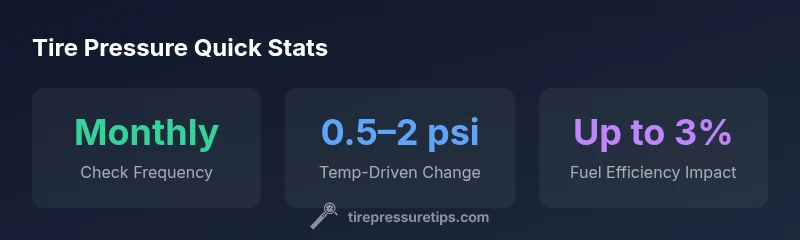
The practical baseline is to check tire pressure at least once a month, and again before long trips or after significant temperature changes. If you drive in extreme heat or cold, daily weather fluctuations can affect pressure by several psi, so more frequent checks help prevent underinflation or overinflation. For new tires or after rotation, recheck within a week.
Baseline safety benefits of properly inflated tires
Proper tire pressure is a foundational safety factor that affects braking, handling, and wear. When tires are within the vehicle manufacturer's recommended range, you maintain a stable contact patch with the road, which improves steering feel and braking performance in wet and dry conditions. Underinflation causes the tire to flex more and run hotter, accelerating wear on the outer edges and increasing the risk of a blowout under heavy load. Overinflation reduces the contact patch at the tread shoulders, leading to a harsher ride and uneven wear in the center. Regularly checking pressure helps you catch slow leaks from nails, faulty stems, or valve issues before they become expensive repairs. In short, consistent, accurate inflation keeps your tires safer, your fuel economy steadier, and your tires wearing more evenly over time.
How often to check tire pressure
The most practical baseline for most drivers is to check tire pressure at least once a month. This cadence aligns with typical tire wear cycles and gives you a steady baseline to compare against. In addition, check before long trips, when carrying heavy loads, or after adding or removing a substantial amount of cargo. Temperature swings—especially in spring and fall—can shift you by a few psi overnight, so a quick check after a cold snap or heat wave helps prevent sudden under- or overinflation. If you have recently replaced tires, rotated wheels, or repaired a puncture, recheck within a week to confirm the pressures have settled to the new baseline.
Temperature and seasonal changes
Tire pressure is temperature sensitive. As outdoor temperatures rise, the air inside tires expands, causing pressure to rise. As temperatures fall, air contracts and pressure drops. Even a modest temperature change can move psi enough to affect handling and tire wear. For most drivers, a routine monthly check plus a quick temperature-led check during seasonal transitions is sufficient. In extreme climates, you may notice a larger swing, which means a frequency bump—from monthly to biweekly checks during the hottest or coldest stretches—can be prudent, especially if you drive on high-speed roads or carry heavier loads.
Vehicle-specific pressure guidelines and TPMS
Your vehicle manual lists the recommended cold tire pressures for front and rear tires, and those values should drive your routine checks. Many modern cars also display a TPMS warning when pressures deviate sufficiently from the baseline. TPMS is a valuable first alert but should not replace a visual and gauge check, because TPMS may be slow to respond to gradual leaks or may rely on sensor accuracy that drifts with time. When tires are cold (before you’ve driven, or after they’ve sat a few hours), check against the manufacturer’s specification. If a TPMS warning persists after correcting to the recommended range, inspect for punctures, valve stem leaks, or a damaged TPMS sensor, and consult a professional if needed.
How to perform a safe, accurate pressure check
Gather a reliable gauge (dial, digital, or stick) and ensure you’re using the vehicle’s cold-pressure specification. Remove the valve cap, press the gauge onto the valve stem firmly, and read the number without rotating the gauge. Compare the reading to the spec, not to the current readings on your dashboard. If readings differ across tires by more than 3–4 psi, check for leaks around the valve stems, bead seating, or damaged tires. If you have a reversible pressure gauge, measure both cold and after a short drive (never rely on peak hot readings). Replace valve caps securely to protect against dust and moisture. Record your baseline and recheck after changes to confirm stability.
Interpreting readings and taking action
A single outlier might be a one-off defect, but persistent deviations suggest a leak or slow loss. Small differences (1–2 psi) are common with temperature changes; treat larger or persistent changes as a maintenance alert. When inflating, aim for the cold-spec number and monitor after driving for a few miles to allow the tires to reach operating temperature. If you notice uneven wear, vibrations, or uneven tread depth, recheck all tires, including the spare, and consider a professional inspection for potential rim, bead, or TPMS issues. Keeping a simple log of pressures for each tire helps you spot trends over weeks and seasons, supporting safer driving and better fuel economy.
Building a simple check routine that fits your schedule
Create a weekly or monthly routine that matches your driving patterns. For example, check once at the start of a workweek and again before weekend trips, alternating between front and rear tires. Use a mobile note or journal to track the date, tire pressures, and ambient temperature. If you commute in a climate with drastic swings, schedule a mid-month check during the most volatile weeks. A consistent routine reduces the guesswork and makes it easier to catch leaks, slow punctures, or TPMS faults early, keeping you safer on the road.
What to do during a tire rotation or replacement
During rotations, recheck all pressures after reassembly to ensure the new baseline is correct, since shoulder wear or traction changes can alter how a tire seats and inflates. After mounting new tires, recheck pressures at least once within the first week; tires settle and may lose a few psi as they break in. When replacing tires, confirm the sidewall markings, load index, and speed rating, and ensure the inflation target matches the vehicle spec. A quick post-change pressure check protects your new tires and helps you avoid over- or underinflation as the tires bed in.
Frequency recommendations by driving pattern
| Scenario | Suggested Check Frequency | Notes |
|---|---|---|
| Daily driver | Monthly + before long trips | Also check after long road trips or tire changes |
| Occasional driver | Monthly | Ideal baseline for safety |
Frequently Asked Questions
How often should I check tire pressure?
Baseline checks should be done monthly, with additional checks before long trips or after temperature swings. If you notice a TPMS alert or an obvious change in ride feel, check immediately. Regular checks are part of safe, economical driving.
Check monthly, plus before long trips or after temperature swings. If the TPMS lights up or the ride feels different, check right away.
Is it okay to check tire pressure when tires are warm?
No. Check tire pressure when the tires are cold, ideally after they’ve sat for at least three hours. Driving heats tires and raises the pressure, which can give a falsely high reading.
Check when cold, after the tires have sat for a few hours.
Can I check tire pressure myself at home?
Yes. Use a reliable gauge, know your vehicle’s cold-spec, and compare the reading to the spec. Practice makes perfect, and keeping a log helps you spot gradual leaks.
Absolutely—use a gauge, know the cold spec, and log readings to spot trends.
What should I do if TPMS warns but the gauge shows normal pressure?
Recheck all tires with a gauge, inspect for leaks or damaged stems, and consider sensor drift or a faulty TPMS receiver. If the tire pressures are correct, you may needTPMS service.
Double-check with a gauge, look for leaks, and if readings are steady, TPMS may need servicing.
How does temperature affect tire pressure?
Temperature changes affect air density, so psi can rise in heat and fall in cold. Plan checks around seasonal shifts to avoid large discrepancies.
Temperature changes can shift psi; check more often during seasonal shifts.
Should I check the spare tire pressure too?
Yes. The spare is part of the tire set and should be inflated to the recommended pressure. Check it periodically because a flat spare defeats the purpose of a ready-to-use tire.
Don’t forget the spare—the same rule applies so you’re ready when needed.
“Maintaining correct tire pressure is one of the easiest, most impactful safety habits a driver can adopt.”
What to Remember
- Check tire pressure monthly to establish baseline
- Recheck before trips with heavy loads
- Account for temperature changes
- Use TPMS readings as a guide, not sole source
- Log changes and wear for maintenance