Check Your Tire Pressure Every: A Practical Driver's Guide
Learn how to check your tire pressure every week or before trips, understand PSI basics, and keep tires healthy with easy steps, tools, and safety tips from Tire Pressure Tips.


Goal: Learn to check your tire pressure every week or before road trips, using a gauge or TPMS, and adjust to your vehicle’s recommended PSI. This quick answer outlines why proper pressure matters, the essential tools, and the safety and efficiency benefits of consistent tire maintenance. Following these steps reduces uneven wear, improves fuel economy, and shortens stopping distances.
Why Checking Tire Pressure Matters
According to Tire Pressure Tips, keeping tires correctly inflated is a simple, powerful way to improve safety, efficiency, and tire life. check your tire pressure every week or before road trips to catch slow leaks or slow pressure loss before it becomes a safety hazard. When tires run underinflated, braking distances lengthen, fuel economy drops, and uneven wear accelerates, especially on front tires. The Tire Pressure Tips Team emphasizes consistency; small PSI changes add up across hundreds of miles. In practice, you should make pressure checks part of your routine, just like checking oil or topping up windshield washer fluid. The goal is not to chase a perfect number every time, but to maintain readings close to the vehicle manufacturer’s recommended range on the door placard or in the owner's manual. Regular checks also help you notice TPMS alerts early, before you notice unusual handling. This approach reduces risk and makes your drive more predictable.
How Pressure Affects Handling, Safety, and Fuel Economy
Tire pressure influences how the tire contacts the road, how the vehicle responds in corners, and how efficiently the engine uses fuel. Overinflated tires create a stiff ride and a smaller contact patch, which can hinder braking performance on wet pavement. Underinflated tires increase rolling resistance, cause heat buildup, and wear the outer edges of the tread faster. In both cases, steering feel can become unpredictable, especially at highway speeds or during rapid maneuvers. By keeping tires near the recommended PSI, you help the tire maintain a consistent footprint, which improves wet grip, reduces hydroplaning risk, and supports even wear. Practical checks also catch slow leaks from nails or vent stems, preventing sudden pressure drops on long trips. Remember that ambient temperature affects readings: a cold morning will show lower numbers than a hot afternoon. Baseline checks at similar temperatures give you the most reliable trend. The Tire Pressure Tips analysis notes that consistent pressure correlates with more stable fuel economy and predictable handling across different driving conditions.
Reading and Interpreting Your PSI: Cold vs Hot Tires
The most accurate tire pressure readings come when the tires are cold, ideally after the car has sat for several hours. Driving heats tires and inflates the air inside, which yields higher numbers that do not reflect the normal operating pressure. If you have driven recently, wait at least 3 to 5 minutes for the tires to cool before testing, or test first thing in the morning. Use your gauge to read each tire, including the spare if you want a complete picture. Note readings for tone and consistency, then compare against the vehicle placard values. If you see a persistent discrepancy of more than a few PSI, inspect for leaks, valve damage, or a faulty TPMS sensor. Simple adjustments can restore correct pressure; however, avoid guessing by inflating to guesswork. The goal is to approach the recommended PSI gradually and recheck after the adjustment to confirm stability.
Where to Find the Correct Pressures for Your Vehicle
Your vehicle manufacturer specifies a safe pressure range that the tires should maintain. The easiest place to confirm is the door jamb placard on the driver's side, which lists cold PSI for each tire. If the placard is missing, consult the owner's manual or the manufacturer website for the exact numbers. Do not rely on the tire sidewall maximum pressure as a target; the max is a limit, not the recommended operating pressure. If you drive with varying loads or speeds, use the numbers that correspond to your typical load and climate. In practice, you should adjust seasonally for temperature changes or when you switch to a different tire size. The readings you obtain should remain within a narrow window around the recommended value. Tracking your numbers over time helps you notice slow changes that indicate a slow leak or a mounting issue.
Tools You Need to Check Tire Pressure and Keep It Consistent
Having the right tools makes tire pressure checks quick and accurate. Start with a reliable gauge, ideally a gauge that you use consistently to minimize measurement variation. A digital tire pressure gauge provides a clear readout, while a good analog gauge can be just as accurate when read carefully. An air compressor or access to an air pump is essential to adjust the pressure on the spot. Keeping a small notebook or digital log helps you track readings over weeks and seasons, so you can notice trends like gradual loss or sudden spikes. It also helps to record the exact PSI you target for your vehicle. Finally, remember to carry a spare valve cap and a basic tire repair kit for emergencies. Admittedly, this is not glamorous work, but it pays off in safer trips and better tire longevity, especially when you drive in extreme temperatures or heavy traffic.
Step-by-Step Overview: How to Check Tire Pressure Correctly (Preview)
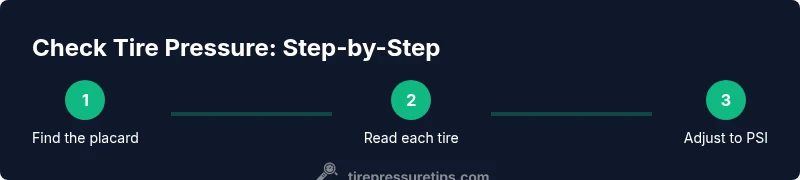
This section previews what you will do in the full step-by-step guide. You will gather your tools, locate the correct pressures, check each tire when cold, adjust to the recommended level, and re-check to confirm stability. You will also verify the spare and inspect the valve stems for damage. By following a routine, you minimize surprises during winter trips or road adventures. The focus is on accuracy, not speed; a slower, deliberate check yields more reliable results and reduces the chance of underinflation or overinflation.
Common Mistakes and How to Avoid Them
Even experienced drivers make avoidable errors when checking tire pressure. Common mistakes include testing after a drive, using the wrong gauge, inflating to the tire sidewall maximum, or neglecting the spare. Another frequent misstep is ignoring ambient temperature effects; readings in hot weather tend to be higher than cold readings. To avoid these issues, always test when tires are cold, use a calibrated gauge, and refer to the placard rather than the maximum PSI printed on the tire. If you notice readings that do not seem to align with the expected numbers, inspect for leaks around the valve stem, bead, and rim. If a TPMS alert persists after inflation adjustments, schedule service to verify sensor calibration and correct any faulty components.
The Role of TPMS and When to Calibrate or Reset
Tire Pressure Monitoring System sensors provide a quick warning when a tire’s pressure deviates from the recommended range. TPMS is an excellent safety net, but it should not replace regular hands-on checks with a gauge. If you notice repeated discrepancies between the gauge reading and the TPMS warning, there may be a sensor fault or a leak near the valve stem. Calibration or replacement might be necessary, and many vehicles require a service visit to complete TPMS resets. Some vehicles allow you to reset the system yourself, but others require a dealer or certified mechanic. In all cases, a gauge-based check is your ground truth and the TPMS should be used as a supplementary cue rather than a replacement for manual measurement.
Creating a Simple, Consistent Schedule for Check-Tire-Pressure Routines
Consistency is easier when you weave tire pressure checks into your regular car care cadence. Choose a fixed cadence: weekly, or before long trips and seasonal changes. Pair the pressure check with another routine task such as fueling or windshield wiper checking to build habit. Keep the recorded readings in a simple log and review it monthly to spot patterns. Temperature can shift pressures by several PSI over the season, so you may need to recheck after the first cold snap or heat wave of the year. A routine approach reduces the risk of driving with underinflated tires and helps you detect slow leaks caused by nails, cracks, or damaged valves. If you share a car with other drivers, post the recommended pressures in a visible location to avoid confusion.
Final Notes: Maintaining Tire Pressure for Safety and Longevity
Maintaining proper tire pressure is a foundational aspect of vehicle safety and efficiency. A little time each week or before trips goes a long way toward keeping you protected and reducing maintenance costs. The routine improves braking, steering accuracy, and tire wear, while also helping your vehicle achieve better fuel economy. The tires operate best when the pressure is within the manufacturer’s recommended range and adjusted for load and temperature. The Tire Pressure Tips Team encourages readers to adopt a simple, repeatable process and to document the readings over time. Remember: small, consistent checks are more valuable than rare, late fixes. The long-term payoff is safer drives, lower fuel use, and longer tire life.
Tools & Materials
- Digital tire pressure gauge(Calibrated, reads to 0.5 psi accuracy)
- Air compressor or access to a gas station air pump(Needed to adjust pressure on the spot)
- Owner’s manual or door placard with cold PSI values(Where to check the correct numbers)
- Notebook or digital log(Record readings for trend analysis)
Steps
Estimated time: 20-30 minutes
- 1
Gather tools and locate recommended pressure
Collect your gauge and air source, then find the official PSI values for your vehicle from the placard or manual. Confirm that tires are cold before measuring for accuracy.
Tip: Use the same gauge consistently to minimize variation. - 2
Check that tires are cold and accessible
Park in a shaded area, stop driving, and wait for at least 10 minutes if you recently drove. Cold tires give the most reliable readings for your baseline.
Tip: If you must test after driving, note that numbers will be higher and plan to recheck when cold. - 3
Read each tire with the gauge
Remove the valve cap, place the gauge on the valve stem, and take a steady reading for every tire, including the spare if you want a complete picture.
Tip: Record readings to compare over time and catch slow leaks. - 4
Adjust to the recommended PSI
If the tire is underinflated, add air in small increments and recheck. If overinflated, release air until you approach the target, then recheck.
Tip: Make incremental adjustments and recheck after each change. - 5
Check the spare and valve stems
Don’t forget the spare and inspect valve stems for cracks or leaks while you’re at it. A faulty valve can cause slow leaks that go unnoticed.
Tip: Replace worn valve caps to maintain a good seal. - 6
Document results and confirm stability
Return to the vehicle after adjustments and recheck all tires to confirm numbers are stable within the recommended range.
Tip: Keep a simple log to spot patterns over weeks and seasons.
Frequently Asked Questions
How often should I check tire pressure?
Check at least once a month and before long trips. If you drive in extreme temperatures or carry heavy loads, check more often. Use the vehicle placard as the baseline.
Check at least monthly and before long trips, adjusting for temperature and load as needed.
Can I rely on TPMS alone?
TPMS provides warnings, but it isn’t a substitute for manual checks with a gauge. It’s possible for sensor errors or slow leaks to throw off readings.
TPMS is helpful, but you should also measure with a gauge to confirm pressure.
Is it unsafe to drive with underinflated tires?
Yes. Underinflation can increase heat buildup, improve risk of blowouts, and reduce handling. Address it promptly and avoid driving long distances on low pressure.
Yes, underinflated tires are riskier and should be corrected as soon as possible.
Should I inflate to the max PSI on the sidewall?
No. The max PSI printed on the sidewall is the maximum safe pressure, not the recommended operating pressure. Always follow the placard values.
No. Don’t use the sidewall max as your target; use the placard values.
What if TPMS and gauge readings disagree?
If readings disagree consistently, inspect for a sensor fault, leak, or valve issue. A professional can calibrate TPMS if needed.
If readings disagree, check for leaks or sensors and consider professional calibration.
Can temperature affect tire pressure?
Yes. Cold temperatures lower PSI readings; hot temperatures raise them. Adjust and recheck as seasons change.
Temperature affects PSI; recheck after temperature shifts.
Do I need to check pressure in the spare tire?
Yes. The spare is part of your readiness kit and should have adequate pressure for emergencies. Check it periodically.
Yes, ensure the spare is properly inflated too.
What tools give the best accuracy for home checks?
A calibrated digital gauge paired with a reliable inflator minimizes variance and makes checks quicker.
A calibrated digital gauge with a good inflator is ideal for home checks.
What to Remember
- Check tire pressure regularly to prevent uneven wear.
- Use a reliable gauge and the vehicle placard values.
- Test when tires are cold for accurate readings.
- Document trends to catch slow leaks early.
- TPMS complements but does not replace manual checks.