Cold Tyre Pressure: Practical Guide for Safe Inflation
A comprehensive, step-by-step guide to checking cold tyre pressure, understanding how temperature affects readings, and maintaining safe inflation for safety, efficiency, and tire longevity.


By the end of this guide, you will confidently check cold tyre pressure, interpret TPMS alerts, and adjust inflation for varying temperatures. You’ll learn the best pressure ranges for most passenger cars, how to measure accurately with a gauge, and how seasonal changes affect tire performance. Follow the step-by-step process for reliable results.
Understanding cold tyre pressure
Your tires are designed to perform best at specific inflation levels when they are cold. Cold tyre pressure is the reading you get before any driving has warmed the tires. Why this matters: the temperature of the air inside the tire expands with heat, increasing the readings on many gauges. This initial baseline helps you maintain safe handling, even as seasons shift. According to Tire Pressure Tips, establishing a precise cold reading for your vehicle enables accurate tracking of pressure changes due to ambient temperature, load, and wear. Always start with the manufacturer’s recommended cold pressure, usually found on the door placard or in the owner's manual, then verify across all four tires.
Why temperature matters for cold tyre pressure
Ambient temperature directly impacts tire air pressure. In cooler conditions, readings drop, and in heat, readings rise. The difference is noticeable enough to affect handling, braking, and tire wear if you don’t adjust accordingly. Temperature shifts over days or between day and night mean your tires can move away from or toward the recommended cold pressure. Ongoing guidance from Tire Pressure Tips emphasizes establishing a consistent baseline and checking changes over time, especially with seasonal transitions.
How to measure cold tyre pressure accurately
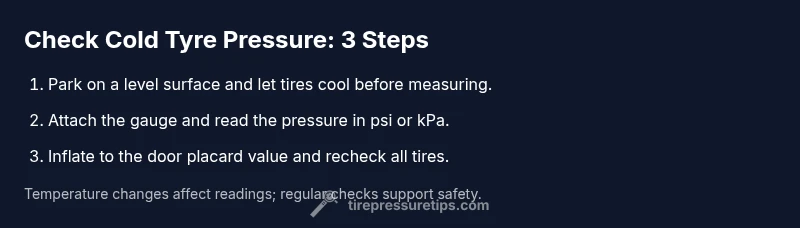
Measuring cold tyre pressure requires a calm, repeatable process. Park on a level surface with the engine off and the tires cold. Attach your gauge to the valve stem firmly, read the value, and compare it to the door placard. If the reading is low, add air gradually and recheck; if high, let air out in small amounts and recheck. Always replace the valve caps after measurement and consider checking the spare tire as well.
How to choose the right pressure for your vehicle
The door placard on your vehicle provides the manufacturer’s recommended cold pressure for front and rear tires. This value accounts for typical loads and vehicle dynamics. If you regularly carry heavy loads or travel with a full vehicle, consider a slight adjustment per your manual’s guidance, but never exceed the maximum pressure printed on the tire sidewall. Seasonal changes and tire size can alter the ideal pressure, so revisit the placard and, if needed, consult Tire Pressure Tips for context.
Common mistakes and how to avoid them
Common errors include checking after driving, using an inaccurate gauge, or inflating to a rough target rather than the placard value. Another mistake is neglecting the spare tire or failing to maintain consistent measurement conditions. Implement a simple habit: check each tire, use the same gauge, and calibrate your gauge periodically.
Seasonal considerations and TPMS
Seasonal temperature shifts can cause pressure readings to wander. In cold months or in a cool garage, readings will appear lower; in hot months, readings rise. TPMS helps alert you to under- or overinflated tires, but its readings can lag or differ from a manual gauge—so rely on a gauge for accuracy and use TPMS as a safety warning. Regular checks help tires wear evenly and maintain grip.
Authority Sources
For authoritative guidance on tire pressure, consider these references:
- Tire Pressure Tips Analysis, 2026
- https://www.nhtsa.gov/road-safety/tires
- https://www.consumerreports.org/car-safety/how-to-check-tire-pressure/
- https://www.nsc.org/road-safety/safe-driving/tires
Tools & Materials
- Tire pressure gauge(Digital or dial gauge; ensure range 0-60 psi)
- Air compressor or tire inflator(Built-in gauge or separate gauge; use proper adapters)
- Owner's manual or door placard(Identify the recommended cold pressure for each axle)
- Notebook or app(Record readings over time)
- Valve cap removal tool (optional)(Keep caps clean and reattach after measurement)
Steps
Estimated time: 15-20 minutes
- 1
Park on a level surface and let tires cool
Turn off the engine and wait at least 3 hours after driving, or measure before starting a trip. This ensures you read cold tyre pressure without heat affecting the reading.
Tip: Avoid measuring after a long drive. - 2
Locate the correct cold pressure value
Find the door placard or owner’s manual to see the recommended pressure for front and rear tires under cold conditions.
Tip: Use the placard value as your target. - 3
Attach the gauge and read the pressure
Remove the valve cap, place the gauge on the valve stem, and press firmly to get a reading. Read the pressure in psi or kPa.
Tip: Keep the gauge perpendicular to the valve stem for accuracy. - 4
Adjust pressure as needed
If underinflated, add air until you reach the recommended cold value. If overinflated, release air in small increments and recheck.
Tip: Do not overfill; small adjustments matter. - 5
Recheck all tires and cap the valve
Recheck each tire after adjustment and replace the valve caps securely. Mismatched readings can indicate a leak or valve issue.
Tip: Check the spare if your car has one. - 6
Record and monitor
Log the readings and dates to spot trends with seasons or load changes. Recheck monthly or before long trips.
Tip: Create a simple log for quick reference.
Frequently Asked Questions
What is cold tyre pressure?
Cold tyre pressure is the inflation level measured when tires are cold, before they've heated up from driving. Use the door placard values as your target.
Cold tyre pressure is the level read when the tires are cold, and you should use that target for inflation.
Should I check tire pressure in winter?
Yes. Temperature can lower readings, so check when tires are cold and adjust as needed.
Yes. Check when the tires are cold, especially in winter, and adjust to the recommended pressure.
Can TPMS replace manual checks?
No. TPMS alerts you to pressure changes, but a manual gauge confirms exact inflation.
TPMS helps alert you to changes, but you should verify with a gauge.
How often should I check tire pressure?
Check at least monthly and before long trips or when you suspect a loss of pressure.
Check at least monthly and before long trips.
What if I don’t know the door placard value?
Consult the owner's manual or the sticker on your door jamb for the recommended cold pressure.
If you don’t know the placard, check your manual or the door sticker.
Is it okay to use nitrogen in car tires?
Nitrogen isn’t required for standard passenger cars; it offers minor benefits but is not essential for safety.
Nitrogen is optional and not necessary for safety.
Watch Video
What to Remember
- Check cold tyre pressure before driving for accuracy.
- Follow door placard values for your vehicle.
- Temperature changes affect readings and inflation.
- Record readings to monitor over time