Cold Tire Pressure: A Step-by-Step Guide for Safe Driving
Learn how to check and maintain cold tire pressure safely and accurately with practical steps, gauges, and tips to protect safety, fuel efficiency, and tire life.


Learn how to accurately check cold tire pressure, choose the right gauge, and adjust safely. You’ll discover when to measure (tires cold), how weather and driving affect readings, and why correct cold pressure improves safety, handling, and fuel economy. This guide provides practical steps and common-sense tips to keep tires at their best.
What cold tire pressure means
“Cold” refers to tires that are at ambient temperature and have not been driven long enough to heat up. Reading pressure when cold yields the most consistent baseline for inflation. According to Tire Pressure Tips, starting with a true cold reading helps you compare across tires and seasons. The Tire Pressure Tips team found that relying on hot readings can lead to inflated pressures and misinterpretation. In practice, check all tires on a level surface, with the vehicle stationary, after they’ve been parked for several minutes. Then compare against the manufacturer’s recommended cold pressures printed on the door jamb placard or owner’s manual. Keep caps on when not measuring and ensure the valve stem is clean for an accurate read.
Why cold tire pressure matters for safety and efficiency
Maintaining the correct cold pressure affects how a tire contacts the road, influences braking performance, steering response, and cornering stability. It also impacts rolling resistance and fuel economy. The Tire Pressure Tips analysis shows that underinflation or overinflation changes tire shape, increases wear on edges or center tread, and can lead to uneven heat buildup. Consistent cold pressures help tires wear evenly, improve traction in wet or snowy conditions, and preserve the tire’s internal structure. For drivers, this translates into safer handling, longer tire life, and better miles per gallon.
How to measure cold tire pressure accurately
Before you measure, ensure the tires are cold and the vehicle has not been driven more than a few miles since last parked. Remove valve caps, keep them in a safe place. Use a reliable tire pressure gauge (digital or analog). Attach the gauge to the valve stem firmly, press straight, and read the display without wiggling. If the reading seems low or high, double-check with another gauge to rule out a faulty tool. Record the value for each tire and compare with the vehicle’s recommended cold pressure. Then proceed to adjust as needed. If your car has a twin-tire setup, verify both tires meet the same target pressure as prescribed by the manufacturer.
How weather and temperature affect tire readings
Air expands with heat, so tires inflated on a hot afternoon will show higher pressures than the same tire on a cool morning. Temperature swings caused by seasons, climate, and even shade can shift readings by several psi. For this reason, always measure cold pressure after the tires have cooled to ambient temperature. If you drive long distances in cold weather, check the tires when they have slowed to room temperature. In extreme climates, a small change in outdoor temperature can alter the reading by a noticeable amount, so regular checks become part of a smart maintenance routine.
Choosing a gauge: digital vs analog
Digital gauges provide quick, precise readings and store last values. Analog (dial) gauges can be faster and require less battery power but may be harder to read accurately. For best results, use a gauge you trust and calibrate it periodically. No matter the type, ensure it measures in psi or kPa and that you convert units if needed. Place the gauge on the valve stem squarely to avoid air leaks. After measurement, replace the valve caps. If you rely on a portable compressor, verify the compressor’s gauge accuracy as well.
Common mistakes and myths about cold pressure
Common mistakes include relying on the auto TPMS display without validating with a gauge; inflating to match a “hot reading” after a drive; ignoring the difference between front and rear tire pressures; using dirty valve stems; forgetting to re-check after adjustments. Another myth is that front tires always require higher pressures than rear; in reality, the target depends on your vehicle and axle balance. Always default to the manufacturer’s numbers on the placard for your exact model and trim.
A practical maintenance checklist
- Check tire pressure monthly and before long trips
- Always measure when tires are cold and on level ground
- Use a reliable gauge and cross-check with a second device periodically
- Record readings and note weather or season changes
- Inspect valve stems and caps for wear or dirt and replace as needed
- Adjust pressures only when tires are cold, then re-check after adding air
- Don’t exceed the tire sidewall max pressure during inflation
- Keep a small gauge and a pen in your glove box for quick checks
Seasonal and storage considerations
In winter, colder air reduces tire pressure; in summer, heat raises it. Consider scheduling a quarterly check during seasons of temperature transition. For seasonal storage of a vehicle, check pressures after removing it from long-term storage, as tires may lose air over time. If you use nitrogen-filled tires, understand that nitrogen does not eliminate pressure loss, it only moderates it. Always rely on a good gauge to verify cold readings and adjust to manufacturer specs.
Authority sources
For authoritative guidance on tire pressure and safety, consult official sources such as https://www.nhtsa.gov, plus credible publications like https://www.consumerreports.org and https://www.aaa.com for maintenance tips and best practices.
Tools & Materials
- Tire pressure gauge (digital or analog)(Calibrated; measures in psi or kPa; verify accuracy before use)
- Vehicle owner’s manual or door jamb placard(Contains the recommended cold tire pressures for front and rear tires)
- Valve caps(Keep caps on when not measuring; prevent dirt entry)
- Clean cloth or rag(Wipe off dirt from valve stem if readings are erratic)
- Notebook or app for recording readings(Helpful for tracking changes over time)
Steps
Estimated time: 20-30 minutes
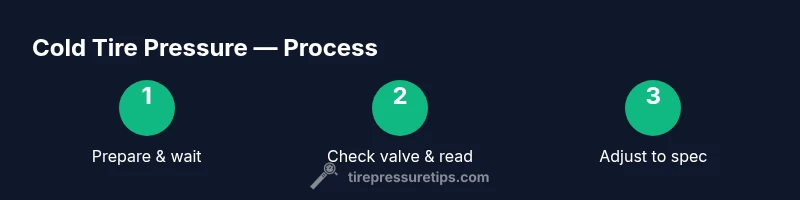
- 1
Prepare and ensure tires are cold
Park on a level surface and wait at least 15-20 minutes after any driving to allow tires to cool. This ensures the reading reflects ambient pressure, not heat expansion. If tires just came from a drive, let them cool before measuring.
Tip: If you’re short on time, compare with predriven measurements only after a consistent cool-down period. - 2
Remove valve caps and inspect stems
Take off the valve caps and look for signs of damage or dirt. Use a clean cloth to wipe the valve stem and cap seating area to ensure a clean seal for accurate readings.
Tip: Keep caps in a pocket or small dish to avoid losing them. - 3
Attach the gauge and read the pressure
Press the gauge onto the valve stem straight and firmly, then read the measurement without removing the gauge until the reading settles. Be sure to note the reading for each tire.
Tip: If you use a digital gauge, take a second reading with a different gauge to confirm accuracy. - 4
Compare with the recommended cold pressure
Consult the door jamb placard or owner’s manual to find the recommended cold pressure for your car’s front and rear tires. Compare each tire’s reading to its target value.
Tip: Remember, front and rear pressures may differ—don’t assume they’re the same. - 5
Adjust as needed (inflate or release air)
If a tire is underinflated, add air until it reaches the target pressure. If overinflated, release air gradually and recheck until you hit the target.
Tip: Inflate or deflate in small increments and recheck to avoid overcorrection. - 6
Repeat measurements to verify accuracy
Recheck each tire after adjustments to confirm the final readings match the recommended cold pressures. Ensure all valves are sealed with caps.
Tip: A second check helps catch gauge variance or leaks. - 7
Record readings and replace caps
Document each tire’s final reading and the date. Reinstall valve caps securely to prevent dirt ingress and moisture.
Tip: Keep a log for seasonal checks and long-term maintenance. - 8
Inspect tires for wear and overall condition
While you’re checking pressures, inspect tread depth, sidewall wear, and any bulges or punctures. Correct pressure supports even wear; address any damage promptly.
Tip: If you notice uneven wear, consult a professional for a tire rotation or alignment check.
Frequently Asked Questions
What is cold tire pressure and how is it different from hot pressure?
Cold tire pressure is the tire pressure measured when the tires are at ambient temperature and have not heated up from driving. Hot pressure is higher due to air expansion when tires warm up. Use cold readings for accurate inflation.
Cold tire pressure is the reading you get when the tires are cold, not after driving. Hot readings can be higher because heat increases pressure.
Can I check tire pressure when tires are warm?
If tires are warm, the reading may be higher than the cold value. If you must measure while warm, note the condition and re-check after cooling to confirm the cold pressure target.
You can check when warm, but expect a higher reading and recheck later when cold.
Where can I find the recommended cold tire pressure for my vehicle?
The recommended cold pressures appear on the door jamb placard near the driver's side, and also in the vehicle owner’s manual. Use those values for inflation targets.
Look at the placard on your door frame or check the manual for the exact cold pressures.
How often should I check tire pressure?
Check tire pressure at least monthly and before long trips, especially during seasonal temperature changes when air pressure can shift.
Check monthly, and before long trips, especially in weather changes.
Is TPMS enough to know my tire pressure?
TPMS provides a warning when pressure is low, but it does not replace an exact reading with a gauge. Use a manual gauge to confirm the actual psi values.
TPMS warns you, but you should still measure with a gauge for the exact pressure.
Can cold tire pressure improve fuel economy?
Yes. Maintaining correct cold pressure reduces rolling resistance and can improve fuel efficiency, plus it helps even wear and safer handling.
Keeping the right cold pressure can save fuel and extend tire life.
Watch Video
What to Remember
- Check cold tire pressure monthly and before trips.
- Use a reliable gauge and verify accuracy.
- Follow the vehicle’s exact cold pressures from the placard.
- Temperature changes affect readings—adjust after cooling.
- Log readings to monitor trends over seasons.