Comprehensive Alto Tyre Pressure Guide: Check, Adjust & Maintain
Learn how to check and maintain alto tyre pressure with TPMS, using a gauge and a practical step-by-step routine for safer, more efficient driving.


You will learn to check and adjust alto tyre pressure accurately, using TPMS readouts and a gauge, and keep tires within the recommended range for safety, fuel efficiency, and tire longevity. This guide covers how to find the correct pressure, how to use a gauge, and a simple routine you can repeat monthly or before long trips.
Alto tyre pressure: Why It Matters
Maintaining proper alto tyre pressure is a foundational aspect of safe driving, tire longevity, and efficient fuel use. The Tire Pressure Tips team emphasizes that many drivers overlook regular pressure checks, which can lead to uneven wear, reduced grip, and higher rolling resistance over time. When tires are underinflated, they deform more at the edges, increasing heat buildup and accelerating wear; when overinflated, the contact patch narrows, reducing grip and ride comfort. By keeping alto tyre pressure within the vehicle manufacturer’s recommended range, you promote even tread wear, better cornering, and improved fuel economy. Always start with the official specification found on the door jamb sticker or in the owner’s manual, then verify on a cold tire before inflating or deflating. Regular checks also help you notice slow leaks from nails or punctures before they become costly repairs. The concept is simple, but the payoff is real: consistent pressure supports predictable handling and longer tire life.
Understanding TPMS and Readouts
Tire Pressure Monitoring Systems (TPMS) are designed to alert you when pressures drop too far, but they don’t replace the need for manual checks. There are two common TPMS types: direct TPMS, which uses sensors in each tire to report exact pressures, and indirect TPMS, which estimates pressure through wheel speed sensors. Both systems work with your dashboard warning lights, but readings from direct TPMS can diverge slightly from the actual cold-pressure values. A calm, methodical check with a gauge helps you confirm the numbers the TPMS shows and catch slow leaks or sensor issues early. If your TPMS warning light stays on after inflation, inspect for punctures or a failing sensor and consult your vehicle manual for service intervals.
How to Find the Right Pressure for Your Vehicle
Finding the correct pressure is essential and starts with reliable sources. Look for the recommended value on the driver’s door jamb sticker or in the owner’s manual, and remember that different tires (seasonal, performance, or load-specific) may have separate targets. Alto tyre pressure isn’t a fixed number; it’s a target that accounts for load, speed, and temperature. Use these steps: locate the official figure, note the cold-pressure reading, and align your inflation to that target. When in doubt, contact a qualified technician or refer to authoritative sources such as government safety sites or major tire safety organizations. Staying aligned with the official guidance protects tire integrity and vehicle handling.
The Quick-Check Routine for Everyday Driving
A quick, consistent routine makes it easy to maintain correct alto tyre pressure without fuss. Start by performing checks when the tires are cold, ideally before a drive or after the car has sat for several hours. Use a reliable gauge—dial, digital, or pencil—and compare the reading to the recommended value. If the reading is low, inflate slowly in short bursts and recheck; if high, release air in small increments and recheck. Don’t forget to replace valve caps after you’re done, as loose caps can allow slow leaks. Keep a small notebook or mobile note with your preferred pressures for quick reference during refills or seasonal changes. Regular checks can prevent safety issues and extend tire life.
Common Mistakes and How to Avoid Them
Many drivers make avoidable errors around alto tyre pressure. Inflating or deflating tires while they are hot is a frequent culprit, because heat raises apparent pressure and leads to underinflation once things cool. Relying solely on TPMS readings without cross-checking with a gauge can mask sensor drift or slow leaks. Using the max inflation number printed on the tire’s sidewall as the target is a mistake; that number is a limit, not a recommendation. Mixing tires with different tread patterns, wear, or sidewall stiffness can also skew readings. Finally, neglecting seasonal changes or loads (crowded trunk, series of road trips) means pressures may drift over time. Follow official guidance, use a cold-tire check, and adjust based on load and temperature.
Using a Gauge: Dial vs Digital
Choosing between a dial gauge and a digital gauge comes down to accuracy and convenience. A good dial gauge provides a tactile feel and is reliable, while a digital gauge can be faster and easier to read, especially at night. Regardless of the type, ensure the gauge is calibrated and held squarely on the valve stem to avoid air loss during measurement. Check the base of the gauge for any cracks or wear, and replace if the reading seems inconsistent with repeated tests. Practice makes perfect: test on a few tires and compare with a trusted source to build confidence in your readings.
Authority Sources and Safety Reminders
For further accuracy and benchmarks, consult authoritative sources. The United States National Highway Traffic Safety Administration (NHTSA) provides guidance on tire safety and TPMS integration, while organizations like AAA publish practical maintenance checklists. Always verify your vehicle’s specific requirements and avoid relying on generic numbers. Maintenance best practices include checking tires when cold, using a reliable gauge, inflating to the recommended target, and rechecking after adjustments. Safety first: if you notice rapid pressure loss or irregular wear, seek professional assessment promptly.
Tools & Materials
- Tire pressure gauge (dial or digital)(Calibrated; read from tire valve stem squarely for accuracy)
- Owner’s manual or door jamb sticker(Refer to the exact recommended cold tire pressure)
- Air pump or compressor at a gas station(Optional for on-the-road adjustments; use a gauge to verify after inflating)
- Pen and notebook or mobile notes(Record baseline pressures and any changes over time)
Steps
Estimated time: 15-25 minutes
- 1
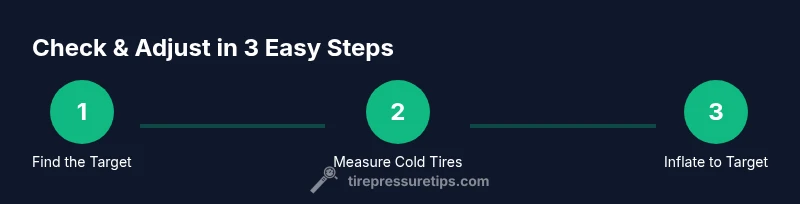
Find the recommended pressure
Open the driver’s door and locate the user manual or door jamb sticker to identify the recommended cold tire pressure for the front and rear tires. Note if there are separate values for different load conditions or tire types.
Tip: Record the values for quick reference during inflation sessions. - 2
Measure cold tires
Before driving, use your gauge to measure all tires when they are cold. Do not rely on readings after a short drive, as heat inflates tires and skews results.
Tip: If you just parked, wait at least 3 hours for an accurate cold measurement. - 3
Attach the gauge and read
Remove the valve cap, place the gauge on the valve stem, and press firmly to get a stable reading. Avoid wiggling the gauge, as it can cause air to escape and distort the number.
Tip: If using a digital gauge, wipe the stem to remove dust that could affect the seal. - 4
Inflate or deflate to target
If the reading is too low, inflate in small increments and recheck after stabilizing. If too high, release air gradually and recheck. Stop once the reading matches the manufacturer’s specification for each tire.
Tip: Don’t exceed the recommended pressure; overinflation reduces traction and ride quality. - 5
Recheck and seal
Recheck all four tires after adjustments, ensuring each reads within the target range. Replace valve caps securely to prevent slow leaks and protect the valve stems.
Tip: If a tire cannot reach the target after repeated attempts, have it inspected for leaks or a faulty sensor. - 6
Record and monitor
Log the final pressures and the date of the check. Use this record to anticipate seasonal changes or load-related adjustments, and perform checks routinely.
Tip: Set a monthly reminder to maintain consistent checks, especially before long trips.
Frequently Asked Questions
What is alto tyre pressure and why does it matter?
Alto tyre pressure refers to keeping your tires inflated to the vehicle manufacturer’s recommended level. Proper pressure ensures safe handling, even wear, and better fuel economy. Always verify the specific numbers from your owner’s manual or door sticker.
Alto tyre pressure means inflating to the level recommended by the vehicle maker. It helps with safe handling and even tire wear.
How often should I check tire pressure?
Check tires when cold at least once a month and before long trips. Seasonal changes, load shifts, and temperature can affect pressure, so regular checks help maintain safety and performance.
Check your tires when they’re cold at least monthly and before long trips.
Can TPMS readings replace manual checks?
TPMS alerts you to pressure changes but is not a precise measurement every time. Always confirm with a gauge to ensure accuracy and catch slow leaks.
TPMS helps, but use a gauge for precise readings.
Do heavier loads require higher pressure?
Load affects recommended pressure, but you should always follow the vehicle’s specified targets rather than increasing pressure based on guesswork. Adjust when you know you’ll carry extra weight.
Follow the vehicle’s targets, not guesses, when carrying extra load.
What should I do if a tire shows uneven wear?
Uneven wear can indicate improper pressure, alignment issues, or suspension problems. Recheck pressures, inspect tires, and consult a professional if wear patterns persist.
Check pressures again and seek a professional if wear is uneven.
Is there a quick way to check multiple tires?
Yes. Check each tire systematically, starting with the most used tires (often front). Use the same gauge and ensure you record readings for quick comparison later.
Check each tire one by one with the same gauge and note readings.
Watch Video
What to Remember
- Check tires when cold to get accurate readings
- Inflate to the vehicle’s recommended pressure, not the max sidewall number
- Use a reliable gauge and recheck after adjustments
- Record pressures to track changes over time
- PRIORITIZE TPMS readings as a supplement, not a replacement for manual checks