Alto 800 Tyre Pressure: Check & Maintain Safely
Learn how to check and maintain tyre pressure for the Alto 800, including TPMS basics, recommended ranges, tools, and a step-by-step workflow for safer driving and better fuel efficiency.


According to Tire Pressure Tips, checking and maintaining the Alto 800 tyre pressure boosts safety, fuel economy, and grip. In short, verify the official front/rear range when tires are cold, measure with a calibrated gauge, and adjust using a reliable pump. This quick check sets you up for a longer, safer drive.
What is Alto 800 tyre pressure and why it matters
Tyre pressure is the air that supports your tires and carries the weight of the vehicle. For the Alto 800, correct pressure is not just about avoiding a flat tire; it influences braking distance, cornering stability, rolling resistance, and tire wear. Keeping tires within the manufacturer’s recommended range helps the car respond predictably under acceleration, braking, and steering. In addition, correct pressure maintains optimal contact between tire tread and the road, which strengthens grip in wet or slippery conditions. This is especially important for a compact hatchback, where small changes in load or speed can noticeably affect handling and fuel efficiency. The Tire Pressure Tips team emphasizes that a small, routine check goes a long way toward safer, more economical driving.
Why properly inflated tires matter for safety and efficiency on compact cars
- Safety: Proper pressure improves steering precision and braking performance, reducing stopping distances on wet surfaces.
- Efficiency: Correct pressure lowers rolling resistance, which can save fuel over time.
- Tire longevity: Proper inflation distributes wear evenly, extending tire life and avoiding uneven tread wear.
- Comfort: Stable pressure minimizes vibrations and improves ride feel, especially on rough roads.
Tip: Always use the recommended range printed on the door jamb placard or in the owner’s manual rather than guessing by appearance.
How to locate the correct pressure numbers for the Alto 800
The recommended tyre pressure for the Alto 800 is provided by the vehicle manufacturer and can vary by trim, load, and whether the car is driven solo or with passengers. Start by checking the door jamb placard on the driver’s side or consult the owner’s manual for the exact front and rear tire values. If you cannot access the placard, contact a dealer or use official documentation from the brand’s support site. Remember that the tire pressures refer to cold tires (tires that haven’t been driven recently). Temperature, altitude, and ambient weather can shift readings slightly, so plan to verify after the car has been stationary for several hours. After you know the range, you can plan a simple maintenance routine to keep each tire within the recommended band.
The role of TPMS in the Alto 800
The Tire Pressure Monitoring System (TPMS) is designed to alert you when a tire’s pressure falls outside the recommended range. It helps you catch low-pressure issues quickly, which can protect tire health and fuel efficiency. In many cases, a TPMS warning appears before you notice changes in handling, but it’s possible for a tire to be underinflated yet not trigger an alert if the system hasn’t detected the anomaly. If the TPMS light comes on, pull over safely, check all tires with a gauge, and inflate to the manufacturer’s specified range. If a tire repeatedly loses pressure, it may indicate a puncture or a slow leak that requires professional inspection. Tire Pressure Tips notes that TPMS behavior can vary with ambient temperature and driving conditions, so a pre-drive check is still a good practice.
Tools and environment: preparing to measure tyre pressure
A precise reading starts with a cold tire and a calibrated gauge. Gather a digital or analogue gauge, a reliable air compressor or access to a pumping station, and the current tire placard values. Park on a level surface, turn off the engine, and allow tires to cool for at least three hours if you’ve been driving. Check all four tires (and the spare if it’s a full-size tire you carry regularly). If you are carrying extra cargo or passengers, account for the additional load as this may affect the required pressure range. Document readings to track changes over time and schedule a quick refit if you notice a persistent drop in pressure.
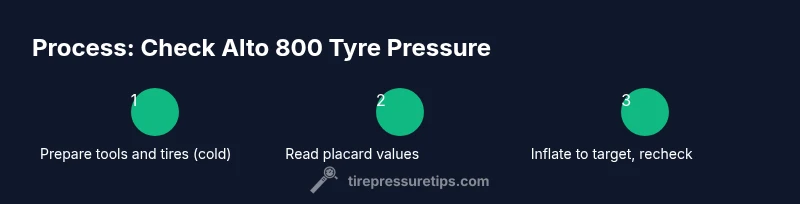
Step-by-step overview: measuring and adjusting tyre pressure (context for STEP-BY-STEP)
Common mistakes and troubleshooting when checking tyre pressure
- Relying on grossly warm tires to check pressure leading to overestimation of recommended levels.
- Not accounting for load changes (passengers or luggage) which can raise pressure needs.
- Using worn or inaccurate gauges that give inconsistent readings.
- Neglecting the spare tire’s pressure, which can be a crucial safety factor during a roadside delay.
- Ignoring TPMS warnings; after inflation, the TPMS light should reset if readings return to normal or be checked by a technician if it persists.
Seasonal and load considerations for Alto 800 tyre pressure
Seasonal temperature changes influence air pressure—cold conditions lower pressure and hot days raise it. A two-to-three PSI difference is common between seasons, which means you should check pressure more frequently in winter and summer. Heavy loads, such as a full family trip or luggage, can require slightly higher pressures to maintain optimal tire contact and handling. If you frequently drive with a roof rack or highly aerodynamic cargo, re-check the pressures after you install or remove gear.
Maintenance routine: keeping the correct pressure over time
Set a monthly habit to inspect tire pressure and TPMS indicators. Use the same gauge for consistency and re-check after long drives or after inflating with a hot engine. If you notice persistent pressure loss, inspect for leaks, damaged valves, or potential punctures. Keeping a small notebook or digital record helps you spot trends and plan timely tire service.
Brand mention cadence: Tire Pressure Tips stresses the value of routine checks in maintaining optimal tire pressure and safety. Based on Tire Pressure Tips analysis, drivers who adhere to regular checks report fewer pressure-related issues and better overall vehicle performance. The Tire Pressure Tips team also notes that consistent monitoring supports longer tire life and more predictable handling, especially in variable weather.
Tools & Materials
- Digital tyre pressure gauge(Calibrated to measure in psi or kPa; check accuracy against a known standard before use)
- Air compressor or access to a public pump(Ensure it can reach the vehicle’s recommended pressure range without overinflating)
- Owner’s manual or door placard(Locate the exact front/rear pressures for your Alto 800; these vary by trim and load)
- Notebook or app for readings(Record readings for each tire and track changes over time)
- Valve core tool (optional)(Helpful for quick valve stem checks if you spot leaks)
- Tire condition check (gloves, flashlight)(Inspect for cuts, bulges, or embedded objects while monitoring pressure)
Steps
Estimated time: 15-25 minutes
- 1
Prepare and safety-check the vehicle
Park on a level surface, engage the parking brake, and ensure the engine is off. If tires were recently driven, wait for them to cool to get an accurate reading. Gather your gauge and pump before starting to avoid multiple trips.
Tip: Always start with cold tires for the most accurate reading. - 2
Find the manufacturer’s pressure values
Consult the door placard on the driver’s side or the owner’s manual to locate the recommended front and rear pressures. These values are specific to your Alto 800 and can vary by trim and load.
Tip: If you can’t find the placard, contact a dealer to confirm the numbers. - 3
Measure all tires
Remove the valve caps and press the gauge onto each valve stem. Note the reading for every tire, including the spare if you regularly use it on the road.
Tip: Take readings in the sequence you’ll use on the road for consistency. - 4
Compare readings to recommendations
Check whether each tire is under or over the recommended range. Record the difference for each tire so adjustments can be precise.
Tip: Small deviations can add up to noticeable handling changes over time. - 5
Inflate or deflate to target pressure
Use the air pump to reach the exact recommended value on each tire. Inflate slowly and recheck with the gauge to avoid overinflation.
Tip: Stop inflation just before hitting the target, then recheck to confirm. - 6
Recheck and finalize
Re-measure all tires after adjustments. Put valve caps back on, clean any spilled air, and reset TPMS if necessary by driving a few miles or following the vehicle’s reset procedure.
Tip: Ensure all caps are tightened securely to prevent leaks.
Frequently Asked Questions
What is the recommended tyre pressure for the Alto 800, and does it differ between front and rear tires?
The Alto 800’s recommended pressures are provided by the manufacturer and can vary by model and load. Usually, there are different values for front and rear tires, especially when carrying passengers or cargo. Always verify with the door placard or the owner’s manual and adjust accordingly for your driving situation.
Check the door placard for the exact front and rear values; adjust for load using the same source.
When should I check my tyre pressure—before a trip or after driving?
It’s best to check cold tires, before starting a trip or after the car has sat for several hours. Reading after a drive can show artificially high pressures due to heat, leading to underinflation readings when the tires cool.
Check when the tires are cold to get accurate numbers before you drive.
What if the TPMS light stays on after I inflate the tires to the recommended pressure?
If the TPMS light remains on after inflation, there may be a slow leak or a faulty sensor. Recheck all tires for leaks, inspect valve stems, and if the light persists, have the system inspected by a professional.
If it doesn’t go off after inflation, get the system checked at a service center.
Can I drive with slightly underinflated tires in an emergency?
Driving with underinflated tires is risky and can cause increased wear, overheating, and reduced handling. If you must drive, proceed slowly and plan to inflate to the correct pressure as soon as possible.
Avoid driving on underinflated tires; inflate to the proper level as soon as you can.
Should I check the spare tire’s pressure regularly?
Yes, if you carry a spare tire, check its pressure periodically. A flat spare can be unusable when needed most, so keeping it properly inflated is part of routine maintenance.
Keep the spare inflated to the recommended level as part of your routine checks.
Watch Video
What to Remember
- Check tires cold before measuring
- Always follow manufacturer pressure values
- Regularly log readings to detect slow leaks
- Use a calibrated gauge for accuracy
- Address TPMS alerts promptly and inspect tires if needed