Tire Pressure in Different Temperatures: A Practical Guide for Drivers
Learn how temperature shifts affect tire pressure, how to measure accurately in all seasons, and practical steps to keep your tires properly inflated for safety and efficiency.


Learn how temperature shifts alter tire pressure and what this means for safety, fuel economy, and tire wear. This quick guide resolves how to measure accurately across seasons, interpret TPMS alerts, and adjust pressure safely. According to Tire Pressure Tips, understanding temperature-related pressure changes helps you maintain optimal performance all year long, regardless of weather.
Understanding the science of temperature and tire pressure
Temperature and air pressure are tightly linked. When air warms, it expands; when it cools, it contracts. In a tire, the air inside responds to ambient temperatures, road friction, and heat generated by driving. The result is that tire pressure can rise on hot days and fall on cold days even when the tires are not loaded or in use. According to Tire Pressure Tips, the basic rule is to check tires when they are cold and to acknowledge that outside temperatures cause pressure swings before you drive. The Tire Pressure Tips team also notes that the relationship is governed by the ideal gas law: fixed volume, increasing temperature raises pressure. But tires are not perfect cylinders, and the rubber and wheel components absorb some heat, modulating how quickly pressure changes happen. For most drivers, the practical takeaway is simple: temperature changes matter, and if you’re not accounting for them, you might be underinflated in winter or overinflated in summer. In turn, underinflated tires reduce grip and fuel efficiency, while overinflated tires can lead to harsher ride quality and uneven wear. By keeping a routine that factors temperature, you improve safety and performance across the seasons. This guidance reflects the Tire Pressure Tips Analysis, 2026.
How to measure tire pressure accurately across seasons
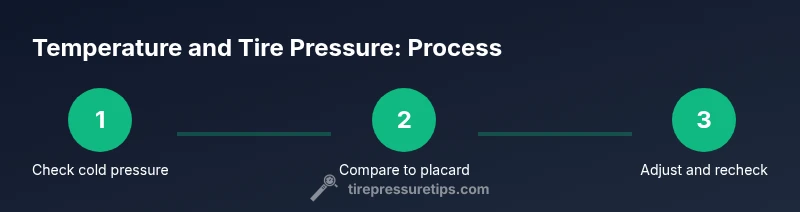
Accurate tire pressure starts with measuring when tires are cold and ambient temperatures are stable. The Tire Pressure Tips approach emphasizes checking after the vehicle has been stationary for at least three hours or before any significant driving. Use a calibrated gauge, preferably digital for readability, and compare the reading to the vehicle’s recommended cold inflation pressure found on the door placard or in the owner's manual. If a tire reads low, inflate in small increments, recheck, and allow the tire to settle before taking a final reading. Always check all four tires (and the spare, if applicable) since a variance between tires can reflect uneven load or wear. For seasonal guidance, aim to match the vehicle’s stated cold pressure, not the pressure observed after a drive. This ensures consistent handling and avoids over-or under-inflation caused by temperature-driven changes. Remember to log your readings for future comparisons; consistent notes help you spot gradual changes due to aging or leaks. This section integrates guidance from the Tire Pressure Tips team.
Daily and seasonal patterns drivers notice
Most drivers notice that tires feel different as the thermometer shifts with the calendar. In cooler mornings, pressures tend to read lower, sometimes making steering feel a touch sluggish or the vehicle feel a bit more hesitant during acceleration. As temperatures rise during the day or in hot weather, pressure readings climb, which can alter ride quality and steering responsiveness. The Tire Pressure Tips team reminds readers that you should not rely on a single reading; instead, track how readings swing with morning-to-afternoon temperatures and after long drives that heat the tires. Understanding these oscillations helps you time checks for maximum accuracy, especially when you drive between air-conditioned interiors and outdoor heat. Connecting temperature awareness to your routine supports safer, more economical driving year-round.
TPMS and gauges: reading accuracy in temperature extremes
Tire Pressure Monitoring Systems (TPMS) provide a useful baseline, but they are not a substitute for a good gauge. In extreme temperatures, TPMS alerts can lag or read differently due to sensor drift or battery condition. The Tire Pressure Tips methodology recommends cross-checking TPMS readings with a trusted gauge when temperatures swing sharply. If you notice persistent discrepancies between TPMS and your gauge, recalibrate or replace sensors per the vehicle manual and consult a professional if your readings remain inconsistent. Regular gauge checks become even more important in extreme heat or cold since the risk of under or over-inflation grows with larger temperature fluctuations. This practice helps maintain grip, tire wear, and fuel efficiency.
Seasonal guidelines: tailoring pressure to weather and load
Most passenger cars tolerate a broad cold-inflation range around 30–35 psi, but the exact figure depends on load, tire size, and the vehicle’s design. The key is to start with the placard-recommended cold pressure and adjust for temperature realities. In hot weather, you may find your tires inflate a bit and require minor release to maintain target pressure; in cold weather, pressure may drop, and a carefully controlled top-up will help restore the intended footprint. The Tire Pressure Tips team emphasizes consistent checks during seasonal transitions, and to always verify after a long cool-down or after exposure to direct sunlight. Adapting pressure for load changes—like carrying extra luggage or passengers—should be done with a fresh cold check so your readings reflect current conditions rather than a lingering heat effect. When in doubt, prioritize the manufacturer’s recommended settings and use your gauge to fine-tune within that range.
Common mistakes to avoid when checking pressure in different temperatures
Avoid these frequent missteps: checking pressure after a long drive and diagnosing with a hot-tire reading; failing to account for ambient temperatures when interpreting gauge numbers; ignoring spare tire readings; relying solely on TPMS without cross-checking with a gauge; and inflating or deflating without returning tires to cold before final measurement. Temperature-induced swings can mask true pressure needs, leading to under- or over-inflation when conditions shift. The best practice is to perform cold checks consistently, use a calibrated gauge, and compare all four corners for even distribution. A small routine—log temperatures alongside pressures—will dramatically improve your ability to maintain the correct inflation for safety, efficiency, and tire life. The Tire Pressure Tips guidance reinforces that consistency beats guesswork.
A practical, repeatable monthly checklist around temperature changes
Create a simple monthly habit that aligns with seasonal shifts. On milder days, take a single 4-tire reading, record the ambient temperature, and compare to the placard. If readings drift outside tolerance, adjust in small increments when tires are cold, then recheck after a quick cooldown. Use a stable, consistent gauge and keep notes for at least three months to identify trends or leaks. This routine supports both safety and efficiency and makes it easier to catch slow leaks or gradual wear that temperature changes might mask. The Tire Pressure Tips approach emphasizes repeating this process every month to keep your tires performing optimally through spring rain, summer heat, autumn cool, and winter chill.
When to seek professional help: signs you shouldn’t ignore
If pressure readings stay inconsistent despite repeated cold checks, or you notice rapid, unexplained changes, consult a tire technician. Temperature extremes can reveal leaks, faulty sensors, or damaged valves. Look for slow loss of pressure across days, irregular wear, or heat buildup during driving. In such cases, a professional should inspect the tire, valve stems, TPMS sensors, and rims for damage. Timely maintenance protects safety, fuel economy, and tire longevity, and can prevent a roadside breakdown. The Tire Pressure Tips team recommends attributing unusual readings to a known cause rather than assuming a routine swing.
Final note: consistency is the goal across all seasons
Tire pressure in different temperatures fluctuates with ambient conditions, but you can manage it with a simple, repeatable routine. Always start with cold measurements, confirm against the placard, and adjust only after the tire has cooled. Keep logs of temperatures and readings, cross-check TPMS with a gauge, and consider seasonal changes when loading the vehicle. By cultivating this habit, you protect grip, braking, mileage, and tire life year-round. The Tire Pressure Tips Analysis, 2026 supports the idea that conscientious checks are a cornerstone of tire maintenance.
Tools & Materials
- Tire pressure gauge (calibrated)(Prefer digital for readability; analog is acceptable if you know how to read it accurately)
- Portable air compressor or inflator(Ensures you can adjust pressure to the target value on the spot)
- Vehicle placard or owner's manual with recommended cold PSI(Your exact target varies by vehicle)
- Notebook or mobile app to log readings and ambient temps(Optional but helps track seasonal changes)
Steps
Estimated time: 15-25 minutes
- 1
Check tires when cold
Park in a shaded area and wait for at least three hours after driving. Read all four tires with a calibrated gauge and note ambient temperature. This establishes a true baseline unaffected by recent heat.
Tip: Cold readings are the baseline; avoid after short trips. - 2
Locate the manufacturer-recommended pressure
Find the cold inflation pressure on the driver’s door placard or the owner’s manual. This is your target for each tire and may differ by axle, load, or tire type.
Tip: Use the same gauge and unit (psi) for consistency. - 3
Measure and compare
Take readings on all tires. If a tire is significantly lower or higher than the placard, plan to adjust it in small increments. Recheck after the tire cools for a few minutes.
Tip: If a tire is extremely low, inspect for leaks before inflating. - 4
Adjust with care
Inflate or deflate to reach the target cold pressure. Do this in small steps, then recheck after 10 minutes of rest. The goal is to land within manufacturer specs for all tires.
Tip: Don’t over-inflate just to mask a leak or uneven wear. - 5
Check the spare tire
If you carry a spare that is inflated, test its pressure too and keep it within the recommended range. A neglected spare can become a problem when you need it.
Tip: Spare tires can be overlooked; include them in monthly checks. - 6
Document and monitor
Record the readings and ambient temperature. When seasons change, compare with prior logs to detect unusual changes that might indicate a slow leak or sensor issue.
Tip: Healthy tires show consistent readings with seasonal weather changes.
Frequently Asked Questions
Why does temperature affect tire pressure?
Temperature changes affect the air inside tires; warmer air increases pressure while cooler air reduces it. The effect is explained by the gas laws and is reinforced by practical observations from drivers. Always check cold readings and adjust to the vehicle’s recommended pressure.
Temperature affects tire pressure because warm air expands and cold air contracts; check when cold and adjust to the recommended level.
When should I check tire pressure during seasonal transitions?
During seasonal transitions, check tires more frequently—ideally after a few days of stable temperatures at the same time of day. This helps you catch shifts caused by changing weather before they affect drive safety.
Check after temperatures settle, especially during seasonal changes, to catch shifts early.
Can TPMS be trusted in extreme temperatures?
TPMS provides a quick alert but may be affected by sensor battery or temperature. Always verify TPMS readings with a reliable gauge, especially in extreme heat or cold.
TPMS is helpful but verify with a gauge in extreme temps.
What happens if I overinflate due to heat?
Overinflated tires wear more in the center and can negatively affect handling and ride comfort. Recheck after exposure to heat and adjust back toward the recommended cold pressure.
Overinflation can make the ride harsh and wear the tire center more.
Do winter tires require different pressure guidelines?
Winter tires generally follow the same pressure guidelines as all-season tires, but changes in tire behavior and road load can affect ideal inflation. Always refer to the vehicle placard and adjust with cold readings.
Winter tires use the same guidelines; check with the placard when temperatures change.
Watch Video
What to Remember
- Check tires when cold before driving.
- Follow the placard for seasonal targets.
- Use a calibrated gauge and record readings.
- Expect temperature-driven swings; adjust calmly.
- Cross-check TPMS with a gauge in extremes.