Air Pressure and Temperature: A Tire Care Guide
Learn how air pressure relates to temperature, why tires change with weather, and practical steps to check and adjust safely for safer driving and fuel efficiency.


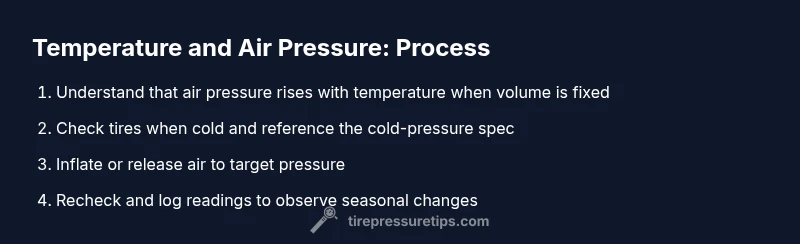
By understanding air pressure related to temperature, drivers can predict how tire pressure will shift with weather and operating conditions. In short, warmer temperatures tend to raise tire pressure, while cooler temperatures tend to lower it. To stay safe, check tires when cold, compare with the vehicle's recommended cold pressure, and adjust using a gauge and proper inflation practices.
Why air pressure related to temperature matters for drivers
Understanding how air pressure relates to temperature is essential for safe driving and fuel efficiency. The Tire Pressure Tips team emphasizes that air inside tires responds to temperature changes, affecting traction, wear, and rolling resistance. By staying aware of temperature-driven pressure shifts, you can keep tires closer to the manufacturer’s recommended cold pressure and avoid unsafe inflations. According to Tire Pressure Tips, recognizing this relationship helps drivers avoid unsafe tire conditions and preserve vehicle handling across seasons.
The science in plain terms: Gas laws that connect pressure and temperature
In a closed, flexible system like a tire, increasing temperature tends to increase pressure if the tire’s volume doesn’t change much. The practical effect is that hot tires read higher on a pressure gauge and cold tires read lower, even if you haven’t driven far. The core idea comes from the basic gas laws: pressure is related to temperature, and, when volume is fairly constant (as a tire’s structure maintains), the relationship is noticeable in everyday driving. This section translates those concepts into actionable insights for road safety.
Temperature effects on tire pressure in everyday driving
On hot summer days or when a car sits in direct sunlight, the air inside tires warms and pressure rises. In contrast, chilly mornings or winter driving can cause a noticeable drop in pressure. Because tires heat up when you drive, readings can be higher after a long trip than before you started. The practical takeaway is to verify tire pressure when tires are cold and account for ambient temperature when comparing readings to the recommended level.
How to measure tire pressure accurately across temperatures
Always measure tire pressure when the tires are cold, ideally after the vehicle has sat for several hours or before driving. Use a calibrated gauge and inflate to the vehicle manufacturer’s recommended cold pressure. If you must check after driving, drive a short distance and wait for tires to cool before adjusting. Keep a small log of readings to notice temperature-driven trends over time.
TPMS and temperature readings: what to know
Tire Pressure Monitoring Systems (TPMS) alert you to large pressure changes, but they don’t directly compensate for ambient temperature. Temperature swings can cause brief fluctuations in TPMS readings, especially after a long drive or in hot weather. Use the TPMS as a diagnostic aid, and rely on a manual gauge to verify actual pressure against the recommended cold values.
Seasonal adjustments: should you inflate more in summer or less in winter?
Seasonal changes create consistent pressure shifts: pressures tend to be higher in warm weather and lower in cold weather. Rather than chasing perfect readings at every moment, aim to maintain the vehicle’s recommended cold pressure and adjust when seasonably appropriate. This approach reduces the risk of underinflation in winter and overinflation in summer, helping tire wear and fuel efficiency.
Practical check routine for temperature fluctuations
Develop a routine that accounts for weather: check pressures weekly during extreme temperature cycles, and before long trips in hot weather. Use the same gauge and the same reference pressures for consistency. Record ambient temperature and readings to detect patterns and plan adjustments ahead of weather shifts.
Tools, techniques, and safety tips
Use a reliable tire pressure gauge, and consider a digital gauge for consistent readings. Inflate using a pump with a built-in gauge or a standalone gauge connected to a compressor. When inflating, avoid overpressure, and never exceed the tire’s maximum pressure printed on the sidewall. Safety first: park on a flat surface, engage the parking brake, and never inflate a hot tire beyond the recommended cold pressure.
Common myths and misconceptions
Myth: You should inflate tires to the maximum sidewall pressure for better stability in heat. Reality: overinflation can reduce traction and accelerate wear. Myth: Nitrogen eliminates pressure changes due to temperature. Reality: all gases expand with heat; nitrogen offers some inert properties but does not negate temperature effects on standard tires. Myth: Temperature alone determines tire pressure; driving heat has no impact. Reality: both ambient temp and driving heat influence readings and should be considered.
Real-world scenarios: daily commutes and road trips
Day-to-day driving mirrors temperature shifts: a morning check may show lower pressure than an afternoon check after a few miles of highway driving. Before road trips through variable climates, check and top up to the cold-recommended pressure, then recheck after arrival to adjust for local conditions. Accurate tire pressure management improves handling, tire wear, and fuel efficiency on longer journeys.
Authority sources and further reading
For further reading on how temperature affects air pressure and tire care, consult related resources from government and educational sites. You’ll find detailed explanations of gas laws and practical implications for vehicle maintenance.
Tools & Materials
- Calibrated tire pressure gauge(Digital or analog; ensure it reads in psi and kPa)
- Tire inflator with gauge(Prefer models with integrated gauge for on-spot inflation)
- Ambient temperature reference(Outdoor thermometer or trusted weather app)
- Notebook or digital log(Record date, ambient temp, and pressures)
- Vehicle manufacturer cold-pressure specification(Found on door placard or owner's manual)
Steps
Estimated time: 20-35 minutes
- 1
Gather tools and plan
Collect your gauge, inflator, and log sheet. Check the weather forecast and identify the target temperature range for today’s drive. This helps ensure readings are interpreted correctly.
Tip: Pro tip: use a dedicated gauge for consistency, and keep it in your glove box. - 2
Find the official cold pressure spec
Locate the vehicle’s recommended cold tire pressure on the door placard or owner’s manual. This is the baseline to compare actual readings against across temperature changes.
Tip: Pro tip: remember that cold means the car has been stationary long enough to avoid heat from driving. - 3
Check tires when cold
If possible, inspect pressures before starting a trip or after the car has sat for several hours. Temperature-regulated readings ensure accuracy and safer inflate targets.
Tip: Pro tip: aim for a consistent environmental condition for each check. - 4
Measure each tire’s pressure
Use the gauge to read each tire’s current pressure, noting the ambient temperature. Record the value in psi or kPa alongside the temperature.
Tip: Pro tip: check both front and rear tires; they can differ slightly. - 5
Inflate or deflate to target
If a tire is below the cold spec, inflate until it reaches the recommended value. If it’s above, release air gradually until at the target.
Tip: Pro tip: use several small adjustments rather than one large change. - 6
Recheck after adjustment
Re-measure to confirm the tire is at the target. Recheck after a few minutes to account for settling after inflation.
Tip: Pro tip: avoid inflating beyond the maximum pressure printed on the sidewall. - 7
Log the readings
Record the date, ambient temperature, and precise pressures for future reference. This helps track seasonal trends and plan adjustments.
Tip: Pro tip: keep a running table in a mobile note or simple spreadsheet. - 8
Plan for temperature shifts
Anticipate seasonal changes by scheduling periodic checks. When temperatures swing, re-check before longer trips or after heat exposure.
Tip: Pro tip: pre-checks before hot days reduce risk of overinflation during driving heat.
Frequently Asked Questions
What is the relationship between air pressure and temperature?
Air pressure in a tire (or any gas) increases with rising temperature if the volume stays roughly constant. Conversely, pressure falls as temperature drops. This basic concept comes from gas laws and applies to daily driving as tires heat up when you drive and cool when parked.
Pressure goes up with heat and down with cold, due to gas behavior in a roughly fixed volume like a tire.
Do tires lose air in winter?
Tires often read lower in cold weather because the air inside contracts with temperature. This doesn't mean tires are leaking; it reflects the temperature effect on pressure. Always adjust toward the cold-pressure specification when temperatures are low.
Yes, cold air makes tires read lower; adjust to the cold spec when it’s cold outside.
Should I inflate tires more in summer or less in winter?
Inflation should align with the cold-pressure specification regardless of season. In hot weather, readings may appear higher after driving; avoid inflating to match hot readings. Check when tires are cold and adjust to the manufacturer’s cold target.
Inflate to the cold spec; don’t rely on hot readings after driving.
How does TPMS relate to temperature changes?
TPMS sensors alert you to significant pressure changes, including those caused by temperature swings. They don’t automatically compensate for ambient temperature, so manual checks are still important for accuracy.
TPMS helps flag changes, but you should verify with a gauge when temperatures shift.
How often should I check tire pressure?
Check tire pressure at least monthly and before long trips, especially during periods of temperature change. Complement regular checks with readings when the car has cooled to ensure accuracy.
Check monthly and before trips, especially during weather changes.
Is using nitrogen inflators worth it for temperature stability?
Nitrogen can offer slower diffusion compared with air, but it does not eliminate the temperature-related pressure changes. Regular checks remain essential regardless of the gas used.
Nitrogen can help slightly, but regular checks are still needed.
Watch Video
What to Remember
- Check tire pressure when tires are cold to ensure accuracy.
- Temperature changes influence tire pressure significantly.
- Use the vehicle’s recommended cold pressure as your baseline and adjust carefully.
- TPMS helps but does not replace manual pressure checks.
- Record readings to manage seasonal changes effectively.