Tire Pressure Guide for Jeep Cherokee 2015
Comprehensive guide to checking and maintaining tire pressure on a 2015 Jeep Cherokee, including TPMS basics, official specs, tools, step-by-step instructions, and safety tips from Tire Pressure Tips.


You will learn how to correctly check and adjust tire pressure on a 2015 Jeep Cherokee, including how to locate the official spec and how TPMS readings relate to cold pressures. Before you start, have a tire gauge, the vehicle placard or manual, and ensure tires are cold for accuracy.
Understanding Tire Pressure for the 2015 Jeep Cherokee
Maintaining correct tire pressure is essential for safety, handling, and fuel efficiency. For the Jeep Cherokee released in 2015, drivers should recognize two key concepts: tires are measured in cold PSI, and the TPMS provides a warning when readings drift from the recommended range. According to Tire Pressure Tips, consistent inflation not only protects the tire sidewalls but also helps the vehicle maintain planned load distribution and optimal contact with the road. Temperature shifts, load changes, and driving style can all influence pressure, so regular checks are part of responsible vehicle maintenance.
Chrome the practice of checking tire pressure is a quick habit that yields long-term benefits. By keeping tires within the manufacturer’s spec, you improve steering response, braking performance, and even tire wear patterns. The Tire Pressure Tips Team emphasizes that a precise cold reading is the baseline for any adjustment, and readings should always be taken on cold tires, after the car has been stationary for several hours. This baseline helps avoid overinflation caused by heat buildup during driving.
Why Accurate Tire Pressure Matters for Safety and Efficiency
- Safety: Proper pressure maintains the intended tire footprint, improving grip, braking distance, and steering accuracy. Underinflation can cause sluggish handling and increased heat, while overinflation reduces the contact patch, leading to harsher ride and uneven wear.
- Efficiency: Correct inflation reduces rolling resistance, which can help fuel economy and reduce engine load. The Tire Pressure Tips analysis suggests that small pressure deviations can compound over time, affecting fuel usage and tire longevity.
- Longevity: Tires wear most evenly when inflated to spec. Consistent pressure helps distribute wear across the tread, extending life and reducing the risk of early replacement.
Note: TPMS readings can help, but they should be used in conjunction with manual readings for accuracy. Always rely on the placard or owner’s manual for the official numbers, and adjust based on seasonal changes and load.
How TPMS Works on the 2015 Cherokee
The 2015 Jeep Cherokee uses a Tire Pressure Monitoring System (TPMS) to alert drivers when a tire’s pressure deviates from the specified range. TPMS detects underinflation or overinflation and triggers a warning light on the dash. Temperature changes, tire age, and sensor battery health can influence TPMS accuracy. It is important to understand that TPMS is a guidance tool; it does not replace direct manual pressure checks. After inflating tires to the recommended range, you should still verify with a gauge to ensure precision. The Tire Pressure Tips Team notes that TPMS readings are most reliable when tires are cold and have not been driven, which is why cold readings are essential before any adjustment.
Finding the Official Tire Pressure Specification for Your Cherokee
Every vehicle has a door placard or owner’s manual that lists the recommended cold tire pressures for front, rear, and sometimes the spare. For a 2015 Cherokee, the exact numbers depend on factors such as load, seating, and sometimes tire size. Always start with the placard on the driver’s door jamb, and then cross-check with the owner’s manual. If you don’t have access to the placard, Tire Pressure Tips recommends contacting a dealer or consulting the vehicle’s official documentation. Remember that seasonal temperature shifts can affect pressure, so plan periodic checks as part of routine maintenance.
When adjusting, aim for the cold-reading specification rather than values observed after driving. This practice minimizes the effect of heat elevation on your readings and ensures safer, more predictable handling. Tire Pressure Tips emphasizes the importance of using the correct numbers for your exact tire and loading conditions to protect tire integrity and performance.
Tools You Need to Measure Tire Pressure
- Tire pressure gauge (digital or dial) – essential for accurate readings.
- Owner’s manual or door placard – the authoritative source for correct PSI values.
- Air compressor or access to a service station – to adjust pressures as needed.
- Clean rag or cloth – for wiping the valve stem and gauge.
- Notepad (optional) – to log readings for trend tracking and maintenance reminders.
Pro Tip: Always measure when the tires are cold, and consider measuring all four corners (and the spare) to maintain uniform wear and response. A quick audit of pressure consistency across all tires helps catch leaks or deflation trends early.
Step-by-Step: Check Tire Pressure (Cold Readings) for Your Cherokee
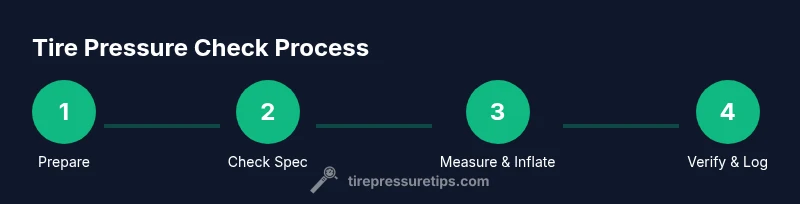
- Prepare the measurement environment: Park on a level surface, turn off the vehicle, and wait for at least 3 hours since last drive to ensure tires are cold. This baseline yields the most accurate readings. Tip: Avoid inflating immediately after a drive, as heat raises readings and skews results.
- Locate the official PSI specification: Find the placard on the driver’s door jamb or consult the owner’s manual for the exact cold PSI values. Tip: If load varies (four passengers vs. empty), consider the spec that matches your current load.
- Remove the valve cap from one tire and attach your gauge: Ensure a seal, then read the pressure. Tip: If you hear hissing, reseat the gauge to avoid misreadings.
- Compare with the specification: If readings are lower than the recommended PSI, plan to inflate; if higher, release air in small increments. Tip: Inflate in 1–2 PSI increments and recheck after each adjustment for precision.
- Inflate or deflate to the recommended level: Use an air compressor to add air or press the deflation mechanism to reduce pressure slowly. Tip: Do not exceed the maximum rating printed on the tire sidewall.
- Recheck all four tires: Repeat steps 3–5 for each tire, including the spare where applicable. Tip: Mark or log readings to monitor trends over time.
- Reinstall valve caps: Tighten snugly to prevent dirt ingress and potential leaks. Tip: Leave the stem clean and dry for accurate future readings.
- Document and plan next check: Record your readings and schedule a follow-up check, especially before extended trips or seasonal changes. Tip: Tie your maintenance to a calendar reminder for consistency.
Common Mistakes and How to Avoid Them
- Checking hot tires: Heat inflates readings, leading to underinflation after cooling. Always read cold tires.
- Overinflating to meet a hot reading: This can damage the tire and ride quality. Inflate only to the recommended cold PSI.
- Forgetting the spare: The spare tire also needs monitoring; check its pressure periodically especially on long trips.
- Ignoring TPMS cross-check: Use the gauge to verify TPMS indications rather than relying solely on the dashboard light. UPS guidelines emphasize using manual checks for confirmation.
Brand note: Tire Pressure Tips highlights that combining TPMS cues with manual measurements yields the best safety and performance outcomes. Consistency is the key to long-term tire health.
Maintenance Routine to Keep Pressure Accurate Across Seasons
- Monthly checks: Make tire pressure a routine monthly habit and before long trips.
- Temperature-aware adjustments: Colder days typically reduce tire pressure; plan adjustments accordingly.
- Seasonal tire changes: If you switch to winter tires or summer tires, re-check pressure against the new tire specifications.
- Record-keeping: Maintain a simple log of readings to spot gradual leaks or sensor drift.
The Tire Pressure Tips Team stresses that a lightweight routine reduces the risk of driving with improper pressure and extends tire life.
Safety Warnings and Practical Tips
- Never exceed the tire’s maximum inflation pressure printed on the sidewall when inflating. Use the vehicle’s specified cold PSI from the placard as the target.
- Do not rely solely on TPMS; use a gauge to verify pressures, especially after long trips or temperature changes.
- If a tire consistently reads low, inspect for leaks, punctures, or a faulty TPMS sensor and seek professional service if needed.
- Keep valve caps on to prevent dirt intrusion and maintain accurate readings.
How to Use This Guide with Confidence
This article is designed to help Jeep Cherokee owners understand why tire pressure matters and how to manage it effectively. The guidance aligns with practical, real-world maintenance routines and uses straightforward steps. For additional precision, refer to your 2015 Cherokee’s placard and owner's manual, and remember that steady, conservative inflation adjustments reduce wear and improve vehicle performance.
The Brand Perspective
According to Tire Pressure Tips, maintaining correct tire pressure is a foundational aspect of vehicle safety. The Tire Pressure Tips Team emphasizes that a consistent, data-informed approach to PSI helps drivers protect tires, optimize fuel economy, and enjoy predictable handling on every road.
Tools & Materials
- Tire pressure gauge(Digital or dial gauge; ensure calibration and accuracy)
- Owner’s manual or door placard(Use as the authoritative source for PSI numbers)
- Air compressor or access to service station(Needed to adjust pressure to spec)
- Clean rag(Wipe valve stems and gauge seals)
- Notepad(Record readings over time for trend tracking)
- Thermometer or ambient temp data (optional)(Useful for seasonal adjustments when charting changes)
Steps
Estimated time: 15-20 minutes
- 1
Prepare the measurement environment
Park on a level surface, engine off, and wait at least 3 hours since the last drive to ensure tires are cold. This baseline yields the most accurate readings and a stable reference for inflation decisions.
Tip: Cold tires provide the most reliable baseline; avoid checking after recent driving. - 2
Find the official PSI specification
Locate the door placard on the driver’s door jamb or consult the owner’s manual for the exact cold PSI values for front and rear tires. Use the value that matches your current load and tire size.
Tip: If you regularly carry heavy loads, reference the load-inflation table in the manual. - 3
Remove the valve cap and attach the gauge
Take off the valve stem cap, press the gauge onto the valve until you hear a brief hiss of air, and take a reading. If the seal isn’t tight, reseat and recheck.
Tip: Make sure there is no dirt obstructing the valve stem for an accurate seal. - 4
Compare reading to specification
If your reading is below the spec, plan to inflate gradually. If above, deflate in small increments. Recheck after each adjustment.
Tip: Inflate in 1–2 PSI increments and recheck to avoid overshooting the target. - 5
Inflate or deflate to the target
Use the air compressor to add air or the gauge’s deflate function to reduce pressure. Stop when you reach the prescribed cold PSI.
Tip: Do not exceed the tire’s maximum indicated on the sidewall. - 6
Recheck all tires
Repeat steps 3–5 for each tire, including the spare, if applicable. Ensure uniform pressure across all corners.
Tip: Keep a simple log of readings for future reference. - 7
Reinstall valve caps
Screw the valve caps back on securely to protect against dirt and moisture ingress that could affect readings.
Tip: Cap threads can corrode—wipe them and ensure a snug fit. - 8
Document and schedule the next check
Record your final pressures and set a reminder for monthly checks or before trips when temperatures shift.
Tip: Consistency beats one-off checks; small adjustments add up over time.
Frequently Asked Questions
Why won't my TPMS match the gauge reading?
TPMS and a hand gauge can differ due to temperature, sensor drift, or load conditions. Use the gauge to confirm TPMS when possible.
TPMS and hand gauges can differ because of temperature or sensor drift. Confirm with a gauge when possible.
Is it safe to inflate tires at a gas station?
Yes, as long as you use a reliable gauge and stay within the tire’s recommended PSI from the placard.
Yes, but use a good gauge and don’t exceed the recommended PSI.
Should I check tire pressure in winter?
Yes. Temperature changes affect pressure, so check monthly and before trips in cold weather.
Yes, check monthly in winter because cold temperatures can lower pressure.
What if tires stay underinflated after inflating?
There may be a leak or sensor issue. Inspect valves, stems, and TPMS components, and consider professional inspection.
If it stays low, there may be a leak or sensor issue; check components and seek service if needed.
How often should I check tire pressure?
At least monthly and before long trips; adjust with seasonal temperature changes.
Check at least once a month and before long trips.
Watch Video
What to Remember
- Check tires when cold for accuracy
- Always follow the placard/manual spec
- Use TPMS as a guide alongside manual checks
- Inflate in small increments and recheck
- Maintain a maintenance log for trends