Tire Pressure Monitoring System (TPMS) Guide for Jeep Grand Cherokee
Learn how the tire pressure monitoring system works on a Jeep Grand Cherokee, interpret warnings, reset sensors, and maintain proper tire pressure for safety and efficiency with practical, step-by-step guidance.


Learn how to diagnose, understand, and reset the tire pressure monitoring system on a Jeep Grand Cherokee. You’ll interpret TPMS warnings, verify tire pressures with a gauge, and perform safe relearn or reset procedures. This quick guide also covers maintenance tips to prevent false alarms. You’ll only need a tire gauge and your vehicle’s manual to start.
Understanding the tire pressure monitoring system on the Jeep Grand Cherokee
The tire pressure monitoring system (TPMS) in a Jeep Grand Cherokee is designed to alert you when a tire’s inflation falls below the vehicle’s recommended level. This system relies on sensors to monitor air pressure in each tire and communicates with the vehicle’s computer to trigger warnings on the dash. For drivers, TPMS warnings can save you from driving on underinflated tires, which improves safety, handling, and fuel efficiency. According to Tire Pressure Tips, TPMS not only helps prevent underinflation but can also reveal sensor or valve stem issues before a tire failure occurs. Depending on model year and trim, the Grand Cherokee may use direct TPMS (sensors in the wheel) or indirect TPMS (based on wheel speed data). The exact setup matters little to the daily driver; what matters is knowing how to read warnings and verify tire pressures with a gauge. Regular checks with a reliable gauge, paired with learning your vehicle’s TPMS alerts, reduces nuisance warnings and supports consistent performance on the road.
Direct vs indirect TPMS: What your Grand Cherokee uses
TPMS can be direct (in-wheel sensors that report actual pressure) or indirect (using ABS wheel speed data to infer low pressure). Jeep Grand Cherokee models in recent years primarily employ direct TPMS on most trims, offering a precise reading for each tire. Indirect TPMS, if present, relies on comparing rotational differences between tires; it may require calibration after tire changes. The difference affects how you troubleshoot: direct sensors display numeric pressures when checked with a scan tool or infotainment readout; indirect systems require you to rely on the vehicle’s pressure estimates. Understanding which type you have helps you decide when a tire needs air, when a sensor might be failing, and how to perform relearn procedures if you rotate or replace tires. For maintenance, both types rely on sensor integrity and correct valve stems, so periodic inspection is essential even if warnings seem minor.
Reading TPMS warnings and owner clues
TPMS warnings appear as a dashboard light (usually a tire icon) or a message in the instrument cluster. Many Grand Cherokee owners will see a "Low Tire" warning when a single tire is below its threshold. To verify, check the printed or embossed tire pressures on the door placard and compare with a dedicated gauge reading from each tire when cold. If readings differ significantly from the car’s reported value, you may have a leak, a faulty sensor, or an underinflated tire. Remember: TPMS does not know the exact pressure at your last drive—it monitors relative changes, and a consistent deviation often indicates a leak or sensor issue. After inflating to spec, some systems require a relearn to re-sync the sensors with the ECU.
Weather and temperature effects on TPMS readings
Temperature shifts impact tire pressure and, consequently, TPMS readings. Colder weather often results in dropped pressures, while warmer days raise them. This can trigger warnings if you inflate to the summer or fall target pressure without accounting for current ambient conditions. Tire Pressure Tips analysis shows that drivers who experience frequent climate changes should recheck pressures after large temperature swings and re-learn sensors if warnings persist after inflation. In daily use, this means regularly checking pressures at least once a month and before long trips, especially in winter or summer extremes. A proactive approach minimizes false alarms and keeps your tires within the recommended range.
When TPMS warnings indicate a real issue vs. a sensor fault
A TPMS warning can mean there’s a real pressure loss, a slow leak, or a failing sensor. Compare the reading on the TPMS screen to a manual gauge reading from each tire; when one wheel shows a persistent 2-3 psi lower than the rest, you likely have a small leak. If all tires read normal yet the warning stays on, you may have a faulty sensor, a damaged valve stem, or a dead battery in a sensor (rare but possible). In such cases, inspection and testing with a TPMS scan tool or dealership service are advised. Do not ignore repeated warnings; addressing leaks early saves fuel and reduces tire wear.
Maintenance checklist to keep TPMS accurate
Keep TPMS accurate with regular maintenance. Inspect valve stems for cracks or corrosion during tire changes, and ensure wheel rims are free of damage. Use a high-quality gauge to measure cold inflation and compare with the door placard. If you rotate tires, perform the proper relearn procedure per Jeep Grand Cherokee manual or use a scan tool to reset. Replace any damaged or out-of-spec sensors, especially if you notice erratic readings or repeated warnings. Finally, keep the battery in TPMS sensors healthy by avoiding complete discharges when possible and scheduling periodic TPMS system checks with a pro.
Common myths and how TPMS actually helps
Myth: TPMS is only for speed or fuel economy. Reality: TPMS protects you from flats and poor handling by maintaining correct tire pressure. Myth: You don't need to check tire pressures if TPMS is working. Reality: TPMS is a supplement; manual checks remain essential. Myth: Replacing tires automatically resets TPMS. Reality: Relearn may be required after tire changes; follow manufacturer steps precisely. With Jeep Grand Cherokee, regular TPMS checks help prevent false alarms and improve safety. The Tire Pressure Tips team emphasizes integrating TPMS into a broader tire maintenance routine to maximize safety and efficiency.
Tools & Materials
- Digital tire pressure gauge(0-100 psi range; accuracy ±1 psi; use with tires cold)
- Air compressor or inflator(Capable of reaching the vehicle’s recommended psi; keep gauge handy)
- Owner's manual and Jeep Grand Cherokee service manual(Needed for model-specific TPMS reset/relearn steps)
- TPMS diagnostic tool or scan tool(Helps with relearn and sensor troubleshooting)
- Leak detection soap or soapy water(For locating slow leaks at valve stems or tires)
Steps
Estimated time: 30-60 minutes
- 1
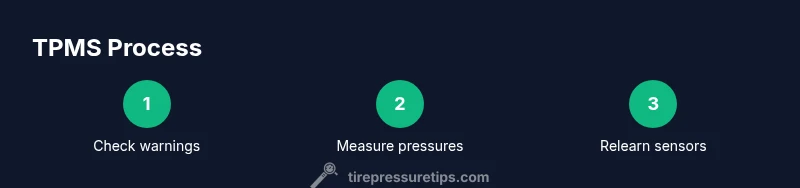
Check for TPMS warnings
Power on the vehicle and observe the TPMS warning light or message on the instrument cluster. If present, note which tire or if it’s a general warning. This step confirms there is an issue to address.
Tip: If the light blinks, refer to the manual; a blinking light often indicates a system fault rather than a simple low pressure. - 2
Measure all tires with a gauge
With tires cold, use a digital gauge to record the actual pressure for each tire. Compare these values to the recommended pressures listed on the door placard or in the manual.
Tip: Record readings so you can reproduce the pressures after inflation and before relearn if needed. - 3
Inflate to the recommended pressure
Inflate each tire to the vehicle’s recommended cold pressure. Do not exceed the max pressure stamped on the tire sidewall. Make sure all tires meet or are above the minimum spec.
Tip: Avoid overinflating; underinflation can also trigger false alarms later on. - 4
Attempt a TPMS relearn or reset
Follow the Jeep Grand Cherokee manual to initiate a relearn. This may involve a sequence in the infotainment system or a dedicated reset button on the vehicle.
Tip: Some models require ignition on with the engine off; check the exact steps in your manual. - 5
Drive to complete relearn
Drive the vehicle for a short period (often 10-20 minutes at moderate speed) to allow sensors and ECU to sync. You should see TPMS warnings clear if the relearn succeeded.
Tip: If the light remains, repeat the relearn procedure or try a different wheel sensor if available. - 6
Verify status and inspect for faults
Recheck pressures after the drive and verify that the TPMS status is normal in the instrument cluster. Inspect tires and sensors for damage if warnings reappear.
Tip: If a persistent warning appears on one corner, you may have a slow leak or a faulty sensor that requires professional service. - 7
Document and schedule maintenance
Record the final pressures and note any sensor issues. Schedule periodic TPMS checks especially after tire changes or weather changes.
Tip: Proactive maintenance reduces unexpected warnings and extends tire life.
Frequently Asked Questions
How does TPMS work on the Jeep Grand Cherokee?
TPMS monitors tire pressure via sensors and alerts when pressure falls below the vehicle’s minimum. Depending on the model, it may use direct sensors in each wheel or indirect methods based on wheel speed data. Proper maintenance ensures accurate warnings and safer driving.
TPMS uses wheel sensors or indirect data to monitor pressure and alert you when it’s low. Regular checks help you respond quickly and safely.
Why is my TPMS light on after inflating tires?
A persistent TPMS light after inflation can indicate a slow leak, a faulty sensor, or that the relearn process hasn’t completed. Recheck all tires, confirm pressures with a gauge, and run the relearn procedure per your manual.
If the light stays on after inflating, check for leaks and consider repeating the relearn process per your manual.
Do I need to reset TPMS after rotating tires?
Yes. Rotating tires can change sensor data alignment, so many Jeep Grand Cherokee models require a relearn after tire rotation to restore accurate readings.
Yes, run the relearn after rotating tires to make sure readings are accurate.
How long does a TPMS relearn take?
A typical relearn can take between 10 and 20 minutes, plus time to inflate tires and verify readings. Always follow the model-specific steps in your manual.
Usually 10 to 20 minutes, depending on the model and relearn method.
What if a TPMS sensor fails?
If a sensor fails, it usually requires sensor replacement and a relearn. A professional diagnostic tool can confirm the fault and ensure correct calibration.
If a sensor fails, replacement and relearn are typically needed and should be done by a professional.
Watch Video
What to Remember
- Check tires with a gauge regularly.
- Know whether your Grand Cherokee uses direct or indirect TPMS.
- Perform a proper relearn after tire changes or sensor work.
- Temperature changes affect readings; adjust and recheck accordingly.
- Inspect sensors and valve stems during maintenance.