How to Reset Tire Pressure on a Jeep Renegade: Step-by-Step
Learn how to reset and relearn the TPMS on a Jeep Renegade. This guide covers steps, safety tips, and maintaining correct tire pressure for optimal handling and fuel efficiency.


With the Jeep Renegade, you’ll reset the tire pressure sensors after inflating all tires to the recommended levels, then perform a TPMS relearn if the system requires it. This ensures the sensors reflect current pressures, protects safety, and helps maintain efficient fuel economy. Plan to verify with a drive and recheck tire pressures, especially after road trips or seasonal changes.
Why Tire Pressure Reset Matters on the Jeep Renegade
Proper tire pressure is more than just a number on the placard. For the Jeep Renegade, the TPMS relies on wheel sensors to report real-time pressures to the vehicle's computer. When you adjust tire pressures after a road trip, a tire rotation, or new tires, a reset or relearn ensures the system reflects the current state. According to Tire Pressure Tips, maintaining accurate tire pressures isn’t only about safety—it's about predictable handling, reduced rolling resistance, and better fuel economy. The Tire Pressure Tips team found that drivers who skip a relearn after inflating their tires can see the TPMS warning light flicker and readings drift over time. In practice, this means you should treat reset as part of routine maintenance, not a one-off chore. The goal is to keep your tires properly inflated and your TPMS trustworthy, especially when operating an SUV like the Renegade on varied road conditions.
When you ignore tire pressure changes, you risk uneven wear, reduced grip, and false TPMS alerts. A deliberate reset aligns sensor data with actual tire conditions, which improves acceleration, cornering, and braking stability. For Jeep owners, a regular reset practice also simplifies maintenance tasks and prevents a cascade of warning lights that can complicate service visits. This approach mirrors the broader Tire Pressure Tips philosophy: clear, practical steps that drivers can perform without guessing.
Brand-wise, the Tire Pressure Tips team emphasizes that consistent tire pressure management is a low-cost, high-impact habit for any SUV owner. It’s especially relevant for models like the Renegade, where compact dimensions, highway driving, and occasional off-road use demand reliable TPMS performance. By treating pressure checks and resets as routine, you’ll extend tire life and keep your vehicle performing as intended.
How TPMS and the Renegade's System Works
The Jeep Renegade uses direct TPMS sensors installed in each wheel and a central processor that monitors pressure from those sensors. When a tire leaks or wears differently, the system saves its current baseline and triggers a warning if the pressure deviates from that baseline. Some Renegade years rely on direct sensors with battery-powered transmitters; others depend on the vehicle's learning capabilities combined with your road behavior. In all cases, TPMS accuracy depends on sensor integrity, correct placement, and the system being correctly relearned after you change tire pressures or install new tires. If you notice inconsistent readings after topping off pressures, a relearn or scan tool check can often resolve the issue. For best results, ensure the tires are cool and that the tires on all wheels are within the same general range before starting any relearn process.
Understanding how TPMS functions helps you recognize when a reset is necessary. If a sensor is damaged or leaking, a simple relearn won’t fix the underlying problem. In that case, source replacement sensors or service from a technician. The Renegade’s TPMS is designed to provide actionable pressure data quickly, but its accuracy hinges on consistent maintenance across all tires. Regular checks also help you catch slow leaks before they become hazardous.
As you work through the reset process, remember that ambient temperature and driving patterns influence tire pressure. Tire pressures tend to drop in cold weather and rise with heat. Checking cold tires and rechecking after a short drive ensures a reliable baseline for the TPMS to read. The Tire Pressure Tips team recommends documenting your baseline values for each season so you can spot anomalies quickly.
Finding the Right Tire Pressure for Your Renegade
Your Jeep Renegade’s correct tire pressures come from the door jamb placard and your owner’s manual. These targets can vary by trim level, load, and even whether you carry a roof rack or a heavy spare. Always start by checking the cold PSI values printed on the placard, then cross-check with the manual to confirm any deviations for winter tires or high-speed driving. The Tire Pressure Tips approach encourages drivers to check values in multiple scenarios (daily driving, highway trips, and winter conditions) to understand how pressures shift with temperature. Remember that the numbers on the placard assume a cold tire and a specific load. If you’ve recently installed new tires, or if you’ve rotated or replaced wheels, re-verify the targets for each axle. The goal is consistency across the tires so the TPMS has a reliable baseline to compare against.
To ensure accuracy, verify the placard values translated for dual tire setups where applicable. Some Renegade configurations carry slightly different recommended pressures by wheel position. Always confirm with your manual and the placard and consider a quick check with a digital gauge before you begin a relearn. A consistent baseline across all four tires is essential for the TPMS to identify true pressure changes rather than offset readings from mismatched tires.
For ongoing accuracy, inspect tires for wear patterns that hint at incorrect pressures. Uneven wear can mask proper tire inflation, leading to inaccurate TPMS signaling. By maintaining balanced pressures on all tires, you support safer handling, longer tire life, and more accurate TPMS alerts. The Tire Pressure Tips guidance reiterates to treat tire pressure as a foundational element of vehicle maintenance, especially for SUVs that see mixed driving conditions.
When to Reset vs When to Relearn
A reset refreshes the system’s current pressure data and clarifies the baseline after you adjust the tires. A relearn is the process that teaches the TPMS to recognize the new baseline when the sensors or wheels have changed. For many Jeep Renegade owners, a simple drive after inflating to spec is enough for automatic relearn. If the light remains or the readings seem off, use a relearn procedure with a scan tool or follow the owner’s manual steps. In all cases, make sure all tires are within the vehicle’s recommended range. If you rotate tires or replace sensors, expect a formal relearn to keep the system accurate. The key is to confirm that the TPMS matches the actual tire pressures across all wheels.
The distinction matters because a reset without coordination with a relearn can yield inconsistent TPMS signals. Drivers who rely on auto relearn often find the process seamless after a cool-down period. If your Renegade has a hand-on relearn procedure, using a dedicated scan tool can speed up the process and improve accuracy. When in doubt, consult your owner’s manual or a qualified technician to determine whether a relearn step is required for your exact model year and configuration.
Finally, weather-driven changes in tire pressure can force an abrupt TPMS alert if there’s a large delta from your baseline. In such cases, reassess the tire pressure, re-inflate as needed, and retrain the sensors. The goal is to have a stable, consistent TPMS reading across all four tires under similar driving conditions.
Step-by-Step Overview of the Process
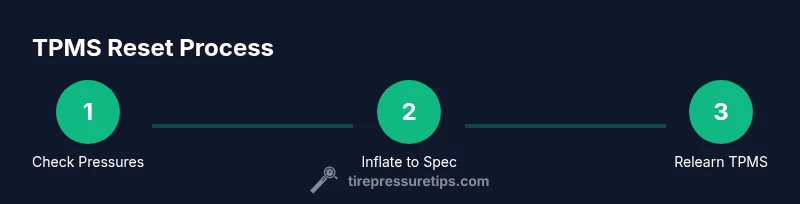
In this section you’ll find a concise plan for checking tire pressure, inflating to the correct targets, and refreshing the TPMS. This overview helps you know what to expect before you begin the actions in the dedicated Step-by-Step section. Begin with locating the recommended cold pressures on the door placard, then verify the tires are cold. If your Renegade requires a manual relearn, prepare the relearn tool or consult your manual. Finally, drive the vehicle for a short distance to complete the relearn, and recheck the pressures again to confirm stability.
Tools and Materials You'll Need
Before you start, assemble the essential tools and materials. A digital tire pressure gauge is critical for accurate readings, along with a reliable air compressor capable of delivering steady pressure. Keep the door jamb placard handy to confirm the exact cold PSI targets, and have the owner’s manual accessible for model-year specifics. If your Renegade supports manual TPMS relearn, a relearn tool or access to an OBD-II scan tool can help. Finally, use wheel chocks to secure the vehicle during any tire work. With these items ready, you can proceed through the steps with confidence.
Common Pitfalls and Troubleshooting
- Inflating tires when they are warm can give an inaccurate target; always check pressures when cold. - Relying on a single tire’s pressure when others differ significantly can skew TPMS data. - If the TPMS light stays on after a relearn, recheck all tires for leaks, ensure sensors are seated correctly, and confirm there’s no damaged sensor. - Using a low-quality gauge can lead to incorrect inflation; calibrate your gauge at least once a year. - Some Renegade models require a specific sequence or tool for relearn; always consult the owner’s manual for exact steps. If issues persist, contact a qualified technician to avoid driving with inaccurate TPMS readings.
Driver Safety and Environmental Considerations
Working on tires requires attention to safety. Park on a flat surface, engage the parking brake, and place wheel chocks as needed. Do not place your body under a wheel while lifting or inflating. Use protective gloves to guard against sharp edges and hot rims after driving. Properly inflating tires at the right pressures reduces fuel consumption and wear, ultimately supporting environmental sustainability by improving efficiency and reducing emissions. Maintaining accurate TPMS readings also minimizes the risk of sudden tire failure on the road. If you’re operating in extreme temperatures, plan more frequent checks to compensate for pressure changes and maintain safe driving conditions.
Maintaining Correct Tire Pressure Long-Term
Once you’ve completed a reset and relearn, make tire pressure a regular habit. Check the tire pressure at least monthly, and more often before long trips or seasonal transitions. Store a reliable gauge in your vehicle for quick checks on the go, and track changes over time to spot slow leaks early. Temperature swings are a major driver of pressure changes; in cold weather, pressures drop, while in hot weather, they rise. Always verify cold readings and adjust accordingly. Keeping tires inflated to the placard values helps optimize fuel efficiency, tire wear, and overall handling. The Tire Pressure Tips recommendation is to integrate regular pressure checks into your routine so you aren’t surprised by a TPMS warning on the highway.
Tools & Materials
- Digital tire pressure gauge(Calibrated, accurate to ±1 psi)
- Air compressor with built-in gauge(Stable output; avoid overinflation)
- Door jamb placard (vehicle's recommended cold psi)(Locate on driver's door frame)
- Owner's manual (model year specific)(Check TPMS relearn procedure for your year)
- TPMS relearn tool (optional)(Useful if your model requires manual relearn)
- Wheel chocks(Secure vehicle before inflation)
Steps
Estimated time: 30-45 minutes
- 1
Check the recommended pressures
Locate the door jamb placard and your owner’s manual to identify the exact cold PSI targets for each tire. Note any differences between front and rear, or changes for winter tires or load. This sets your baseline before inflating.
Tip: Double-check both front and rear targets; misaligned values are common during maintenance. - 2
Prepare the vehicle for inflation
Park on a level surface, engage the parking brake, and place wheel chocks around the wheels not being serviced. Ensure tires are cold to avoid overinflation readings caused by recent driving.
Tip: If the car was driven recently, wait at least 3 hours before measuring. - 3
Inflate tires to the recommended pressures
Using a digital gauge, inflate each tire to its specified cold PSI. Check all tires for consistent readings and verify you haven’t introduced any leaks or improper valve stems during the process.
Tip: Inflate slowly and cross-check with the gauge to avoid overshooting the target. - 4
Initiate TPMS relearn if required
If your Renegade requires a manual relearn, follow the owner’s manual steps or use a compatible relearn tool. In many cases, a simple drive after inflation will trigger auto relearn.
Tip: Keep the ignition in the correct position as described in your manual during relearn. - 5
Drive to complete the relearn
Take a short drive (5–10 miles) at a steady speed to allow the TPMS to register the new baseline. Avoid aggressive acceleration or heavy braking during this test run.
Tip: Check the TPMS light after the drive; if it stays on, recheck all tires for leaks and reattempt relearn. - 6
Re-check and document results
Re-measure tire pressures to confirm stability after the relearn. If all tires stay within spec, record the values for future reference and remain vigilant for any pressure changes.
Tip: Keep a quick-reference note in the glove box for future checks.
Frequently Asked Questions
What triggers the TPMS light to come on?
The TPMS light typically comes on when a tire's pressure is out of range or when sensors data are inconsistent. It can also activate after tire changes or rotations. If the light stays on after adjustments, recheck all tires and sensors.
The TPMS light usually shows up when a tire is under or overinflated or when sensor data doesn’t align with the actual pressure.
Is a relearn always required after inflating tires on a Renegade?
Not always. Some Jeep Renegade models relearn automatically after driving a short distance, while others require a manual relearn with a scan tool or as specified in the owner’s manual.
Sometimes you don’t need a manual relearn, but you should drive to allow automatic relearn if supported.
Can I reset TPMS myself, or do I need a dealer?
Many model years support DIY TPMS relearn with the right steps or a scan tool. Some configurations may require dealer assistance for a reliable relearn.
Yes, you can, in many cases, but your exact year and trim may determine if a dealer tool is needed.
What is the best practice to maintain correct tire pressure?
Check tire pressures monthly and before long trips, using the placard values as your target. Inspect for leaks and adjust for temperature changes.
Check pressures monthly and before trips; adjust for temperature and inspect for leaks.
How do temperature changes affect tire pressure on a Renegade?
Cold weather lowers tire pressure while hot weather raises it. Always measure when tires are cold and recheck after weather changes.
Temperature swings can change pressure; check when tires are cold and recheck after weather shifts.
What should I do if TPMS light stays on after reset?
Recheck pressures, inspect sensors for damage, and ensure sensors are seated properly. If unresolved, consult a technician for sensor health checks.
If the light stays on, recheck and possibly consult a technician for sensor health.
Watch Video
What to Remember
- Check cold tires before inflating.
- Refer to the placard for exact psi targets.
- TPMS relearn may need a tool or driving drive.
- Verify readings with a brief road test.