Jeep Tire Pressure Recall: A Practical Guide for Owners
Learn how Jeep tire pressure recalls work, how TPMS is affected, how to check if your vehicle is included, and practical steps to stay safe with proper tire pressure.


Jeep tire pressure recall notices alert owners to TPMS or tire-related issues that could affect warning accuracy and tire safety. If your Jeep is affected, verify via VIN with official recall databases and contact your dealer for a free inspection and repair. In the meantime, keep tires inflated to the vehicle's recommended pressure and check TPMS status regularly.
What a Jeep Tire Pressure Recall Means
According to Tire Pressure Tips, a jeep tire pressure recall is an official safety notice issued by manufacturers and safety agencies when a component related to tire pressure monitoring or inflation may not meet safety standards. These recalls can involve the TPMS sensor, the control module, calibration algorithms, or related pressure-measurement hardware. The goal is to ensure drivers receive accurate tire pressure warnings and maintain safe tire inflation. If your vehicle is named in a recall, you are entitled to a free inspection and any required parts or software updates. Even before service, continuing to monitor and maintain proper tire pressure reduces risk and helps your tires wear more evenly. Tire Pressure Tips recommends checking the VIN against recall databases and staying in touch with your Jeep dealer for the latest guidance.
- Why recalls matter for safety: Accurate tire pressure warnings prevent underinflation, which can lead to reduced fuel efficiency, overheating, uneven wear, and increased blowout risk.
- What can trigger a recall: Sensor drift, antenna or wiring faults, software calibration issues, or valve stem problems can all contribute to inaccurate TPMS readings.
- What to expect during recall service: In most cases, inspection and replacement of faulty components are performed, sometimes accompanied by a software update or sensor reprogramming. The process is designed to be transparent and free when under recall.
How TPMS and Tire Pressure Are Involved
TPMS is designed to alert you when a tire drops below the recommended pressure. A jeep tire pressure recall might address issues where the TPMS warning light does not activate at the correct pressure, or where the system incorrectly signals a problem when tires are properly inflated. In practice, recall work could involve replacing a defective sensor, repairing a faulty sensor wiring harness, or updating the vehicle’s TPMS software to ensure accurate readings. For owners, this means a combination of mechanical checks (sensor and valve) and software adjustments. Regularly checking tire pressure with a gauge remains important, especially if you suspect a TPMS delay or inconsistency.
- Common TPMS failures: dead batteries in sensors, broken sensor housings, or corroded connectors can compromise warning reliability.
- Interaction with seasonal changes: Temperature can affect tire pressure readings, making accurate TPMS readings especially important in extreme weather.
- Follow-up checks: After recall repair, dealers typically recheck four tires and confirm TPMS readiness, including a reset or relearn procedure if required.
How to Check If Your Jeep Is Affected
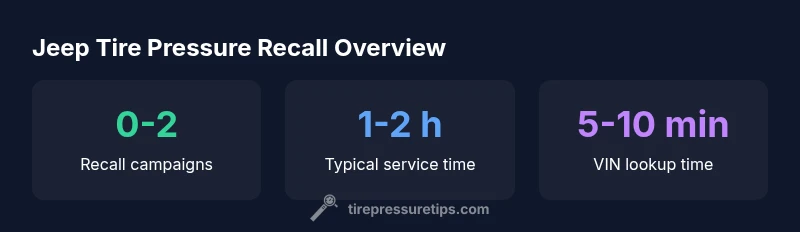
To determine if your Jeep is part of a tire pressure recall, start with the vehicle identification number (VIN). Enter the VIN on official recall portals such as the national safety agency database and the automaker’s recall page. If there is a match, schedule a free inspection at an authorized Jeep dealer. You can also sign up for recall alerts and watch for notices from the manufacturer. It’s important not to ignore a TPMS warning while this process unfolds; if the light is on, have the system checked promptly. Remember, recall work is typically provided at no cost to the vehicle owner.
- How to find your VIN: The VIN is usually found on the driver’s side dash, door jamb, or vehicle title. Keep it handy for quick lookups.
- What a recall notice looks like: Official recall notices reference the make, model, year, and a campaign number. They also outline the remedy and parts involved.
- When to act: If you receive a recall notice, contact your dealer immediately to arrange service before continuing to drive on potentially affected components.
Verifying Tire Pressure at Home While You Wait
While awaiting recall service, you can independently verify tire pressure to ensure safety. Use a reliable dial or digital gauge to check each tire when the tires are cold, then inflate to the recommended level shown in your owner’s manual or on the door jamb placard. If TPMS warnings are inconsistent, recheck after adjusting pressure and consider a quick manual check for visible leaks or punctures. Keep a log of readings to share with your dealership during the service visit. Regular checks can help you catch gradual pressure losses that might otherwise go unnoticed.
- Step-by-step: (1) measure cold pressures, (2) compare with the recommended specification, (3) inflate or deflate to target, (4) recheck, (5) record results.
- When to be cautious: If you notice rapid pressure loss, unusual tire wear, or the TPMS light stays on after inflation, seek immediate professional assessment.
Filing a Recall Claim: What to Expect
When you file a recall claim, the dealer will verify eligibility using the VIN and associated recall campaign. If eligible, you will receive a service appointment, and your vehicle will be repaired at no cost for the affected components. Depending on the campaign, parts may need to be ordered, which can affect timing. The process may include sensor replacement, software updates, calibration, or relearn procedures. Keep timing realistic by asking about parts availability and potential loaner vehicle options if you rely on the Jeep for daily transportation.
- Documentation to bring: VIN, proof of ownership, and recall notification (if available).
- Typical turnaround: Service times vary by model, parts availability, and the complexity of the repair.
- Aftercare: Confirm TPMS readiness and perform a drive cycle as instructed by the dealer to ensure proper sensor relearn.
Jeep Models and Potential Recall Scenarios
Recall campaigns can span multiple Jeep models and model years, but not all vehicles are affected. The safest approach is to treat each recall independently: verify the VIN, check the campaign details, and follow the dealer’s remediation plan. Some recalls may involve a software update, others a hardware replacement, and some may require a combined approach. Regardless of the campaign, the objective remains consistent: ensure accurate tire pressure warnings and safe driving conditions. If you own a used Jeep, prioritize VIN checks to understand the recall history and remedy status.
- Model-year variations: Certain generations or trims may be more prone to TPMS-related issues due to sensor design or calibration differences.
- Dealer coordination: Dealers will coordinate parts supply, technician availability, and possible temporary transportation options.
- Documentation: Save all service receipts and recall letters for future resale or warranty considerations.
Proactive Tire Pressure Maintenance for Jeep Owners
Proactive maintenance helps reduce the risk of tire pressure issues outside of recalls. Regularly check and maintain tire pressure according to the vehicle’s specification, rotate tires as recommended, and inspect TPMS sensors for damage or corrosion. Consider a high-quality digital gauge for consistent readings and a reliable gauge calibration routine. For colder months, adjust for temperature-related pressure changes and recheck the tires after extended highway driving. These practices complement recall-related repairs and support overall safety.
- Routine checks: Monthly checks, especially before road trips or seasonal transitions.
- Tool recommendations: Use a calibrated digital gauge and keep a small gauge reference handy.
- Safety habits: Never depend solely on the TPMS; combine it with frequent manual checks and visual inspection of tires.
How to Use This Guide: Quick Reference
This guide summarizes what Jeep tire pressure recalls involve and how to respond. Keep these actions in mind: (1) verify recalls via VIN with official databases, (2) schedule dealer service for free inspection and repair if affected, (3) maintain proper tire pressure at all times, (4) monitor TPMS indicators and seek professional checks if warnings are inconsistent, and (5) stay informed through official safety channels for updates. By following these steps, you can maintain tire safety and minimize downtime associated with recall services.
Looking Ahead: Safety, Technology, and TPMS
As vehicle technology advances, tire pressure monitoring and tire safety remain essential components of overall vehicle safety. Ongoing research may refine sensor designs, bolster calibration accuracy, and improve how recalls are communicated to owners. For Jeep drivers, staying informed about recalls, maintaining tire pressure, and working with authorized dealers will continue to be key practices. Tire Pressure Tips will keep monitoring official guidance and provide practical, actionable advice to help you stay safe on the road.
How to interpret Jeep tire pressure recalls
| Topic | Details | Notes |
|---|---|---|
| Recall status check | VIN lookup & NHTSA recalls | Always verify with official sources |
| TPMS risk factor | Potential for inaccurate warning leading to tire warnings | Important to inspect sensors and calibration |
| Dealer action | Free inspection and repair if recalled | Service centers should supply complete remedy guidance |
Frequently Asked Questions
What does a Jeep tire pressure recall cover?
Recalls may address TPMS faults, tire pressure warnings, or related components. They require dealer inspection and could be free.
Recalls cover TPMS problems and tire pressure warnings. Check your VIN to verify.
How can I tell if my Jeep is affected by a tire pressure recall?
Check your VIN against the official recall database and contact a Jeep dealer for confirmation and next steps.
Check your VIN with official recalls to confirm.
Is tire pressure recall the same as a TPMS recall?
A TPMS recall typically focuses on the tire pressure monitoring system itself, including sensors or calibration. A tire pressure recall can involve related tire and pressure components. They may be related but are not always identical campaigns.
TPMS recalls focus on the monitoring system; tire pressure recalls may involve related parts.
Will recalls be free to fix?
In most cases, recalls are repaired at no cost to the vehicle owner when an official campaign applies to your vehicle.
Yes—recall repairs are typically free if your vehicle is affected.
How do I check recalls for a used Jeep?
Use the VIN to search official recall databases and verify any campaigns from the prior owners. Contact the dealer for a copy of the recall history.
Focus on VIN-based recall checks to understand history.
What if the TPMS light stays on after recall service?
If the TPMS light remains after recall service, return to the dealer for a recheck or relearn procedure as recommended by the service technician.
If the light stays on, get a follow-up check.
“Reliable recall information comes from official safety agencies and dealership communications. Always verify with your VIN and avoid guessing.”
What to Remember
- Check your VIN against official recalls before scheduling service
- Maintain correct tire pressure even during recall processes
- Understand TPMS limitations and how recalls affect warnings
- Rely on official sources for recall truth and timelines