Jeep Grand Cherokee Tire Pressure Guide 2026
Learn how to check, adjust, and maintain tire pressure on the Jeep Grand Cherokee for safety, fuel efficiency, and optimal TPMS performance. Step-by-step guidance, tools, and maintenance tips from Tire Pressure Tips.


This guide helps you check and adjust tire pressure on the Jeep Grand Cherokee for safety, fuel efficiency, and TPMS reliability. You’ll locate the official specs on the door placard and in the owner's manual, learn cold-tire measurement, and discover how to inflate correctly for load, temperature, and driving conditions. Follow the steps and keep records for ongoing maintenance.
Why Proper Tire Pressure Matters for the Jeep Grand Cherokee
Correct tire pressure is central to safety, handling, tire wear, and fuel economy for the Jeep Grand Cherokee. Underinflated tires reduce cornering grip, increase stopping distances, and wear the outer edges of the tread. Overinflation can make the tire ride too firm, reduce grip on potholes and debris, and cause the center of the tread to wear faster. For drivers who use their Grand Cherokee for family trips, towing, or off-road adventures, maintaining the right pressure helps maintain predictable steering and load-bearing capability. The Tire Pressure Tips team emphasizes that small pressure adjustments can yield meaningful benefits in daily driving and long trips alike. Always verify pressures when tires are cold and before long drives, and account for loads, climate, and road conditions to keep the vehicle safe and efficient.
Where to Find the Official Specs for Your Jeep Grand Cherokee
Your Jeep Grand Cherokee’s official tire-pressure specs come from two reliable sources: the door jamb placard and the owner's manual. The placard lists the recommended cold pressures for each tire position (front, rear, and sometimes spare) and may differentiate by load or driving conditions. The owner’s manual provides broader guidance on tire care and how certain trims or tire sizes can shift the recommended range. If you rotate tires or change the wheel size, always recheck against the placard, as changes can shift the correct target pressure. For quick reference, many drivers of the Grand Cherokee keep a small note with the exact numbers so that they aren’t searching the manual every time. According to Tire Pressure Tips, always baseline your readings against the official sources and recheck after any adjustment to confirm accuracy.
How to Check Tire Pressure Correctly
Checking tire pressure correctly requires consistent procedure and reliable tools. Start with a cold tire measurement, since driving heats tires and raises pressure. Use a high-quality gauge and note the reading in psi (or kPa, depending on your gauge). Remove the valve cap, place the gauge on the valve stem, and press steadily to get a precise reading. Repeat for all tires, including the spare if you rotate tires regularly. Record every value and compare to the placard on the door. If readings differ significantly between tires, inspect each tire for leaks, damage, or abnormal wear. The goal is to identify tires that need attention before a trip or during seasonal changes, not just after a quick drive.
Inflating and Adjusting for Load and Temperature
Inflation should bring each tire to the exact specification printed on the placard. If you frequently carry heavy loads or tow a trailer, you may need to adjust within the recommended range. Make inflation changes in small increments, recheck with the gauge, and then drive a short distance and recheck again to account for temperature changes. Temperature influences tire pressure: hot days increase readings, while cold weather lowers them. The key is consistency—inflating to the correct cold pressure and then rechecking after a drive helps catch leaks, slow leaks, or misreads. Keep a log of readings to observe trends and ensure your tires stay in their optimal pressure band.
TPMS: What It Does and How to Respond to Alerts
The Tire Pressure Monitoring System (TPMS) monitors tire pressure and alerts you when a tire drops below the recommended level. If TPMS warns, pull over safely, inspect all tires, and measure with a gauge. If a tire is underinflated, inflate to the placard value and recheck after a few minutes of driving. If the warning persists, inspect for leaks, punctures, or a faulty sensor. TPMS is a fantastic safety net, but it does not replace manual checks. The system may not reflect rapid pressure losses from a puncture, so a periodic manual check remains essential.
Seasonal and Driving Conditions: Temperature, Towing, and Off-Road
Seasonal changes and driving conditions affect tire pressure. Colder mornings can reduce pressure, while hot weather can increase it—something to monitor if you store the Grand Cherokee in a garage or drive in fluctuating climates. When towing or carrying heavy loads, the pattern of tire wear and pressure demands may shift, and the placard’s higher-range values are meant to accommodate it. Off-road use or aggressive driving on rough terrain can also impact pressure and tire-seal integrity, so rechecking after a trip is wise. The goal is stable handling, even wear patterns, and predictable brake response across weather and usage conditions.
Spare Tire and Inflation: Do You Need to Check It?
Spare tires deserve attention too. Many Grand Cherokee owners neglect the spare until a flat occurs, but a cold, properly inflated spare is essential for a quick, safe replacement. If your spare uses the same tire size and type as the other tires, treat it the same as the day’s primary tires. Check it against the placard’s pressure target and inflate to spec when you change your tires. A spare with correct pressure can save you by reducing downtime and keeping you moving in a pinch.
Common Mistakes and How to Avoid Them
Common mistakes include inflating based on a forecast rather than the placard, using an old, inaccurate gauge, and assuming all tires require identical pressures. Also, mixing tires with different sizes or tread patterns without rechecking the target pressure can lead to uneven wear and handling changes. To prevent these issues, always reference the placard, use an accurate gauge, and rotate tires as recommended by the manufacturer. Tire Pressure Tips emphasizes routine checks—preferably monthly and before long trips—to avoid surprises on the road.
Maintenance Schedule: Quick 15-Minute Checks You Can Do
To stay ahead of pressure problems, set a monthly reminder to check all four tires and the spare. Perform a quick cold-check each month and before any long trip or heavy-load outing. If you notice a curb impact, slow leak, or wheel damage, get the tires checked promptly. A predictable maintenance routine reduces the risk of sudden pressure losses and helps you drive with confidence. Keeping a simple log of your readings also helps you detect gradual leaks and aging tires before they become safety concerns.
Tools & Materials
- Digital tire pressure gauge(Calibrated; read to the nearest psi or kPa)
- Portable air compressor(With a built-in gauge if possible)
- Owner's manual and door placard(For exact cold-pressure specs and load recommendations)
- Valve-cap replacements(Keep caps handy to prevent dirt entry)
Steps
Estimated time: 20-35 minutes
- 1
Locate the correct pressures
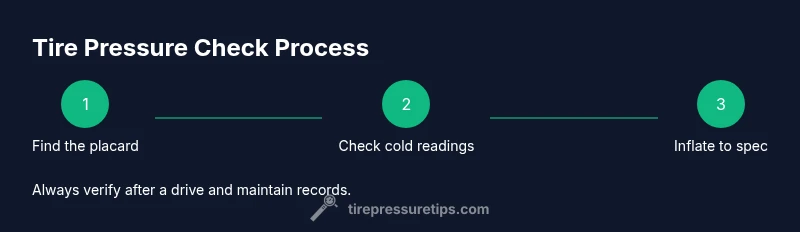
Open the driver-side door and locate the tire information placard. Note the cold-pressure targets for each tire position (front, rear, and spare, if listed). If your Grand Cherokee has different sizes front and rear, record both values. Keep the placard accessible for quick reference during inflation.
Tip: If you have changed wheel sizes, consult the manual or dealer for updated targets. - 2
Check tires when cold
Tires must be cold to get an accurate reading. Avoid checking immediately after highway driving or long trips, as heat raises pressure readings. If you’ve just driven, wait at least 3 hours or until tires return to ambient temperature before measuring.
Tip: Turn off the vehicle so you aren’t warming tires with the engine while you measure. - 3
Read all tires with a gauge
Remove the valve caps from each tire, press the gauge onto the valve stem, and hold firmly to get a stable reading. Record each tire’s pressure, including the spare if you plan to rotate it soon. Use the same gauge for consistency.
Tip: Take multiple readings to confirm accuracy; an outlier may indicate a faulty gauge or a slow leak. - 4
Inflate or deflate to spec
If a tire is below the target, inflate in small increments (about 1-2 psi at a time) and recheck after each increment. If a tire is above target, release air in small bursts and remeasure. Repeat until each tire matches the placard.
Tip: Do not exceed the tire’s maximum inflation pressure stamped on the sidewall. - 5
Recheck after driving
Take a short drive to seat the tire beads and settle the new pressure, then recheck all readings. Temperature changes during driving can affect pressure, so final values after a drive are the most accurate reflection of real conditions.
Tip: If a reading drifts, inspect for leaks or a damaged valve stem. - 6
Check spare and plan maintenance
If the spare is a full-size tire, measure its pressure and adjust as needed. Add the spare check to a maintenance routine—log your readings and set reminders monthly or before long trips to stay proactive.
Tip: Rotating tires can change which tire gets which target pressure; re-check after rotations.
Frequently Asked Questions
Where do I find the tire pressure specs for my Jeep Grand Cherokee?
Check the door jamb placard and the owner’s manual for the exact cold-pressure targets. If you’ve changed wheel sizes or trim, verify the updated specification against the placard.
Look at the door jamb sticker and the manual for the exact cold pressures; verify any changes if you upgraded tires.
Can I check tire pressure with the engine running?
No. Tire pressure readings are most accurate when tires are cold. Checking after driving can give inflated readings that mask slow leaks or underinflation.
Check when the tires are cold, not with the engine running.
Should I adjust pressure for heavy loads or towing?
Yes. The placard typically provides higher targets for heavy loads or towing. Always stay within the recommended range and adjust only by small increments, then recheck.
If you’re hauling, use the higher end of the recommended range and recheck after loading.
What should I do if the TPMS warning lights up?
Pull over safely, inspect all tires, and measure their pressures. Inflate to the placard target if needed and recheck after a brief drive. If the warning persists, check for leaks or faulty sensors.
If TPMS warns, pull over, check all tires, and recheck after inflating to spec.
Is nitrogen filling beneficial for Jeep Grand Cherokee tires?
Nitrogen is optional; standard automotive air is fine for most drivers. The difference in everyday driving is minimal unless you operate in extreme conditions.
Nitrogen isn’t required for normal driving; regular air works well.
How often should I check tire pressures?
Aim to check monthly and before long trips, especially when seasons change or you adjust tire load.
Check monthly or before big trips to stay on top of pressure changes.
Watch Video
What to Remember
- Check the door placard for exact cold-pressure targets.
- Use a reliable gauge and measure tires cold.
- Adjust for load and temperature within the placard range.
- Respond promptly to TPMS warnings with a manual check.
- Create a monthly tire pressure maintenance habit.