Tire Pressure Unavailable in Jeep Grand Cherokee: Quick Troubleshooting Guide
Urgent guide to fix Tire Pressure Monitoring System issues on the Jeep Grand Cherokee when tire pressure shows as unavailable. Learn quick checks, relearn steps, and when to call a pro.


Understanding the symptom and why it matters
When the vehicle’s dashboard shows 'tire pressure unavailable' on a Jeep Grand Cherokee, it means the TPMS cannot read data from one or more wheel sensors. This is more than a nuisance — it reduces your ability to monitor tire pressure accurately, which can affect handling, fuel economy, and tire wear. The first step is to distinguish this message from a simple 'low pressure' warning. A true low-pressure alert still provides a pressure reading, while 'unavailable' indicates a data gap at the sensor or system level. According to Tire Pressure Tips, the most common root causes involve sensor health, battery life, or calibration needs. You’ll usually notice the message even when all tires appear inflated to the recommended pressure. Before assuming a tire is out of spec, run manual checks and take note of any recent tire rotations, wheel changes, or replacements that could have disrupted the sensor IDs.
Common causes of tire pressure unavailable on Jeep Grand Cherokee
- TPMS sensor battery failure or aging sensor battery
- Blown TPMS fuse or damaged wiring harness
- Sensor ID mismatch or missing relearn after tire rotation or wheel change
- Physical damage to a sensor, valve stem, or wheel rim that prevents data transmission
- Vehicle computer or TPMS module glitch requiring a relearn or reset
According to Tire Pressure Tips, battery health and proper relearn are among the most frequent culprits. If you recently rotated tires or changed wheels, a relearn/check may be all that’s needed.
How to safely verify tire pressures manually
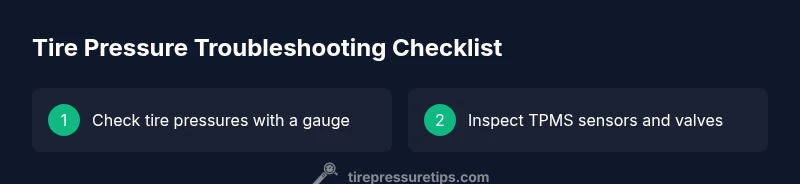
Before diving into sensor checks, confirm all tires are within the recommended range using a reliable tire pressure gauge. Do this with the tires cold for accuracy, then inflate to the door placard spec or owner’s manual recommendation. Record your readings to compare against the vehicle’s TPMS data. If any tire reads too high or too low, adjust accordingly and recheck after a few minutes to account for temperature changes. This manual step helps determine whether the issue is a sensor-related fault or simply a misread caused by temperature, valve damage, or a slow leak.
TPMS sensors: battery health, location, and relearn process
Each wheel hosts a TPMS sensor powered by a tiny battery. Over time, batteries lose capacity, leading to intermittent readings or permanent failures. Learn/relearn procedures differ by model year; some Jeep Grand Cherokee variants support in-vehicle relearn by following the owner’s manual prompts, while others require a handheld TPMS tool. If you suspect a sensor issue, inspect the valve stem for damage, check for corrosion on valve stems, and verify sensor positioning after wheel work. A failed sensor or dead battery commonly triggers the 'unavailable' message.
Diagnostic flow: symptom → diagnosis → fixes
- Confirm the symptom is consistent across all wheels or isolated to one wheel. 2) Verify manual tire pressures. 3) Inspect tires, valves, and wheel hardware for damage. 4) Check the TPMS fuse and wiring; replace if blown or damaged. 5) Perform a TPMS relearn or sensor reprogramming with a compatible tool. 6) If unresolved, replace faulty sensors or seek professional diagnostics. 7) After any fix, drive the vehicle at moderate speeds to allow the system to relearn.
STEP-BY-STEP: Most common fix for Jeep Grand Cherokee
- Park on a level surface and ensure tires are cold. 2. Use a reliable gauge to measure each tire; inflate to the door placard spec. 3. If available, put the vehicle in TPMS Learn mode or use a TPMS tool to relearn sensors. 4. Inspect sensors and valve stems for damage; replace if needed. 5. Check the TPMS fuse and nearby wiring; replace blown fuses and repair any damaged harness. 6. If the issue persists, replace the faulty sensor(s) and perform a full relearn. 7. Test drive at moderate speed to confirm resolution.
Safety tips and professional help when needed
- Do not ignore the warning; driving with incorrect or unreadable TPMS data can increase the risk of tire failures.
- If you hear hissing from a tire or detect a wheel with abnormal heat, pull over and inspect the tire immediately.
- If the TPMS warning persists after basic checks, seek professional service. Technicians can perform advanced diagnostics, sensor health checks, and complete relearn procedures using calibrated equipment.
Prevention and maintenance tips to avoid future issues
- Regularly check tire pressure with a gauge, especially after temperature changes or long trips.
- Schedule periodic TPMS battery health checks and sensor inspections during wheel service.
- When rotating tires or replacing wheels, ensure proper sensor relearn and ID matching.
- Use a high-quality TPMS tool for relearns and avoid mixing sensor brands if not compatible with your Jeep Grand Cherokee.