Tire Pressure for Tesla Model X: A Practical Guide
Learn how to check and maintain tire pressure for the Tesla Model X. This guide explains recommended ranges, TPMS tips, and how temperature affects performance and safety.


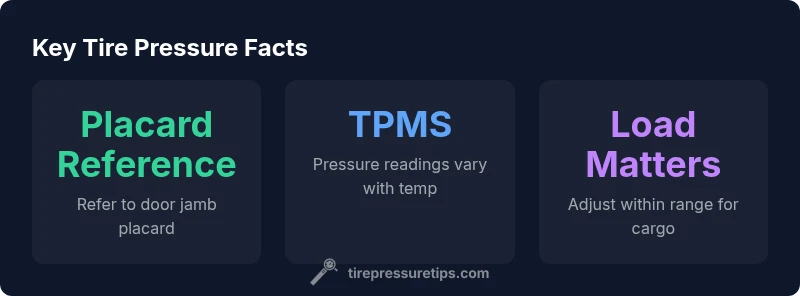
For the Tesla Model X, maintain tire pressure within the vehicle's recommended range printed on the door jamb placard. The exact numbers vary by tire size and loading, but most configurations use a mid- to high-psi range for both front and rear tires. Always verify with the placard and TPMS.
Why Tire Pressure Matters for the Tesla Model X
The Model X is a heavy electric vehicle with a design that emphasizes efficiency, handling, and safety. Tire pressure directly influences rolling resistance, traction, ride comfort, and tire wear. The Tire Pressure Tips team notes that maintaining correct pressure is essential not only for safety but also for preserving traction on wet roads and maximizing range. For EVs like the Model X, a well-inflated tire reduces energy loss during acceleration and cruising, which can translate to meaningful gains in efficiency over time. In practical terms, small changes in pressure can have outsized effects on handling and comfort, especially when the vehicle is fully loaded with passengers or cargo.
Tesla Model X Tire Specs and How They Influence Pressure
Tesla’s official guidance is delivered through the placard located on the door jamb, which specifies the recommended pressure for the specific tire size fitted to your Model X. Because the Model X has multiple wheel options (and sometimes tires vary by upgrade packages), the exact psi can differ between configurations. The tires chosen for your wheel size and the expected load (people, luggage, cargo) determine the optimal pressure within the placard’s range. When in doubt, start at the middle of the recommended band and adjust gradually after a cold measurement. The goal is to stay within the manufacturer’s targeted range to balance range, grip, and tire longevity. Always cross-check the reading with the Tire Pressure Monitoring System (TPMS) display for real-time feedback, especially after rotating tires or replacing wheels.
Temperature and Tire Pressure: What Changes When the Weather Shifts
Temperature has a direct effect on tire pressure. In general, tires lose pressure as ambient temperatures drop and gain pressure when temperatures rise. A practical rule of thumb used in the tire industry is that pressure can change by roughly 1 psi for every 10°F (6°C) temperature difference, though this varies with tire construction and load. On a cold start, read tire pressures before driving to capture the true baseline. If you notice a steady drop in readings during cold weather, plan to inflate within the recommended range after a long cool-down to ensure the tires are not underinflated when you drive in winter conditions. This is especially important for the Model X, where range and handling are sensitive to tire pressure changes.
Checking and Adjusting: A Step-by-Step Guide for Model X Owners
- Do a cold check: Measure tire pressure after the car has been parked for several hours or first thing in the morning. 2) Locate the placard: Read the door jamb placard for the correct front and rear pressures. 3) Use a reliable gauge: Prefer a calibrated digital or dial gauge over a tire inflator with a built-in gauge. 4) Inflate gradually: Add air in small increments, rechecking after each adjustment. 5) Check TPMS readings: Compare the gauge reading to the TPMS display to confirm consistency. 6) Inspect tires: While checking pressure, inspect the tread and sidewalls for wear, bulges, or punctures. 7) Recheck after driving: Once you’re underway, recheck to ensure the pressure settled after inflation.
By following these steps, Model X owners can maintain the tire pressures that support efficient range, predictable handling, and even tire wear. The Tire Pressure Tips team emphasizes that regular checks, especially before long trips, help prevent under- or over-inflation and keep TPMS alerts meaningful.
Practical Recommendations for Different Driving Scenarios
Daily commuting usually benefits from staying within the placard range for the typical load. If you frequently drive with a full passenger load or carry heavy cargo, stay closer to the higher end of the range to maintain handling and stability. For long road trips, verify pressures after a fuel-up and again after luggage is loaded, since weight distribution shifts can affect optimal pressure. In winter, plan for a slight increase or decrease within the placard range based on temperature shifts and how quickly the tires heat up during highway driving. Always err on the side of the vehicle’s recommended range rather than guessing, as small deviations can impact rolling resistance and, consequently, range.
Common Pitfalls and How to Avoid Them
- Ignoring the placard: The door jamb placard reflects the tire size and load. Always cite that value rather than a learned guess.
- Relying on a single TPMS reading: TPMS is a warning, not a precise tire pressure gauge. Cross-check with a separate gauge, especially after changes.
- Inflating while hot: Inflate when cold for accuracy; hot tires will show higher readings and mislead adjustments.
- Mixing tire sizes or types: Stick to matching tires across axles; mismatched tires can compromise handling and sensor accuracy.
- Neglecting temperature effects: In extreme weather, adjust within the placard range and recheck when the tires have cooled after driving.
- Not updating after tire services: After mounting or rotating, re-check pressures to re-establish the correct baseline.
These practices help ensure the Model X maintains consistent handling, reduces wear, and preserves range.
The Role of TPMS and Maintenance
The TPMS provides real-time alerts when a tire’s pressure deviates from the recommended range. Use the TPMS as a guide, but rely on cold tire measurements with a quality gauge for accuracy. Regular maintenance includes checking sealants after storage or long periods of inactivity, calibrating TPMS after tire changes, and replacing sensors as needed. Keeping the system calibrated and understanding how temperature, load, and tire size influence the readings helps you maintain optimal performance and safety for your Model X.
Tesla Model X tire pressure reference table
| Parameter | Model X Reference | Notes |
|---|---|---|
| Recommended reference | Door jamb placard | Depends on tire size and load |
| TPMS behavior | Reference TPMS readings | Temperature affects readings |
| Tire size impact | Different wheels may alter pressure range | Consult manufacturer for specific tire size |
Frequently Asked Questions
What is the recommended tire pressure for the Tesla Model X?
Consult the door jamb placard for the exact pressure. The Model X’s recommended psi varies by tire size and load, so use the placard as the authority and verify with TPMS readings.
Check the placard, then confirm with TPMS readings for accuracy.
Does tire pressure affect driving range in an electric vehicle?
Yes. Proper tire pressure reduces rolling resistance, which can improve efficiency and range. Underinflation increases resistance and can lower your EV’s range.
Yes, proper pressure helps your range and efficiency.
How often should I check tire pressure on a Model X?
Check cold tires at least monthly and before long trips. After heavy loads or temperature shifts, recheck to ensure readings stay within the placard range.
Check monthly and before trips.
Can temperature changes trigger TPMS alerts?
Yes. Temperature fluctuations affect tire pressure readings, which can trigger TPMS alerts if readings move outside the expected range. Recheck after weather changes.
Temperature changes can affect TPMS readings.
Is it okay to mix tire brands or sizes on Model X?
Avoid mixing tire brands or sizes across axles. Mismatched tires can degrade handling and sensor performance; use the manufacturer-recommended configuration for your vehicle.
Stick to the recommended tires for safe handling.
“For the Tesla Model X, following the manufacturer’s tire pressure specification and adjusting for load and temperature delivers optimal range and handling. Regular TPMS checks help maintain safety and tire life.”
What to Remember
- Check the door jamb placard first before inflating.
- Inflate with cold tires for accurate readings.
- Consider load and temperature when adjusting within the placard range.
- Use TPMS as a guide, not a replacement for a gauge.
- Avoid mixing tire sizes or brands on the Model X