Tire Pressure for Nissan Maxima: A Practical Guide
Learn the recommended tire pressures for the Nissan Maxima, how to check them, and how to adjust for load and weather. Practical guidance from Tire Pressure Tips to save fuel, extend tire life, and stay safe.


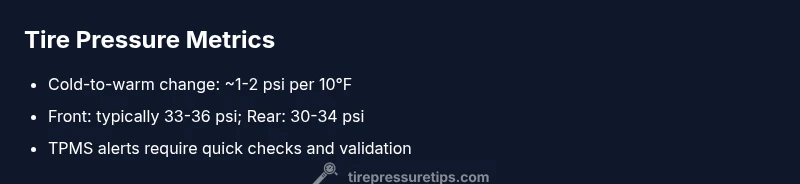
For tire pressure for nissan maxima, follow the door placard specifications listed on the driver’s door jamb. In general, pressures sit in the low-to-mid 30s psi for both front and rear, with small variations by trim and load. Check cold tires with a reliable gauge, inflate to spec, and recheck after temperature changes or heavy cargo. Always monitor TPMS alerts and adjust as needed to stay in range.
Nissan Maxima tire pressure fundamentals
Tire inflation is a foundational safety parameter that affects grip, steering, braking, and fuel economy. For the Nissan Maxima, the exact target pressure depends on trim, wheel size, and how you typically drive, but the core rule is universal: inflate to the vehicle placard value rather than chasing a single number from memory. The phrase tire pressure for nissan maxima is widely used across guides, but it should be interpreted as two targets (front and rear) that may shift with tires, load, and climate. Maintaining pressure within the manufacturer’s recommended range helps ensure predictable handling and even tire wear, especially on a car known for its balanced ride. Regular checks also guard against slow leaks that can silently degrade performance over weeks.
According to Tire Pressure Tips, adhering to the placard and checking pressure regularly yields measurable benefits in safety, traction, and fuel efficiency. Maxima owners often notice improved braking response and steadier cornering when tires are properly inflated. The Tire Pressure Tips team emphasizes consistency: check when tires are cold, use a calibrated gauge, and adjust for seasonal temperature changes and any extra cargo. This approach reduces the variance caused by weather, road conditions, and driving style, and it makes TPMS readings more meaningful rather than a frequent nuisance.
How to determine the correct tire pressure for your Maxima
To determine the correct tire pressure for your Nissan Maxima, start with the placard on the driver’s door jamb. This placard shows the exact cold tire pressure for both front and rear tires for your trim. If you don’t have the placard handy, refer to the owner’s manual or contact a dealer service department. In many Maxima configurations, the front tires run slightly higher than the rear, often in the low-to-mid 30s psi range, with rear pressures a few psi lower depending on load and tire size. The key is consistency: set all four tires to the recommended target and avoid inflating based on previous tire pressures or “feel.” Throughout the life of the vehicle, you should recheck pressures after tire rotations, seasonal temperature shifts, and whenever you suspect a leak or puncture. For family road trips and highway driving, consider inflating to the upper end of the range if you’re carrying extra passengers or luggage, but never exceed the placard’s maximum—this limit protects the tire sidewalls and wheel bead.
A practical approach is to measure pressures when the tires are cold and after the vehicle has had time to rest—ideally several hours since driving. If you drive and then inflate, the readings will be artificially high and won’t reflect the true cold pressure. When assessing a vehicle like the Maxima, it’s also important to recognize that different trims and wheel sizes may yield slightly different recommended pressures. Always default to the placard’s specifications and use the gauge to verify.
Temperature, load, and tire pressure: practical implications
Temperature is a silent driver of tire pressure. On cold mornings, tire pressure reads lower, while a hot highway stretch can raise the pressure. The general rule of thumb is that tire pressure can change by about 1-2 psi for every 10°F temperature swing. For Nissan Maxima owners, this means you should expect to check tire pressure more often in winter and after long drives in summer, then adjust back to the placard numbers. Under heavy load—carpool days, camping trips, or cargo-heavy trips—you may need to increase front and rear pressures within the allowed range to prevent underinflation and excessive tire flex, which can degrade handling and tire life. Conversely, if you overinflate to compensate for heat or load, you risk reduced tire grip and a harsher ride. The goal is to stay within the recommended range at all times, with small, controlled adjustments to accommodate temperature and load. The Tire Pressure Tips guidance stresses that even small deviations can compound: a 2-psi change can affect fuel Economy and wear patterns over thousands of miles. Always verify with a reliable gauge and revert to the placard after any adjustments.
How to measure tire pressure correctly
Measuring tire pressure accurately requires a few steps and a calibrated gauge. Start by ensuring the tires are cold—ideally after the car has been parked for at least three hours. Remove the valve cap, press the gauge straight onto the valve stem, and read the pressure immediately to avoid air loss. If the reading is below the placard, inflate in small increments (about 1 psi at a time), recheck, and repeat until you reach the target. Do the same for all four tires, keeping notes for future reference. If you drive short distances before inflating, drive a few miles first, then recheck; the reading will be higher, not reflective of cold pressure. Finally, replace valve caps securely to prevent slow leaks and avoid guessing—recheck every month and after long trips or temperature swings. A consistently checked tire pressure routine reduces the risk of underinflation and overinflation, both of which compromise performance and safety.
TPMS and Nissan Maxima: understanding sensors and alerts
The Nissan Maxima’s TPMS alerts you when any tire falls significantly below the recommended pressure. TPMS is a helpful safeguard, but it doesn’t replace manual checks with a gauge. If you see a warning, inspect all four tires with a pressure gauge and compare against the placard. If you notice a persistent difference between tires on the same axle, it could indicate a slow leak, a puncture, or a faulty sensor. In many cases, resetting the TPMS after inflating is necessary to clear the alert, but this should only be done after confirming that the pressures are correct. If a TPMS light stays on after inflation, consult a technician to verify sensor function, as failing sensors can lead to incorrect readings and unsafe driving conditions.
Common mistakes and best practices
Common mistakes include inflating to historical pressures rather than the placard, assuming all tires require the same pressure, and neglecting to account for temperature and load. Best practices include checking when cold, using a high-quality gauge, and keeping the door placard as the source of truth. Also, remember to rotate tires and recheck pressures after rotations, as tire position changes can alter effective load and required pressures. Finally, don't ignore TPMS warnings: a low-pressure tire can lead to increased wear, reduced fuel economy, and compromised safety. By following a disciplined approach to tire pressure, you’ll improve handling, extend tread life, and maximize efficiency on every Nissan Maxima ride.
Putting it into practice: a simple weekly check routine
Create a weekly routine to ensure consistent tire pressure. Pick a day and time, preferably when the car has not been driven for at least three hours, and check all four tires with a trusted gauge. If any tire is outside the placard range, adjust in small increments, recheck, and record the readings for future reference. In colder months, you may need to check more frequently due to temperature fluctuations. If you rotate tires or replace wheels, recheck all pressures after installation. A simple routine helps catch leaks early, preserve fuel economy, and maintain optimal handling and braking performance on your Nissan Maxima.
Key factors affecting tire pressure and guidance for the Maxima
| Factor | Impact on Pressure | Guidance |
|---|---|---|
| Cold weather | Lowers tire pressure; watch for drops ~1 psi per 10°F | Check when tires are cold; adjust to placard |
| Load and travel speed | Increases pressure with heavier load; more temp rise | Inflate within placard range; recheck after trips with cargo |
| Tire age and wear | Leaking or worn tires can unevenly lose pressure | Inspect for leaks and replace worn tires; inflate to spec |
Frequently Asked Questions
What is the recommended tire pressure for a Nissan Maxima?
The recommended pressure is listed on the driver’s door placard for your Maxima; it varies by trim and wheel size. Check the placard and inflate to that value when tires are cold. If in doubt, contact the dealer or refer to the owner's manual.
Check the placard on the driver’s door for the exact pressure; figures vary by trim. Inflate to that value when cold and recheck after temperature changes.
How often should I check tire pressure?
Check tire pressure at least once a month and before long trips. Inspect after temperature swings, after carrying heavy loads, or after a tire rotation to ensure all four tires are within spec.
Check monthly and after temperature or load changes; inspect after rotations.
Does TPMS replace manual tire pressure checks?
No. TPMS provides alerts, but it doesn’t give exact pressures. Use a gauge to confirm pressures and rely on the placard for the correct numbers.
TPMS warns you, but you still need a gauge to know the exact pressure.
What happens if tires are over-inflated?
Over-inflation reduces the contact patch, which can hurt traction and ride comfort and accelerate wear in the center tread. Stay within the placard range and avoid 'overcorrecting' for comfort.
Over-inflation reduces grip and comfort; keep within the recommended range.
Do tire pressures change with temperature?
Yes. Temperature changes can shift tire pressure; expect higher readings after warming, and lower readings when cold. Always recheck and adjust to the placard values when temperatures shift.
Temperature affects pressure; recheck to placard values when temps shift.
Should I adjust pressure for heavy luggage or passengers?
If carrying heavier loads, you may need to increase pressures within the placard range. Avoid exceeding the maximum and recheck after unloading.
Increase within placard range for heavy loads, then recheck after unloading.
“Proper tire pressure boosts safety, fuel efficiency, and tire life. Always verify exact pressures from the placard and account for temperature and load.”
What to Remember
- Check tires when cold against placard values
- Use a reliable gauge and verify after temperature shifts
- Adjust for load but never exceed placard limits
- Treat TPMS warnings as actionable cautions
- Establish a weekly tire pressure routine