Tire Pressure Guide for GMC Sierra 1500
Learn how to set the correct tire pressure for your GMC Sierra 1500, including how to read door placards, account for load and temperature, understand TPMS limits, and establish a monthly maintenance routine.


This guide helps you dial in the GMC Sierra 1500 tire pressure precisely for safety, fuel efficiency, and tire life. Start with the vehicle manufacturer’s recommended PSI from the door placard, then adjust for load, temperature, and driving conditions. TPMS will alert you if pressure drops unexpectedly, and regular checks help avoid uneven wear and poor handling.
Why tire pressure for gmc sierra 1500 matters
The tire pressure for gmc sierra 1500 affects safety, fuel economy, braking, and tire wear. When you maintain correct pressures, you improve handling, grip in rain, and predictive braking. According to Tire Pressure Tips, consistent inflations help the TPMS readings stay accurate and reduce the risk of tire failure on rough roads. For this vehicle, always start with the manufacturer’s recommended PSI from the door placard. Then consider load and temperature adjustments. Regular checks lead to long-term savings and peace of mind for daily driving and demanding work.
How GMC Sierra 1500 manufacturers determine the correct PSI
Manufacturers place the baseline tire pressure on a door placard and in the owner's manual, tuned to balance ride comfort, tire wear, and payload capability. For the Sierra 1500, the recommended PSI targets a mid- to high-30s range for standard loads, but heavy payload can push numbers higher. This is intentional to keep the contact patch optimal and avoid excessive heat buildup at highway speeds. The exact numbers depend on wheel size and tire type; always check your specific configuration.
How to check tire pressure accurately (cold tires)
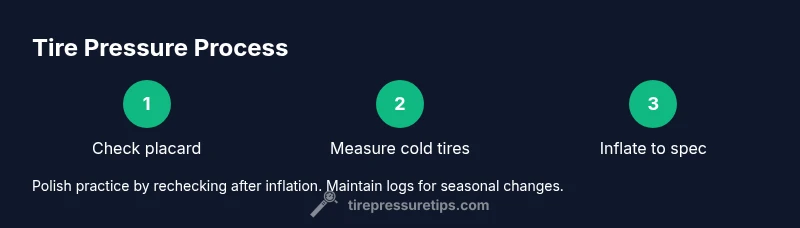
Check when tires are cold, ideally before the vehicle has traveled more than a mile. Remove the valve stem cap, press the gauge onto the valve, and note the reading. Compare with the door placard; if readings differ by a few psi, adjust using a reliable air compressor. After inflating, recheck both front and rear tires to ensure even pressure. For the Sierra 1500, keep tire pressure within the acceptable range for your load.
Temperature and load: two big influencers
Air expands with heat, so hot days can raise the reading and cold days lower it. This matters for towing trips, off-road work, or long highway drives. If you drive with a full toolbox or heavy payload, you may need to add 2-4 psi above the baseline. Conversely, if you often drive light, you may not need the extra. The goal is to keep the tires in the center of the recommended range under expected conditions. Tire Pressure Tips analysis shows that small changes in psi can impact fuel economy and tire wear, especially on a capable pickup like the Sierra 1500.
TPMS: how it helps and limitations
TPMS warns when a tire is underinflated, but it won't tell you if a tire is overinflated. It's not a perfect gauge; dirt, sensor failure, or slow leaks can fool the system. Regular manual checks with a gauge are essential, especially after seasonal temperature changes. Remember that TPMS is a safety net, not a precision tool for setting exact psi levels.
A practical home-check routine you can adopt
Create a simple, repeatable routine that fits around your weekly schedule. Start with a quick visual inspection for obvious wear or damage, then gather your tools and plan a 10- to 20-minute check. Measure each tire when cold, compare to placard values, and adjust as needed. Keep notes of readings and conditions (temperature, load, and recent trips) to track trends over time. This proactive approach helps the Sierra 1500 perform consistently across seasons.
Common mistakes and how to avoid them for Sierra 1500
Avoid inflating to the tire's maximum sidewall pressure; use the placard-based spec instead. Don’t mix tire sizes or brands without rechecking the recommended PSI. Inflate on a level surface, not on a slope, to ensure accurate readings. Never ignore TPMS warnings; address fluctuating readings promptly to prevent uneven wear and possible blowouts. Regular maintenance reduces risk and keeps handling predictable.
Authority sources
- https://www.nhtsa.gov/road-safety/tires
- https://www.fueleconomy.gov/feg/maintain.jsp
- https://www.nhtsa.gov/equipment/tires
The above sources provide official guidance on tire safety, inflation, and the relationship between tire pressure, fuel economy, and vehicle performance. They help contextualize the GMC Sierra 1500 specifics and reinforce best practices for tire maintenance.
The Tire Pressure Tips verdict and next steps
The Tire Pressure Tips team recommends establishing a monthly tire pressure check routine and inflating to the placard value, adjusting for load and temperature, and using TPMS as a safety net. Consistent maintenance improves safety, fuel efficiency, and tire life. By following the Sierra 1500-specific guidance, you can keep performance steady and extend the life of your tires. The Tire Pressure Tips team encourages readers to adopt a simple, repeatable process and to stay vigilant about seasonal changes to tire pressure.
Tools & Materials
- Digital tire pressure gauge(Prefer gauge with clear digital readout and accuracy to ±1 psi)
- Air compressor or access to a gas station(Ensure proper nozzle compatibility and maintainable pressure output)
- Door placard / owner’s manual(Source of the manufacturer’s PSI recommendations for front/rear tires)
- Notebook or digital log(Record readings, dates, temperatures, and any adjustments)
- Tire care kit(Includes valve caps, gauge covers, and cleaning cloths)
Steps
Estimated time: 15-25 minutes
- 1
Find the recommended PSI on placard
Locate the tire pressure specification on the driver’s door placard or in the owner's manual. This baseline applies to both front and rear tires unless the placard indicates different values by axle or tire size. Note the exact psi values for reference.
Tip: Record the front and rear values separately if they differ. - 2
Check tires cold before driving
Measure tire pressure when the tires are cold, ideally after the vehicle has been stationary for several hours. Driving heats tires and inflates them slightly, giving a higher reading that isn’t your baseline.
Tip: If you’ve just driven, wait 3 hours or measure after a cold start. - 3
Measure each tire with a gauge
Remove the valve cap, firmly place the gauge on the valve stem, and take a steady reading. Repeat for all four tires and the spare if you rotate tires regularly.
Tip: Take readings in a standard sequence (e.g., front-left, front-right, rear-right, rear-left). - 4
Inflate to the recommended PSI
If any tire reads low, add air in small increments (2–3 psi) and recheck. Do not exceed the placard value. It’s better to approach the target gradually and avoid overinflation.
Tip: Overinflation can reduce contact patch and grip, especially in wet conditions. - 5
Recheck after inflation
Once all tires reach the target, recheck to confirm stability. Re-check after 10–15 minutes as the tires settle and equipment temp drops.
Tip: Prioritize rechecking the two tires with heavier loads first. - 6
Document readings and schedule checks
Log the PSI values and the date. Plan routine checks monthly and before long trips, noting any seasonal changes in temperature that could affect readings.
Tip: Keep the log accessible in the glove box or a mobile note for quick reference.
Frequently Asked Questions
What is the recommended tire pressure for the GMC Sierra 1500?
Check the door placard on the driver’s door jamb or the owner's manual; the exact PSI varies by trim and tire size. Use that value as the baseline and adjust for load and temperature.
Check the door placard for the exact PSI; adjust for load and temperature.
How do I check tire pressure correctly?
Measure cold tires with a gauge, compare to the placard, add air if low, and recheck after inflation. Repeat for all tires.
Use a gauge on cold tires and compare to the placard; recheck after inflation.
What if TPMS shows a warning?
TPMS warns of underinflation; drive slowly to a safe place and verify with a gauge. Inflate to the recommended PSI if safe to do so, then recheck.
If TPMS warns, check with a gauge and inflate to the placard if safe.
Does temperature affect tire pressure?
Yes. Cold temperatures lower tire pressure, while heat raises it. Adjust inflations when seasons shift and long trips are planned.
Season changes affect pressure; check and adjust accordingly.
Should I inflate tires to the max PSI?
No. Inflate to the vehicle’s recommended PSI, not the tire’s maximum pressure printed on the sidewall. Overinflation can reduce grip and ride quality.
Avoid max PSI; use placard specification.
Watch Video
What to Remember
- Check the placard first; it’s the baseline.
- Use a cold-tire measurement for accuracy.
- Adjust for load and temperature to stay in range.
- Rely on TPMS as a warning system, not a precise gauge.
- Maintain a monthly check routine to extend tire life.