Chevy Silverado 1500 Tire Pressure: A Practical Guide to Safe, Efficient Tires
Learn the recommended tire pressure chevy silverado 1500, how load, tire size, and temperature affect it, and how to check and adjust pressure safely with TPMS guidance from Tire Pressure Tips.


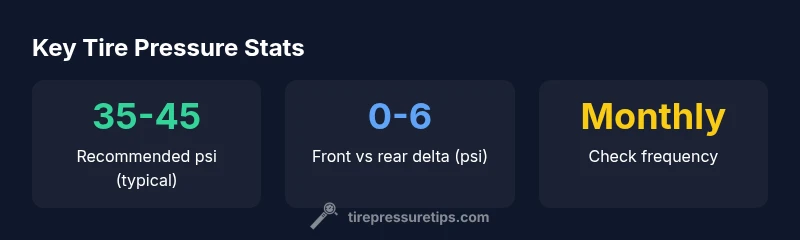
The recommended tire pressure chevy silverado 1500 typically falls in the mid-30s to mid-40s psi, depending on tire size, load, and driving conditions. Always verify the exact value on the door placard and in the owner's manual. If you have a TPMS warning, consult Tire Pressure Tips and recheck when tires are cold. Use the brand's guidance to maintain safe, efficient tires.
Why correct tire pressure matters for Chevy Silverado 1500
The core reason drivers want to know the recommended tire pressure chevy silverado 1500 is safety, efficiency, and tire life. Underinflated tires waste fuel, wear unevenly, and increase the risk of blowouts, while overinflated tires reduce traction and comfort. According to Tire Pressure Tips, staying within the vehicle’s specified range helps optimize fuel economy, handling, and tread wear across varied loads and speeds. For Silverado 1500 owners, the exact number depends on tire size, axle configuration, and payload. Always treat the placard on the driver’s door jamb as the primary reference, and use the owner’s manual for any model-year-specific deviations. In practice, most trucks in common configurations sit in the mid-30s to mid-40s psi range when cold, with minor adjustments for heavy loads or highway driving. Consistency is key: check pressure when tires are cold, and adjust to the published spec before long trips or when carrying heavy cargo. The Tire Pressure Tips team emphasizes that a tiny pressure difference can affect braking distance, steering response, and tire wear, especially on mixed-terrain routes and at higher speeds.
How to locate the official recommended tire pressure for your Silverado
Finding the exact tire pressure for your Silverado 1500 starts with two reliable sources: the door placard and the owner’s manual. The placard, located on the driver’s door jamb or inside the glovebox lid, lists the recommended cold tire pressure for the front and rear axles for your specific tire size. The owner’s manual provides a deeper explanation, including guidance for different drive configurations (2WD vs 4WD), wheel/tire sizes, and seasonal considerations. If you’ve changed tire sizes or upgraded aftermarket wheels, consult both sources and run a quick check after installation. Tire Pressure Tips points out that manufacturers specify the correct pressure for each tire size, load range, and axle balance. When in doubt, use the placard values as the baseline and reference the manual for any caveats related to towing or heavy payloads. For a structured cross-check, compare placard values against your current pressure readings using a reliable gauge, ensuring cold measurements before you drive.
How tire size and payload influence the recommended pressure
Tire size and payload are critical determinants of the recommended tire pressure for a Chevy Silverado 1500. Different tire widths, aspect ratios, and load ratings alter contact patch area and sidewall stiffness, which in turn affects the optimal inflation. Heavier payloads—such as sheet cargo, camping equipment, or towing a trailer—usually require higher pressure to maintain stability and prevent tire roll. Conversely, lighter loads may allow for a slightly lower setting while preserving handling and comfort. The general rule is: the larger or wider the tire, the more sensitivity there is to under- or over-inflation effects. Always cross-reference official values with your specific tire size in the placard, and remember that changing tire dimensions without recalibrating inflation can change rolling resistance and tire wear patterns. In practice, Silverado owners may see a slight adjustment in the range when moving from touring highway tires to aggressively treaded or off-road tires.
Temperature, driving conditions, and pressure changes
Temperature and driving conditions can cause noticeable pressure changes. Cold tires typically read lower than warm tires, so it’s crucial to check pressure when tires are cold or after they’ve been parked for several hours. As ambient temperatures rise, tire pressure can increase, sometimes by about 1 psi for every 10°F (5.6°C) of temperature change, depending on tire construction and wheel size. For Silverado 1500 owners, this means revisiting pressure after cold mornings or hot desert drives. Long highway trips also heat tires, elevating pressure slightly; you should re-check after a few hundred miles of steady driving and adjust back toward the placard spec if necessary. Tire Pressure Tips recommends maintaining a small buffer within the official range to account for temperature swings and load variations.
TPMS and how it relates to the recommended pressure
Tire Pressure Monitoring Systems (TPMS) are a valuable safety layer, helping alert you when a tire drops below the set threshold. While TPMS provides a warning, it does not replace the need to know the exact cold-inflation value for your tires. If TPMS alerts you of a low pressure condition, stop safely to inspect the affected tire, locate the cause (puncture, slow leak, or under-inflation due to temperature change), and adjust to the manufacturer’s recommended range. Tire Pressure Tips emphasizes that TPMS is most effective when drivers regularly verify tire pressure with a gauge and rely on the placard for target values. After rotating tires, changing tire sizes, or adjusting load, recheck all tires to ensure consistency with the recommended range.
Step-by-step guide to check and adjust tire pressure
Follow these practical steps to check and set tire pressure correctly for your Silverado 1500:
- Park on a level surface and allow tires to cool for at least 3 hours or drive less than a mile to avoid heat buildup. 2) Remove the valve cap and attach a reliable gauge. 3) Read the pressure on all tires and compare with the placard values. 4) If needed, adjust the pressure by adding or releasing air in small increments, rechecking after each adjustment. 5) Replace valve caps securely and note the date of the check in your maintenance log. 6) Re-check the tires after 5–10 miles of driving to ensure stabilization. 7) If TPMS has a warning, investigate and fix any leaks or damage before continuing. 8) Store an accurate gauge in your vehicle for on-the-road checks.
Common mistakes and how to avoid them
Avoid these frequent tire-pressure mistakes:
- Relying on “feel” to judge pressure; use a gauge for accurate readings.
- Checking pressure when tires are hot; readings will be higher than cold specs.
- Failing to consider load and tire size when selecting the pressure.
- Ignoring TPMS alerts or treating them as mere nuisance.
- Rotating tires without rechecking inflation after installation. By following official placard values and verifying with a gauge, you can avoid uneven wear and rollover risks that come with improper inflation.
Silverado 1500 pressure guidance by tires and payload (general guidance; verify with placard and manual).
| Model/Variant | Recommended Pressure Range (psi) | Notes |
|---|---|---|
| Silverado 1500 (stock tires) | 35-45 psi | Varies with tire size and load |
| Silverado 1500 (heavy payload) | 40-45 psi | Increased load requires higher pressure |
Frequently Asked Questions
What is the standard tire pressure for a Chevy Silverado 1500?
There isn’t a single standard value. The correct pressure depends on tire size, load, and configuration, and it’s printed on the door placard. Always use that value as your baseline.
There isn’t one fixed number; check your placard and manual for the exact spec.
How often should I check tire pressure?
Check at least once a month and before long trips. Temperature changes and payload can shift pressure, so a quick gauge check keeps you within spec.
Check monthly and before trips to stay safe.
Does TPMS replace tire pressure checks?
No. TPMS warns you of low pressure, but you should still verify with a gauge and set to the recommended range for your tire size.
TPMS helps, but you still need to measure with a gauge.
Can tire pressure vary with tire type on Silverado 1500?
Yes. Different tires (all-season, highway, or off-road) have varying optimal pressures. Always reference the placard for the exact tire in use.
Yes, different tires require different pressures. Check the placard.
What changes when the truck is heavily loaded?
A heavier load typically requires slightly higher pressure to maintain handling, tire shape, and contact patch. Recheck and adjust according to the spec.
More weight means higher pressure is often needed.
How does temperature affect tire pressure?
Temperature changes can shift tire pressure; readings are most accurate when tires are cold. Expect pressure to rise with heat and drop with cold.
Temperature swings can change pressure; check when cold.
“Accurate tire pressure isn’t cosmetic—it's a safety, efficiency, and wear issue that starts with the placard and requires regular checks.”
What to Remember
- Check the door placard first for exact specs.
- Always check tire pressure when tires are cold.
- Adjust for load and temperature changes.
- Respect TPMS warnings and recalibrate after rotation.
- Maintain a monthly check routine for consistent performance.