Tire Pressure Guide for Silverado 2008: Safety, TPMS, and Maintenance
Learn how to check and maintain tire pressure on a Silverado 2008 with practical steps, TPMS basics, and load/temperature considerations for safety and efficiency.


You're about to learn how to check and adjust tire pressure on a 2008 Silverado. We'll cover where to find the recommended psi, how to use a gauge, and how temperature and load affect inflation. By following these steps, you’ll improve safety, handling, and fuel efficiency. This quick guide also touches TPMS basics for your truck.
Why Tire Pressure on a Silverado 2008 Matters
Maintaining proper tire pressure is crucial for safety, handling, and fuel efficiency, especially on the Chevrolet Silverado 2008 when the vehicle carries cargo or tows. Under-inflated tires can overheat and wear at the inner or outer edges, reducing grip in wet conditions and increasing stopping distances. Over-inflation makes the contact patch smaller and can cause a harsher ride and uneven wear that reduces tire life. The Tire Pressure Tips team notes that psi accuracy matters more than chasing a single number; readings vary with temperature and load, and the door jamb placard reflects the recommended range rather than the maximum pressure printed on the tire. By understanding how load, temperature, and tire design interact, you can decide when to adjust the pressure for spring and summer highway cruises, mud-bog days, or pulling a trailer. This section lays the groundwork for practical checks you can perform in minutes. According to Tire Pressure Tips, adopting a disciplined approach to tire pressure helps you stay safe on the road and protect tire longevity.
Where to Find the Recommended Tire Pressure for the Silverado
Your Silverado's official tire pressure numbers are found on the driver’s door jamb placard and in the owner's manual. For a 2008 Silverado, the front and rear tire pressures may differ, and configurations with dual rear wheels often require higher rear-axle pressures. The placard shows cold-inflation psi values; using the tire sidewall maximum as a target is a common mistake. If the placard is missing or illegible, refer to the owner's manual or contact a dealer. Temperature and load also influence actual pressures; a tire reading when cold will rise after a drive, so measure after tires have cooled for at least three hours or overnight. The Tire Pressure Tips analysis emphasizes following manufacturer guidance rather than generic maximums, especially when towing or carrying heavy loads, to preserve stability and tread life.
Tools and Technique: Gauges and Readings
To accurately measure tire pressure on the Silverado, you'll need a reliable gauge, an air source, and a way to log results. A digital gauge is easiest to read, especially in low-light conditions; an analog gauge works if you keep it steady and confirm readings. Always check tires cold and remove the valve cap to access the valve stem. Place the gauge on the valve stem, press straight, and read the psi value. If your gauge has a bleed function, release air in small increments to reach the target. Remember, TPMS can warn you, but it isn't a precise gauge. If you’re uncomfortable inflating yourself, many auto shops and gas stations can perform a quick check. For consistency, use the same gauge and calibrate it periodically as part of routine maintenance.
Step-by-Step: Check and Adjust Tire Pressure on a 2008 Silverado
This section expands on the quick answer with a practical sequence you can follow in minutes. Each step is designed to be a single action with a clear purpose, including why and any cautions. Expect to spend about 20–30 minutes for a full tire set check.
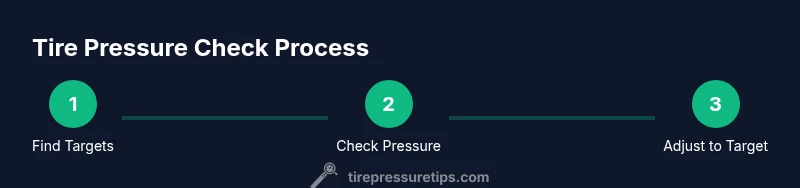
- Find target pressures: Locate the door placard or manual to identify front and rear tire psi targets. This sets the goal for inflation and prevents over-torqued or under-inflated tires. Tip: note differences between axle positions and consider load when towing.
- Prepare tires (cool check): Ensure tires are cold before checking; readings taken after driving can be 3–5 psi higher due to heat. If tires are hot, wait and recheck later.
- Remove valve caps and attach gauge: Spin off the valve caps and securely attach your gauge to the valve stem. Ensure an airtight seal before reading. Tip: avoid leaning on the tire while taking the reading to prevent heat buildup.
- Read psi and compare: Read the pressure and compare it to the target values for each tire. If a tire is below target, plan to add air; if above, plan to release air gradually.
- Inflate or deflate to target: Use an air compressor or gas station pump. Add air in small increments and recheck after each adjustment to avoid overinflation. Tip: inflate in steps of 1–2 psi and verify accuracy of the gauge first.
- Recheck after inflation: Recheck all four tires (and spare if you monitor it) to confirm you’ve reached the targets. Temperature or recent driving can skew results, so re-check after a cool-down period if needed.
- Repeat for all tires: Do not skip any tires; even the spare can underperform if neglected. Ensure consistent readings across all positions.
- Record readings and plan next check: Log the pressures you observed and the date. Schedule the next check within the window recommended by your vehicle’s manual or Tire Pressure Tips guidance.
TPMS Basics: What Triggers Warnings and How to Respond
The Silverado’s TPMS (Tire Pressure Monitoring System) signals when tire pressure deviates beyond the safe range, typically due to significant under-inflation or a sensor fault. If a warning lights up, verify the suspect tire pressure with a gauge first, then inflate to the target. After adjustment, drive a short distance to allow the system to update. If the warning persists, there could be a leak or a sensor issue that requires inspection.
Safety Reminders and Maintenance
Maintaining correct tire pressure is a core part of vehicle safety. Regular checks help ensure safe handling, even under load or during abrupt maneuvers. Never inflate beyond the manufacturer’s recommended psi shown on the placard. If you notice slow leaks, damaged valve stems, or a consistently failing TPMS, schedule service promptly to avoid dangerous driving conditions and accelerated tire wear.
Tools & Materials
- Tire pressure gauge (digital or analog)(Prefer a gauge with ±1 psi accuracy; bring to the correct scale for your tires.)
- Vehicle door jamb placard or owner's manual(Contains front/rear tire psi targets and load considerations.)
- Air compressor or gas station air pump(Use with a built-in gauge or have a separate gauge handy.)
- Notebook or app to log tire pressures(Useful for tracking pressures over time and during seasonal changes.)
- Soap solution for leak testing(Helpful to identify slow leaks around valve stems or beads.)
Steps
Estimated time: 20-30 minutes
- 1
Find target pressures
Identify the psi targets for each tire from the door placard or manual. Distinguish front from rear values and account for any towing or heavy load. Why: ensures you inflate to the correct operating pressure for performance and safety.
Tip: If you tow often, write the higher rear-axle psi on your chart. - 2
Check tire temperature and cooldown
Tires read differently when hot. Measure after tires have cooled for at least 3 hours or after overnight rest to avoid inflated readings caused by heat.
Tip: If you must check after a drive, note the reading and recheck later when cold. - 3
Remove valve cap and attach gauge
Carefully remove the valve cap and press the gauge onto the valve stem with a straight, stable approach to prevent air loss. Read the psi value.
Tip: Hold the gauge steady for a clean reading and avoid twisting the stem. - 4
Read psi and compare
Compare the measured psi to the target. If below, plan to add air in small increments; if above, release air gradually until you hit the target.
Tip: Use 1–2 psi increments to avoid overshooting the target. - 5
Inflate or deflate to target
Inflate or vent air to reach the exact psi. Recheck after each adjustment to maintain accuracy and safety.
Tip: Record the final pressure for each tire before closing the valve caps. - 6
Recheck after inflation
Reverify all tires, including the spare if you monitor it. Ensure uniformity across axles and tire positions.
Tip: If the gauge reads differently after multiple checks, calibrate or replace the gauge. - 7
Repeat for all tires
Move to each tire and perform the same steps to guarantee comprehensive coverage.
Tip: Don’t forget the tire tread wear and valve stems during the check. - 8
Record readings and plan future checks
Document the pressures and plan the next check per vehicle manual or local guidelines. Regular checks reduce risk and extend tire life.
Tip: Set reminders monthly or before long trips.
Frequently Asked Questions
Where can I find the recommended tire pressure for my Silverado 2008?
Check the driver’s door jamb placard and the owner's manual for front and rear tire pressures. If you tow or carry heavy loads, refer to the higher axle pressure within the placard limits.
Look at the door jamb placard or your manual to find the exact psi for front and rear tires. If you tow, use the higher recommended value within the allowed range.
Is TPMS required for a 2008 Silverado?
Yes, most 2008 Silverado models include TPMS that warns when tire pressure is too low. Use a gauge to confirm exact pressures and adjust as needed.
Yes, TPMS is present on most 2008 Silverados and will warn you if a tire is underinflated. Confirm with a gauge and adjust accordingly.
Can I mix different tires on the Silverado?
Avoid mixing tires with different sizes or tread patterns on the same axle. This helps maintain balanced handling and accurate tire pressure readings.
Don't mix tire sizes or tread types on the same axle; it can affect handling and reading accuracy.
What if a tire won't reach the target psi?
Check for slow leaks around valve stems or the bead, ensure the gauge is accurate, and inspect tires for damage. If leaks persist, replace the faulty component.
If a tire won’t reach the target psi after adjustments, check for leaks and gauge accuracy, then inspect the tire for damage.
Should I inflate to the max PSI on the sidewall?
No. Always inflate to the vehicle’s recommended psi on the placard, not the sidewall maximum.
No. The sidewall number is a maximum; use the placard value for your vehicle.
How often should I check tire pressure?
Check at least monthly and before long trips, and after significant temperature changes or load increases.
Check at least monthly and before long trips, especially when weather shifts or you’re carrying heavier loads.
Watch Video
What to Remember
- Check tires cold for accuracy.
- Follow door placard values for each axle.
- Use a reliable gauge and adjust gradually.
- Account for temperature and load when inflating.