Tire Pressure for Audi Q7: Practical Maintenance Guide
Learn how to check, adjust, and maintain tire pressure for your Audi Q7. This step-by-step guide covers TPMS, seasonal changes, and safe driving practices to protect tires and improve fuel efficiency.


Learn how to check and maintain tire pressure for your Audi Q7. This guide explains TPMS basics, how to locate the correct cold pressure on the door placard, and practical steps to adjust for load, speed, and seasonal changes. Proper tire pressure improves safety, handling, fuel economy, and tire life. It also covers common mistakes and what to do if the TPMS light indicates a problem.
Why Tire Pressure Matters for the Audi Q7
According to Tire Pressure Tips, maintaining correct tire pressure is essential for safety, handling, fuel efficiency, and tire wear in large SUVs like the Audi Q7. Underinflated tires increase rolling resistance and heat buildup, reducing grip in cornering and increasing the risk of blowouts at highway speeds. Overinflated tires can reduce contact patch and cause uneven wear, leading to a harsher ride and reduced braking performance. The Q7's weight and dynamic suspension mean precise pressure management matters more than in smaller cars. Regular checks help optimize load carrying, tire life, and tolerance to temperature changes. Properly inflated tires also contribute to even tread wear, predictable steering, and better stopping distances, which is crucial on high-speed highways and in varying weather conditions.
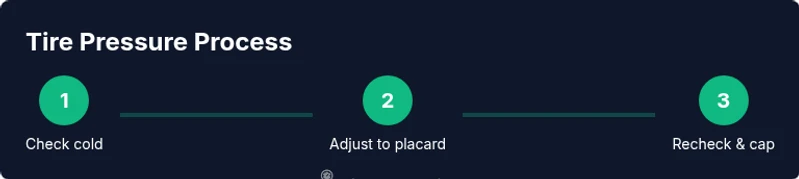
For drivers who want a clear, actionable plan, Tire Pressure Tips highlights a practical approach: measure cold pressure first, adjust to the vehicle’s placard values, and recheck after a few minutes of driving to verify stability. This routine applies to all wheel configurations on the Audi Q7 and can be adapted for different tire sizes as needed.
Finding Your Exact Cold Pressure for the Q7
The exact cold tire pressures for your Audi Q7 are not guesswork. They are defined by the door jamb placard and the owner's manual and vary by tire size, load, and driving conditions. The placard lists separate front and rear pressures and sometimes for different load scenarios (e.g., normal vs. heavy cargo). Always measure pressure when the tires are cold—ideally after the vehicle has been parked for several hours or before you’ve driven more than a mile. If you ever question the numbers, contact an authorized Audi service center or check your owner's manual for the model year and tire size specification. Remember, the goal is to match the recommended cold pressure exactly, not to exceed it, especially during seasonal changes that can affect tire stiffness and performance. Using the door placard as your baseline ensures the best balance of comfort, handling, and tire life for your Audi Q7.
Tools and Methods to Check Tire Pressure
To accurately measure tire pressure on your Audi Q7, you need a few reliable tools and a method that emphasizes accuracy. A digital tire pressure gauge provides consistent readings and is easier to read than analog gauges. An air compressor or fill station helps you adjust pressure to the exact spec on the placard. Always check pressures when the tires are cold and after the vehicle has been stationary for several hours. Keep a tire pressure gauge in the glove compartment so you can check readings when you’re away from home. For the most precise result, calibrate your gauge periodically and use the same gauge for all measurements to avoid cross-device variance. If you notice rapid changes in readings, there may be a leak or a TPMS fault that requires professional inspection.
Step-By-Step: Quick Pressure Check (Overview)
This section provides an overview of the practical steps you’ll follow in the dedicated STEP-BY-STEP block. The process starts with gathering the right tools, locating the official cold pressure spec on the placard, and ensuring you measure when the tires are cold. You’ll then check each tire’s current pressure with a gauge, compare it to the recommended value, and make precise adjustments. After adjusting, recheck all tires to confirm readings remain within spec. Finally, replace valve caps and document the maintenance action for future reference. This overview emphasizes safety, accuracy, and efficiency so you can complete the task without guesswork.
Step-By-Step: Check and Adjust (Long-Form Details)
The Audi Q7 uses TPMS to alert you when tire pressure drops below the recommended level. Before you begin, gather your tools and ensure you’re in a safe, level area. Start with the driver’s side front tire and work your way around to the spare if you’re inspecting the set. For each tire: remove the valve cap, attach the gauge, note the reading, then add or release air to reach the target pressure. Recheck after any adjustment. After finishing all tires, reinstall caps and clean the valve stems to prevent leaks.
Adjusting Pressure by Load, Speed, and Tire Size
Your tire pressure targets may shift with changes in load (more passengers or cargo), driving speed, and tire size. Heavier loads at speed can compress tires more, requiring slight pressure increases within the recommended range. If you frequently carry heavy cargo or drive long highway trips, verify the placard values for the heavier-load scenario if provided, and adjust accordingly. Never exceed the max pressure printed on the tire sidewall, and always confirm final readings with your gauge. Small changes in pressure can noticeably impact ride comfort, handling, and tire wear over time.
TPMS: How It Works on the Audi Q7
TPMS monitors air pressure and alerts you if a tire’s pressure falls below the recommended level. In many Audi Q7 configurations, the system uses direct TPMS with sensors inside each tire and indirect TPMS that infers pressure changes from wheel speed sensors. If the TPMS light illuminates, don’t ignore it. It may indicate a single tire is low or a sensor fault. Use a gauge to verify readings and inflate to the precise spec; if the light remains on after inflation or if readings vary widely, seek service. Regular TPMS battery checks are important for sensor reliability.
Temperature, Seasonality, and Pressure Changes
Temperature affects tire pressure because air expands and contracts with heat and cold. In cold weather, tire pressures naturally drop; in hot weather, they rise. For Audi Q7 drivers, this means you may need to adjust pressures seasonally or after significant temperature shifts. A small change in ambient temperature can cause a few psi difference over a week of driving. Regularly check your pressures, especially when seasons shift, and consider performing checks after long drives or at the start of a trip to ensure accurate readings.
Common Mistakes and Quick Fixes
Common mistakes include inflating to the tire’s maximum pressure rather than the vehicle’s recommended cold pressure, not checking tires when cold, and relying solely on TPMS without validating readings with a gauge. Fixes are straightforward: always measure cold pressure, use a trusted gauge, inflate to the placard value, and recheck. If a tire shows persistent low readings or if TPMS warnings recur, examine for slow leaks, nails, or wheel alignment issues. In case of persistent issues, consult a qualified technician.
Regular Maintenance Routine for Peak Tire Health
Set a monthly tire pressure check as part of your routine. Pair this with a quarterly TPMS inspection and tire tread depth measurement. Keep your valve caps on, rotate tires as recommended by Audi, and replace worn tires promptly. A consistent maintenance schedule helps you catch leaks early, maintain even tread wear, and preserve your vehicle’s handling and ride quality. Use the correct gauge each time to improve measurement reliability and prevent over- or under-inflation that could affect safety.
Tools & Materials
- Digital tire pressure gauge(Prefer a gauge with 0.5 psi resolution for precise readings)
- Air compressor or fill station(Calibrate the gauge and fill slowly to avoid overshoot)
- Owner's manual and door jamb placard(Use it to identify exact cold pressures for front/rear tires)
- Valve caps(Replace caps after checking; keep caps clean to prevent leaks)
- Tire pressure log(Record readings and adjustments for future reference)
Steps
Estimated time: 15-25 minutes
- 1
Gather and prepare
Park on a level surface, engage the parking brake, and assemble your gauge, air source, and placard. Having everything ready saves time and ensures accuracy.
Tip: Double-check you’re using the same gauge for every tire to avoid reading variance. - 2
Identify the correct cold pressures
Read the recommended cold tire pressures from the door jamb placard or owner's manual for your Audi Q7. These numbers depend on tire size and load, so verify the exact values.
Tip: Measure only when tires are cold to avoid inflated readings from recent driving. - 3
Check current tire pressures
Remove the valve caps and attach the gauge to each valve stem. Note the current reading for every tire before making changes.
Tip: Record readings to compare against the placard values after adjustment. - 4
Add air to underinflated tires
If a tire is below the recommended value, add air in small increments, pausing to recheck after each addition.
Tip: Avoid overfilling; make tiny adjustments and recheck to stay within spec. - 5
Release air from overinflated tires
If a tire is above the target, release air gradually until it aligns with the placard value.
Tip: Use the gauge to monitor the exact decrease; recheck after correcting. - 6
Recheck all tires
After adjustments, recheck each tire to confirm readings remain within the specified range.
Tip: Don’t forget the spare tire if you regularly monitor all four corners. - 7
Reinstall caps and tidy up
Replace valve caps and wipe off any dust from valve stems to prevent leaks or contamination.
Tip: Keep caps on to protect stems from dirt and moisture. - 8
Document the maintenance
Log the date, tire pressures, and any notes about leaks or TPMS behavior for future reference.
Tip: A simple log helps track changes across seasons and loads.
Frequently Asked Questions
What is the difference between cold and warm tire pressure, and why does it matter for the Audi Q7?
Cold tire pressure is measured after tires have been stationary and chilled, which gives the true baseline for inflation. Warm pressure is higher due to heat buildup from driving. Always measure when cold and inflate to the placard value, then drive normally to verify readings.
Cold tire pressure is the true baseline. Measure when cold and inflate to the placard value; check again after driving to confirm. If the TPMS shows a warning, recheck with the gauge.
Where can I find the recommended tire pressure for my Audi Q7?
The recommended tire pressure is on the door jamb placard and in the owner's manual. It varies by tire size and load, so always use those official references for your specific Q7 configuration.
Check the door jamb placard or the owner’s manual for the exact cold pressure values for your Q7.
What should I do if the TPMS warning light stays on after I check pressure?
If the TPMS light stays on after inflating to the recommended pressure, there may be a slow leak, a faulty sensor, or a calibration issue. Inspect for leaks, reseat the valve core, and if needed, have a technician diagnose the TPMS system.
If the TPMS light stays on after inflating, there may be a leak or sensor fault. Check for leaks and consult a technician if it remains on.
Can changing tire pressure affect ride comfort or handling on the Q7?
Yes. Underinflation lowers fuel economy and increases heat; overinflation can reduce tire contact with the road, affecting grip and comfort. The goal is to stay within the vehicle’s recommended range for balanced handling and wear.
Pressure affects grip and ride. Stay within the recommended range for best handling and wear.
Is it safe to drive with slightly low or high pressure if I can’t adjust right away?
Short, cautious driving with a slight deviation is generally acceptable, but avoid highway speeds and long trips. Plan a tire pressure check as soon as possible to restore the correct values and safety.
It’s best to avoid long drives if pressures are off. Check and correct as soon as you can.
Should I check tire pressure when the tires are hot or cold?
Always check tire pressure when tires are cold to avoid readings skewed by heat. If you’ve driven recently, wait several hours for the tires to cool before taking measurements.
Check tires when cold for accuracy; wait if you’ve just driven.
Watch Video
What to Remember
- Check cold pressures first, using the placard as your target.
- Use a reliable gauge and recheck after adjustments.
- Seasonal temperature can change pressures; verify regularly.
- TPMS complements, but does not replace gauge-based checks.
- Document readings to track changes over time.