Tire Pressure Guide for Audi Q3: Safe, Efficient Tire Maintenance
Comprehensive guide to checking and maintaining tire pressure on Audi Q3, including TPMS basics, tools, step-by-step instructions, and safety tips to optimize fuel economy and tire wear.


According to Tire Pressure Tips, learn how to check, adjust, and maintain tire pressure on an Audi Q3, including how to interpret TPMS alerts, how to use a gauge, and how to account for load and temperature changes. You'll need a tire gauge, the vehicle's placard or doorjamb sticker, and a reliable pressure source for safe driving.
Why tire pressure matters for Audi Q3
Maintaining correct tire pressure is a foundational aspect of safe driving, comfort, and performance for any vehicle, including the Audi Q3. Properly inflated tires improve handling, braking efficiency, and fuel economy while reducing premature wear and the risk of a blowout. For Audi owners, correct tire pressure is also a matter of preserving warranty terms and ensuring TPMS readings align with OEM specifications. High or low pressures can alter the tire’s contact patch, affecting grip and steering feel, especially in dynamic driving conditions like curvy highways or urban streets with potholes. By keeping tires at the recommended pressure, you minimize uneven wear and extend tire life, which can translate into fewer road-side issues and lower maintenance costs over time.
To make tire pressure maintenance practical, adopt a routine that fits your schedule. Monthly checks, plus checks before long trips or when carrying heavy loads, help catch leaks and slow leaks early. If you drive in extreme temperatures, you’ll want to recheck more often because ambient temperature changes can cause noticeable pressure fluctuations. In short, regular checks are not just about numbers—they’re about safer driving, better mileage, and longer-lasting tires for your Audi Q3.
Understanding the Audi Q3 placard and TPMS
All Audi Q3 models use a tire pressure placard that shows the expected cold inflation pressures for the front and rear tires. This placard is usually on the driver's door jamb or in the owner's manual, and it reflects the tire size and load ratings recommended by the manufacturer. In addition to the placard, many Audi Q3s are equipped with a TPMS (Tire Pressure Monitoring System). TPMS alerts can be direct (sensor-based) or indirect (speedometer-based) and are designed to warn you when a tire’s pressure deviates from the recommended range.
When you see a TPMS warning, don’t panic. Start by checking the tire pressures with a reliable gauge and compare readings to the placard. If a tire is underinflated, add air in small increments, then recheck. If any tire remains underinflated after adjustment, or if you notice a nail or puncture, seek professional inspection. Always inflate to the cold-tyre specification, since heat from driving can temporarily raise tire pressure and mask a slow leak.
Tools and gauges you’ll need
A practical tire pressure maintenance kit for the Audi Q3 typically includes: - A reliable tire pressure gauge (digital or analog) - Access to the vehicle placard or owner’s manual for the target pressures - A portable air compressor or access to a service station with a gauge - Optional TPMS reset tool or device (if your model requires manual TPMS resets) - A notepad or smartphone for recording readings and maintenance dates
Choose a gauge you trust; digital gauges are often easier to read, but a good quality analog gauge can be equally accurate when used correctly. Keep the gauge clean and free of debris, and calibrate it periodically if the device allows. For best results, measure tire pressure when the tires are cold, as driving heats tires and temporarily increases pressure readings.
Step-by-step: check cold tires and gather baseline
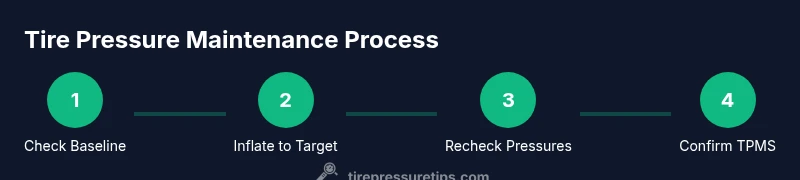
- Park the Audi Q3 on a level surface and turn off the engine. 2) Ensure the tires haven’t been driven for at least 3 hours (or 4 hours if the vehicle has been driven short distances). 3) Locate the placard in the door jamb or consult the owner’s manual for the target pressures. 4) Remove the valve cap from the tire you’ll measure first and place it somewhere safe. 5) Use your gauge to read the current pressure, recording the value for each tire. 6) Return the gauge reading to the correct target by either adding air or releasing air as needed. 7) Replace valve caps and repeat for all tires. 8) After adjusting, recheck each tire to confirm readings are within the recommended range. Time estimate: 15–25 minutes for a full check across all four tires.
Step-by-step: reading TPMS alerts and what they mean
When the TPMS warning light illuminates on your Audi Q3 dashboard, it indicates at least one tire is below or above the recommended pressure. Start by performing a cold tire pressure check with a gauge, then compare readings to the placard numbers. If a tire is low, add air in small increments and recheck. If a tire is consistently low or a sudden drop is observed, inspect for leaks, punctures, or wheel valve damage. If the TPMS light remains on after inflating to the target pressure, there may be a sensor fault or a slow leak that requires professional inspection. Regularly scheduled TPMS maintenance helps prevent unexpected alerts and ensures accurate readings.
Step-by-step: adjusting tire pressure safely
- Confirm you have the correct target pressure from the placard. 2) If a tire is underinflated, apply air in small 1–2 psi increments and recheck after each increment. 3) Do not exceed the maximum pressure printed on the tire sidewall or overinflate just to reach a target that doesn’t account for load. 4) After inflating to the target, recheck all four tires and ensure the changes are uniform. 5) If you notice a slow leak or a damaged valve stem, stop and seek professional service. 6) If the TPMS remains lit after inflation, have the system inspected by a qualified technician. Time estimate: 10–15 minutes for inflation and rechecks.
Temperature, load, and seasonal changes
Tire pressure naturally changes with temperature. Colder weather reduces tire pressure, while hot weather increases it. If you frequently drive with a heavy load or carry passengers, you may see higher pressure values during normal operation. To maintain consistency, check tire pressure when tires are cold and adjust to the placard recommendations for your driving conditions. Consider using a tire pressure gauge with a gauge range that matches your tire size and typical load, and remember that even a 1–2 psi variance can affect handling and wear over time.
Recognizing tire wear and under/overpressure signs
Underinflated tires wear more on the outer edges and can cause excessive rolling resistance, while overinflated tires wear down the center of the tread and reduce traction. Look for slow leaks, cracks in the sidewalls, uneven tread wear, or a tire that feels 'bulgy' at a point along the sidewall. If you notice abnormal wear patterns or a tire that never seems to reach the target pressure, schedule a tire inspection. Regular pressure checks help detect leaks and prevent dangerous blowouts and improve fuel economy and steering response in the Audi Q3.
Common mistakes to avoid
Avoid the most frequent pitfalls: checking pressure only when a tire feels soft, ignoring the TPMS warning, inflating to a number that doesn’t align with the placard, using a damaged gauge, and neglecting to recheck after adjustments. Ensure you measure pressure when tires are cold, avoid cross-threaded valve caps, and don’t mix tires with different wear levels. Proper technique includes verifying all four tires and understanding how load and temperature influence readings.
Maintaining tire pressure as part of regular maintenance
Make tire pressure a standing item on your maintenance calendar. Check at least once a month and before long trips, especially in extreme temperatures where changes can be more pronounced. Record readings, track changes over time, and react quickly to any sustained deviations. Pair tire pressure checks with other routine maintenance, such as tire rotation, alignment checks, and TPMS system inspections. Keeping up with this routine extends tire life, improves fuel efficiency, and maintains safe handling of your Audi Q3.
On-the-road and emergency checks
If you notice a sudden drop in pressure during a trip, pull over safely as soon as possible and inspect the tire for obvious damage. If you cannot locate a leak or repair the tire, switch to a spare and seek professional assistance. Carry a portable air compressor and a reliable gauge to help manage temporary pressure fluctuations. After any roadside check where air was added, recheck all tires when you reach a safe location to ensure they’re within the recommended range.
Long-term plan: scheduled pressure maintenance
Commit to a quarterly review of tire pressures and a biannual TPMS system check. If your Audi Q3 undergoes seasonal tire changes (summer/winter setups), recheck pressures after installation or rotation. Keep a simple log of readings and any changes in parking or load patterns that could affect pressures. A consistent maintenance rhythm helps prevent punctures, reduces fuel consumption, and keeps your Audi Q3 performing at its best.
Tools & Materials
- Tire pressure gauge (digital or analog)(Ensure it reads to at least 1 psi increments; calibrate if possible.)
- Access to placard/owner's manual(Find target cold pressures for your tire size on the door jamb placard.)
- Air compressor or service station with gauge(Prefer one that can read to +/-1 psi; bring a deflation tool if needed.)
- Valve caps and storage(Keep caps clean and replace after checking to prevent leaks.)
- Notebook or mobile device for logs(Record readings and maintenance dates for future reference.)
Steps
Estimated time: 20-30 minutes
- 1
Find target tire pressures
Locate the Audi Q3 tire pressure placard or the owner’s manual and note the recommended cold pressures for the front and rear tires. This establishes your baseline target for all four tires.
Tip: If front and rear pressures differ, follow the higher value for safety in mixed-weight loads. - 2
Prepare the vehicle and tools
Park on level ground, turn off the engine, and gather your gauge and air source. Remove valve caps and have a safe place to set them down so you don’t lose them.
Tip: Make sure tires are cold before you start; a quick drive can skew readings. - 3
Measure current pressures
Using the gauge, check each tire’s current pressure and record the results. Begin with the tire closest to the spare (if you rotate regularly) to stay organized.
Tip: Readings should be taken with the tire valve stem perpendicular to the gauge for best accuracy. - 4
Adjust pressures to target
If a tire is underinflated, add air in 1–2 psi increments and recheck after each increment. If overinflated, release air until you reach the target pressure.
Tip: Do not inflate beyond the recommended target; small adjustments are safer and more precise. - 5
Recheck all tires
Once adjustments are made, recheck every tire to confirm readings are within spec and that no leaks have appeared around the valve stem.
Tip: Refit the valve caps securely after final checks to prevent slow leaks. - 6
Review TPMS status
If your TPMS warning is on, verify pressures again with a gauge and compare to placard values. If the light persists after correct inflation, arrange a service check.
Tip: TPMS may indicate a sensor fault; do not ignore a continuing warning light. - 7
Document results
Record the pressures and the date in your maintenance log. This helps track changes over time and identify leaks early.
Tip: Keep the log in a visible location for quick reference before trips.
Frequently Asked Questions
Should I check tire pressure when tires are hot or cold?
Check tire pressure when the tires are cold to get an accurate reading. Hot tires can show higher pressures due to recent driving heat, which can mislead your adjustments.
Always check when cold to get an accurate PSI reading, then adjust as needed.
How often should I check Audi Q3 tire pressure?
Check at least once a month and before long trips, especially when carrying extra load or traveling in extreme temperatures.
Monthly checks and before long trips are best practice.
What if TPMS stays on after adjusting?
If the TPMS light remains on after inflation to the target pressure, inspect for leaks or sensor faults and consider a professional TPMS diagnostic.
If the warning stays on after inflation, get the TPMS checked by a professional.
Can TPMS provide exact psi readings?
TPMS indicates whether a tire is under- or over-inflated relative to the target, but you should use a tire pressure gauge for exact psi values.
TPMS shows if you're low or high, but you need a gauge for exact numbers.
Where can I find the recommended tire pressure for my Audi Q3?
Refer to the door jamb placard or the owner's manual for the exact cold-inflation pressures based on tire size and load.
Check the placard on the door frame or the owner's manual for the exact pressure.
Watch Video
What to Remember
- Check tires when cold against placard values.
- Use a reliable gauge and recheck after inflation.
- Address TPMS alerts promptly with a physical pressure test.
- Document readings to monitor wear and leaks over time.
- The Tire Pressure Tips team recommends integrating regular checks into your Audi Q3 maintenance routine.