Audi A3 Tyre Pressure Guide: Check, Set, and Maintain
Master Audi A3 tyre pressure with practical steps: read the door label, use TPMS data, and maintain safe cold pressures for safety, efficiency, and tire longevity.


You will learn to check and adjust Audi A3 tyre pressure using the door label, TPMS data, and a reliable gauge. This guide covers how to read the label, measure cold pressures, inflate to spec, and verify all tires (including the spare) are within range. Accurate tyre pressure improves safety, handling, and fuel efficiency.
Audi A3 tyre pressure basics
Your Audi A3 relies on correct tyre pressure for safety, grip, and fuel efficiency. The official spec is printed on the door-jamb label and in the owner’s manual; it varies with model, wheel size, and load. Start here: locate the label on the driver’s door frame, and note the cold-inflation pressures for the front and rear tires, plus the spare if applicable. Do not rely on the feel of the tire or wear patterns alone—the pressure affects the contact patch, braking performance, and rolling resistance. Temperature, vehicle speed, and load all influence tyre pressure, so check when tires are cold (ideally after a few hours of no driving) and adjust as needed. For Audi A3 owners, the Tire Pressure Tips team recommends always matching the cold pressure to the vehicle’s specification rather than chasing a softer ride. If you have run-flat tires or a spare, verify their pressures against the label as well. In addition to the label, keep notes on how your tyres perform under different loads and seasons; this helps you detect slow leaks or gradual pressure loss early. Regular checks guard against underinflation, which increases wear and reduces fuel efficiency.
Reading and understanding TPMS alerts and pressure labels
TPMS comes in two common forms: direct sensors that report actual pressure and indirect systems that estimate pressure from wheel speed. Audi A3 models may use either depending on year and trim. A lit TPMS warning usually means at least one tire’s cold pressure is below the recommended value, but it can also indicate a sensor fault or a recently rotated tire. Always start with a manual check to confirm actual pressure before plugging in to reset the system. Compare your gauge reading to the label on the door jamb; if the numbers don’t match, adjust accordingly and recheck. After inflating, drive a short distance to allow the system to relearn the new pressures if your model supports automatic relearn; some vehicles require a menu-based reset. If the TPMS light remains on after adjustments, consult the owner's manual or a technician, as sensor faults require professional service.
How temperature affects tyre pressure and why it matters for Audi A3
Tire pressure changes with ambient temperature; for every 10°C drop, tire pressure can fall by about 1 PSI in many tires. That means a cold morning reading on your driveway will not match a reading after a 20-minute highway trip. Because the Audi A3 can be equipped with different tire types and sizes, it’s essential to use the door jamb label as your baseline and adjust only when tires are cold. In-season shifts, such as winter cold and summer heat, will cause consistent pressure drift; plan monthly checks and before long trips. When you store or drive a vehicle over longer distances, check pressures again to ensure they haven’t drifted past safe thresholds, particularly if you notice vibration or uneven wear. Temperature changes also affect the TPMS relearn process, so be mindful of whether your model supports automatic relearn or requires a manual reset after inflating.
Tools and methods for accurate measurement
Start with a calibrated gauge; a digital gauge reduces user error and displays readings in psi or bar, depending on your preference. Use the door-jamb label as your primary reference, and keep a small notebook or a mobile log to track readings over time. If you use an air compressor, ensure it can dial in the exact target pressure; overinflation is easier than underinflation and less forgiving on the sidewall. For best results, check tires when they are cold (after parking for a few hours) and avoid inflating after a long drive. If you find a consistent underinflation on one corner, consider a slow leak diagnosis: a technician can perform a more thorough inspection for punctures or valve stem issues. Finally, remember to check the spare tire if your Audi A3 uses a space saver.
Common mistakes and how to avoid them
Do not guess by feel or rely on surface wear to judge pressure. Many drivers inflate to a single value that feels comfortable, which can over-stress the shoulders of the tire. Never inflate beyond the label’s maximum; if you need a softer ride, adjust speed or suspension rather than pressure. Avoid inflating with a hot tire; wait until tires cool down for the most accurate reading. Don’t forget to recheck after correcting pressures; one quick check can miss a gradual leak or sensor fault. Finally, do not ignore TPMS warnings for weeks; persistent warnings indicate a maintenance need, such as a faulty sensor or a puncture.
Maintenance plan and when to service TPMS or tires
Develop a monthly tire pressure check routine, with extra checks before road trips or weather transitions. If you replace tires, the TPMS sensors may require reprogramming or a relearn procedure; follow the vehicle's manual or seek service. For run-flat tires, confirm the recommended minimum pressures vary by model and tire type; do not rely on a spare for long-term service. Regularly inspect the tire sidewalls for cuts or bulges that could indicate pressure loss. For the Audi A3, keep a service schedule for TPMS calibration and wheel alignment; misalignment can exaggerate pressure-related wear. If you notice repeated low readings on multiple tires, have a professional perform a leak test and sensor check, as worn seals, damaged valves, or sensor batteries can affect accuracy.
Tools & Materials
- Digital tire pressure gauge (calibrated)(Reads in psi or bar; prefer a gauge with a clear display)
- Owner’s manual and door jamb label(To verify the correct cold tire pressures for front, rear, and spare)
- Tire inflator / air compressor(Must allow precise control to avoid over-inflation)
- Notebook or mobile log(Optional—record readings and dates for trend tracking)
Steps
Estimated time: 10-15 minutes
- 1
Prepare your measurement tools and documentation
Gather a calibrated gauge, the Audi A3 owner’s manual, and the door jamb label. Have a notebook or app ready to log readings. This pre-check ensures you know the target pressures and can record anything unusual.
Tip: Calibrate your gauge before use to ensure accuracy. - 2
Find the correct pressure specification
Locate the door jamb label on the driver’s side and note the cold tire pressures for the front, rear, and spare. If the label is missing, refer to the owner’s manual or the official Audi service site for the exact numbers.
Tip: Use cold tires as the baseline; readings after driving will be higher. - 3
Check tire pressures when tires are cold
Park the car for at least a few hours and avoid recent driving before checking. Cold readings are the baseline against which you adjust to the label values.
Tip: If you must check after a drive, wait until tires cool down. - 4
Remove valve caps and apply the gauge
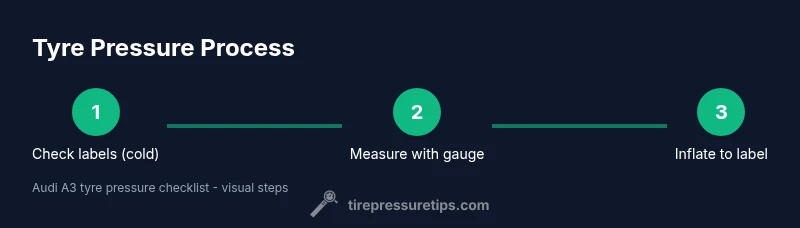
Remove each valve stem cap, press the gauge onto the valve, and take a reading. Record the result and compare against the label. Repeat for all tires.
Tip: Seal the valve cap to prevent dirt entry during testing. - 5
Inflate or deflate to match the spec
If a tire is below the target, add air in small increments and recheck. If above, release air gradually and recheck. Do not exceed the label limit.
Tip: Use the gauge to verify increments; avoid guessing by feel. - 6
Recheck all tires after adjustment
Take readings again to confirm each tire sits at the correct cold pressure. If one tire remains off, inspect for leaks or valve issues.
Tip: Check for even wear patterns once pressures are correct. - 7
Check the spare tire
If your Audi A3 has a spare, verify its pressure against the label. Spare tires may have different targets; ensure they’re within the recommended range for the spare type.
Tip: If you have a space saver, follow its specific instruction sheet. - 8
Record readings and plan next check
Log the pressures with date and ambient temperature. Schedule the next check in a couple of weeks or before a long trip.
Tip: Keep a running log to spot slow leaks early.
Frequently Asked Questions
Why is the TPMS warning on after inflating?
TPMS can trigger from small leaks, sensor fault, or recent changes in pressure. Inflate to the label, then drive a few miles to relearn; if it stays on, have the system checked.
The TPMS light can come on from a small leak or a sensor issue. Recheck pressures and consider a reset or service if it remains on.
Drive with low pressure safe?
Long-term driving on underinflated tires is not safe; it reduces grip and increases heat. If you notice low pressure, refill promptly and recheck.
Driving with low pressure is risky. Get to a pump soon and recheck all tires.
Check pressure how often?
Check monthly and before long trips; temperature changes can drift readings, so seasonal checks are wise.
Check monthly and before trips for best safety and efficiency.
Nitrogen good for tires?
Nitrogen offers minor benefits in maintaining pressure stability, but standard air is sufficient if it’s properly maintained and checked regularly.
Nitrogen isn’t essential; regular checks with air are fine if done correctly.
Spare pressure differs?
Spare tires may have different targets; always follow the label for the spare type and adjust accordingly if using a space saver.
Spare tires can have different pressures; check the label for the spare.
Reset TPMS after service?
Refer to the owner's manual; many Audis require a reset through the vehicle menu or dealer tool. In some cases, driving after a relearn will reset automatically.
TPMS reset is usually manual in the car menu or via a service tool; follow the manual.
Watch Video
What to Remember
- Check cold pressures against the door-jamb label before driving
- Use a reliable gauge and TPMS readings together
- Account for temperature when checking pressures
- Log readings to spot slow leaks or sensor faults
- Reset or service TPMS if warnings persist