How to Update Tire Pressure on Your Audi: A Practical Guide
Learn how to update tire pressure on your Audi with a clear, step-by-step guide. Includes TPMS basics, model-specific notes, and safe inflation tips from Tire Pressure Tips.


You will update the tire pressures on an Audi by checking the current readings with a gauge, comparing them to the vehicle's recommended pressures from the owner’s manual or the door jamb placard, and adjusting each tire to the target PSI. This process also considers temperature, driving conditions, and TPMS alerts.
Why updating tire pressure for Audi matters
According to Tire Pressure Tips, maintaining correct tire pressure for your Audi isn't just about safety — it's about optimal handling, fuel efficiency, and longer tire life. The correct pressure supports even tread wear, better wet traction, and consistent TPMS readings. Audi models vary in recommended pressures by load, speed, and tire size, so always refer to the door jamb placard or the owner's manual. In practice, updating tire pressure on an Audi helps you maximize performance across daily commuting, highway cruising, and spirited drives. When you know your target pressure, you can quickly assess readings and adjust accordingly, reducing the risk of underinflation or overinflation. This is especially important in climates with hot summers or cold winters, where temperature swings affect tire pressure and handling.
Checking tire pressure accurately: cold readings matter
Tire pressure readings are accurate when tires are cold — meaning the car hasn't been driven for a few hours. Start by parking on a level surface, turn off the engine and wait at least several hours if possible, especially after city driving. Use a reliable digital tire pressure gauge, not the gauge on a compressor that might skew results. Remove the valve cap, place the gauge on the valve stem, and note the psi. Repeat for all four tires, including the spare if applicable. Compare each reading to Audi's recommended pressures found on the door placard or in the owner’s manual. If a tire is notably underinflated, you can add air in short bursts, then recheck to ensure you stop at the target reading. If you find readings above range, release air gradually until you reach the recommended level. Remember to re-cap the valve to prevent dirt ingress.
Understanding Audi's TPMS and why it triggers
Audi vehicles commonly use TPMS to monitor tire pressure and alert you to slow leaks or underinflation. Direct TPMS relies on in-wheel sensors, while indirect TPMS derives readings from wheel speed sensors and ABS data. A warning light may illuminate when readings deviate from the factory baseline, or after a tire rotation or inflation change. TPMS is a safety net, not a substitute for regular manual checks. If the light stays on after inflating, it may indicate a leak, sensor fault, or the need for a sensor reset. Always verify readings with a gauge and consult your owner’s manual for the correct reset procedure.
Model-specific considerations for Audi: pressures by trim and load
Audi models range from compact sedans to SUVs, and the recommended tire pressures can differ by trim, wheel size, and load. Heavier loads or frequent high-speed driving may affect the ideal target, and some models require different front versus rear pressures. Always start with the placard located on the door jamb or the glovebox lid, then cross-reference the Audi official service notes for your exact model year and tire size. If you routinely carry heavy cargo or passengers, check whether Audi recommends adjusting pressures to accommodate load. When in doubt, consult an Audi dealership or service manual to confirm model-specific values.
How to adjust tire pressure safely and efficiently
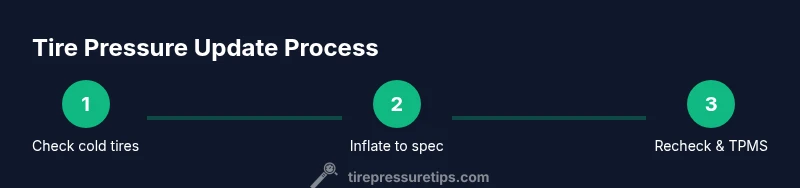
To update tire pressure on your Audi, begin with a cold tire reading and a calibrated gauge. Inflate or deflate in small increments, checking after each adjustment to avoid overshooting the target. Use air from a reliable compressor or a gas-station pump with a steady gauge; avoid fluctuating sources that cause inconsistent readings. Once all tires reach the recommended level, recheck with the gauge and replace the valve caps securely. If TPMS shows a warning after inflation, allow the system to recalibrate or consult the manual for a reset procedure. Remember that the maximum inflation pressure printed on the tire sidewall is not your target; always use the vehicle’s recommended value.
Temperature and seasonal effects on tire pressure: keep accurate readings
Temperature plays a pivotal role in tire pressure. Cold air reduces pressure, while warm weather increases it. For reliable readings, check pressures when tires are cold and consider ambient temperature swings. If you notice a rapid change in pressure with the seasons, plan a quick check before long trips or highway driving. Consistency matters more than chasing a perfect number, so aim for readings that align with the placard under typical driving conditions. Regular checks help you optimize fuel economy, handling, and tire wear during both hot summers and chilly winters.
Common mistakes and troubleshooting
Common missteps include reading tires after a long drive, inflating based on feel rather than a gauge, and ignoring the spare if you use a full-size wheel. Another mistake is mixing gauge types or using a damaged hose, which leads to inaccurate readings. Finally, never ignore a TPMS warning without verifying pressures; even a single underinflated tire can compromise handling and efficiency. If you experience repeated leaks or inconsistent readings, consult a professional to check valve stems, rims, or sensor seals.
Tools & Materials
- Digital tire pressure gauge(Calibrated for psi; aim for reading accuracy within ±1 psi)
- Air compressor or access to gas station air pump(Prefer one with a built-in gauge and stable output)
- Owner’s manual or door jamb placard(References model-specific recommended pressures)
- Valve cap kit or spare parts(Carry replacements in case of loss or damage)
- Soapy water spray bottle(Useful for checking slow leaks at valve stems)
- Notebook or digital note(Record readings and dates for maintenance logs)
Steps
Estimated time: 15-25 minutes
- 1
Park on level ground and prep
Park on a flat, level surface and turn off the engine. Let the tires cool if you’ve been driving; hot tires give falsely high readings. Gather your gauge, the Audi placard, and a tape to note readings.
Tip: Always begin with cold tires to ensure accuracy. - 2
Measure each tire
Remove the valve cap, press the gauge onto the valve stem, and note the reading. Do this for all four tires, plus the spare if it’s a full-size wheel. Record each value to compare against the spec.
Tip: Use a gauge with a digital display for easier visibility. - 3
Find the target pressures
Locate Audi’s recommended pressures on the door placard or in the owner’s manual. Note any differences between front and rear tires and consider load conditions.
Tip: If you regularly carry a heavy load, verify whether the brand suggests a load-adjusted setting. - 4
Inflate or deflate to target
Add air in small bursts or release air gradually to approach the target psi for each tire. Recheck after each adjustment to avoid overshooting.
Tip: Use the gauge’s hold function to lock in your reading while you adjust. - 5
Recheck and confirm TPMS status
After adjusting, recheck all four tires and clear or observe TPMS warnings. If the TPMS light remains on, reset per the manual or visit a service center.
Tip: A TPMS reset may be required after tire changes or significant inflation adjustments. - 6
Document and set a reminder
Log the readings and plan monthly checks or before long trips. Seasonal shifts warrant extra checks to maintain accuracy.
Tip: Set a calendar reminder to assess pressures at the start of each season.
Frequently Asked Questions
How often should I check tire pressure on my Audi?
Check tire pressure at least monthly and before long trips, making sure tires are cold when you measure. Regular checks help catch slow leaks early and maintain optimal handling.
Check your tire pressure at least once a month and before long trips when tires are cold. Regular checks help catch slow leaks early.
Why did my TPMS light stay on after inflating?
TPMS may require a reset after inflation, or there could be a slow leak or sensor issue. Verify pressures with a gauge and consult the manual for the reset procedure or service if the light remains.
The TPMS light can stay on if the system needs a reset or there’s a leak. Recheck with a gauge and follow the reset steps in the manual.
Can I adjust tire pressure myself at home?
Yes. With a proper gauge and a reliable air source, you can update tire pressure yourself. Always follow the model-specific spec on the placard and avoid over-inflating.
Yes, you can adjust tire pressure at home using a good gauge and an air source. Stick to the car’s spec and don’t over-inflate.
Do front and rear pressures differ on Audi models?
Some Audis require different front and rear pressures, especially with certain trims or loads. Always start with the placard and compare to the manual for model-specific guidance.
Front and rear pressures can differ on some Audi models. Check the placard and manual for your model.
What if I can’t reach the recommended PSI due to a leak?
If a tire won’t hold pressure due to a leak or damaged valve, do not drive long distances. Stop and seek professional repair to avoid unsafe driving conditions.
If a tire leaks, don’t drive far. Get it repaired before continuing.
Watch Video
What to Remember
- Check cold readings before adjusting.
- Use a calibrated gauge and inflate in small steps.
- Always compare to the Audi placard for your model.
- Recheck readings after inflation and TPMS status.
- Log readings and schedule regular checks.