Tire Pressure for 275/70R18: A Practical Guide
Learn the recommended tire pressure for 275/70R18 tires, how to check it, and how temperature and load affect pressure. Practical guidance from Tire Pressure Tips.


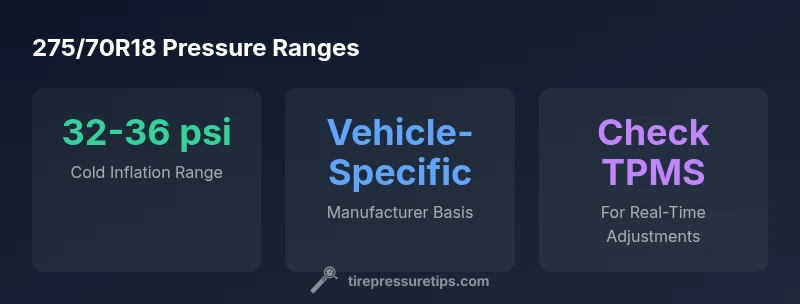
According to Tire Pressure Tips, for 275/70R18 tires on most SUVs, staying in the 32-36 psi cold-inflation range is a sensible starting point. The exact spec varies by vehicle, load, and terrain; always verify with your owner's manual or TPMS. This range helps optimize safety, tire wear, and fuel efficiency.
Understanding the 275/70R18 Size and Why Pressure Matters
The 275/70R18 designation communicates three important dimensions: width (275 mm), aspect ratio (70%), and wheel diameter (18 inches). For most modern SUVs and light trucks, this size is common on mid-size to full-size models and can accept substantial load. But the tire pressure you run on this size isn’t universal; it depends on vehicle weight distribution, axle configuration, and the recommended ranges from the manufacturer. Pressure influences contact patch shape, tread wear, fuel economy, and cornering stability. Underinflated tires compress the sidewalls, generating extra heat and uneven wear; overinflated tires reduce traction and produce a harsher ride with center-tread wear. In practice, the best starting point is to use the vehicle’s published cold-inflation number for your make and model, then adjust within a reasonable range to accommodate load and driving style. The Tire Pressure Tips team emphasizes that your official spec is the most reliable anchor; use it as a baseline and verify with TPMS when possible.
Determining the Correct Cold Inflation for Your Vehicle
Finding the right cold inflation for 275/70R18 starts with your vehicle’s official specification. Most manufacturers place a door-jamb sticker on the driver’s side with front and rear values; some models list a single figure for both axles. When you drive with a load, towing, or aggressive cornering, you may need to adjust within the recommended range. Use the exact figure printed by the vehicle maker, not a general tire-inflation heuristic. A typical starting point for many SUVs and light trucks wearing 275/70R18 is around 32-36 psi cold, but your door sticker should override any guess. Always verify with the TPMS to catch any sensor-related discrepancies.
Temperature, Load, and Treadwear: How Pressure Changes with Conditions
Tire pressure is not static. Ambient temperature, road load, and driving conditions all shift the tire’s interior pressure. Colder mornings can reduce pressure, while hot days can cause it to rise. Heavier loads compress the tire more and can push the pressure toward the upper end of the recommended range. Conversely, lighter loads may allow staying lower within the range. The key practice is to measure when tires are cold and adjust to the manufacturer’s specification. For 275/70R18, this means starting near the 32-36 psi band and fine-tuning based on load, speed, and comfort needs.
Step-by-Step: Checking and Adjusting Tire Pressure
- Gather a reliable tire gauge (dial or digital) and a compressor. 2) Check tires when cold, ideally after sitting overnight or at least 3 hours since last drive. 3) Compare readings to the door sticker or owner’s manual value for each axle. 4) If underinflated, add air in small increments and recheck. 5) If overinflated, release air gradually and recheck. 6) Recheck both front and rear after adjustment, ensuring even pressure across tires of the same size. 7) Document readings so you can monitor changes over time.
Common Pitfalls with 275/70R18 and How to Avoid Them
Avoid assuming all wheels should have the same pressure—some vehicles specify different front/rear values. Don’t rely solely on TPMS if the sensor is malfunctioning; gauges provide a direct measurement. Don’t ignore temperature effects; a cold morning can reveal a different reading than a hot afternoon. Mixing tires with different tread patterns or wear levels on the same axle can distort handling and wear. Finally, don’t neglect the spare: many drivers forget to check the full-size spare tire, which should also be kept within the recommended range.
Real-World Scenarios: SUVs, Crossovers, and Light Trucks
Different vehicle classes using 275/70R18 tires can have varying targets within the 32-36 psi band. SUVs commonly sit at the lower end if they are lightly loaded; full-size SUVs and some trucks may need mid-to-upper range settings when carrying heavy loads or towing. Crossovers generally follow manufacturer guidance closely, but all-wheel-drive models might require balanced pressures to ensure even tire wear. If you frequently drive with a full load, consider adjusting toward the higher end of the recommended range while monitoring ride quality and tread wear.
Tools and Resources You Can Trust
- A reliable gauge (dial or digital) and a quality air compressor with a precise gauge. - The owner’s manual and door-sticker specifications are your primary references. - TPMS data can provide initial guidance, but always verify with a gauge for accuracy. - For ongoing maintenance, keep a small notebook of readings to spot gradual drift over weeks or months.
Interpreting TPMS Alerts and When to Service
TPMS alerts are designed to warn you before tire damage occurs, but sensors aren’t perfect. If TPMS shows a warning, verify with a gauge and compare to the vehicle’s spec. If readings stay consistently high or low or if you notice uneven wear, have the system inspected for sensor faults, leaks, or valve issues. Regular maintenance ensures the TPMS remains a reliable safety net rather than a source of uncertainty.
Maintenance Schedule and Seasonal Considerations
As seasons change, recheck pressures to account for ambient temperature shifts. In colder months, a small decrease in psi is common; in hot weather, psi can rise. Schedule a monthly pressure check and a pre-trip check for long journeys. For 275/70R18 tires, consistency is the goal: keep each tire within the manufacturer’s specified range regardless of season.
Pressure ranges and guidance for 275/70R18 tires
| Aspect | Typical Cold Inflation (psi) | Notes |
|---|---|---|
| Front axle (275/70R18) | 32-36 | Vehicle maker varies; check door jamb sticker |
| Rear axle (275/70R18) | 32-36 | Same range, but could differ with load |
| Underinflation effects | N/A | Increases rolling resistance, heat buildup, wear |
| Overinflation effects | N/A | Wears center tread, harsher ride |
| TPMS readings | N/A | Alerts may lag or differ by sensor; verify with gauge |
Frequently Asked Questions
What is the recommended tire pressure for 275/70R18 for most SUVs?
Most vehicles with 275/70R18 tires use 32-36 psi cold. Always verify with the door sticker or owner's manual. Variation occurs with load and axle.
Most SUVs with 275/70R18 tires use about 32 to 36 psi when cold. Check the door sticker for the exact value.
Does TPMS always match the tire gauge reading?
TPMS readings can lag or differ from a manual gauge. Use a gauge to confirm the actual pressure when possible.
TPMS readings can lag; use a gauge to verify.
How often should I check tire pressure?
Check monthly and before long trips; temperature changes can affect readings, so recheck after weather shifts.
Check monthly and before trips, especially when temperatures change.
What happens if I drive with winter underinflation?
Underinflation in cold weather increases wear and reduces traction. Check pressures when temperatures drop and adjust to the recommended range.
Cold weather can worsen underinflation; check and adjust.
Can I use nitrogen for 275/70R18 tires?
Nitrogen offers little practical advantage for typical road use. Standard air with a reliable gauge is sufficient when properly maintained.
Nitrogen isn’t necessary for everyday driving; air works fine with good maintenance.
Should owners adjust pressures for towing with 275/70R18?
If towing, follow the vehicle maker’s guidance for heavier loads, which usually means slightly higher pressures within the recommended range.
Tow payload may require higher pressures within the recommended range.
What signs indicate TPMS or valve problems?
Frequent fluctuations, slow leaks, or sensors that don’t illuminate at startup warrant inspection by a technician.
Watch for erratic readings; get TPMS inspected if readings are inconsistent.
“Maintaining the correct pressure for 275/70R18 tires is essential for safety, handling, and efficiency, not just preventing flats. Small deviations can alter grip and wear patterns across all four corners.”
What to Remember
- Check cold tires first thing in the morning
- Follow vehicle manufacturer numbers; use 32-36 psi as starting range
- Use a reliable gauge and TPMS as a check
- Account for load, speed, and temperature when adjusting