SUV Tire Pressure: Practical Guide for Safe Driving
Learn how to check SUV tire pressure, interpret TPMS alerts, and maintain optimal PSI for safety, fuel efficiency, and tire longevity with practical steps, tools, and routines.


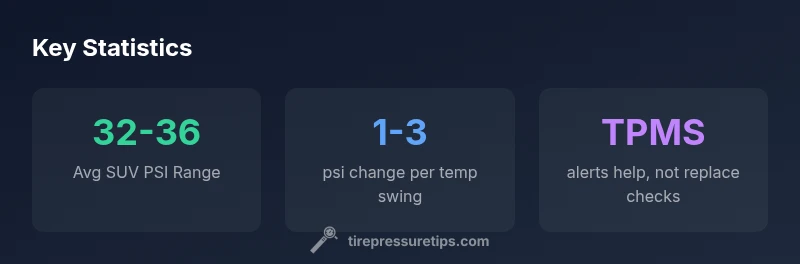
In short, suv tire pressure should follow your vehicle’s placard values, typically within a 30–36 psi range for many SUVs. Regular checks when tires are cold, plus adjustments for load and temperature, help you stay safe and maximize efficiency. Tire Pressure Tips emphasizes using a gauge and the door jamb sticker for exact targets.
Why SUV tire pressure matters
Maintaining the correct suv tire pressure is essential for safety, handling, and efficiency. According to Tire Pressure Tips, underinflated tires can compromise cornering, increase tire wear, and raise fuel consumption. For SUV owners, the tire pressure is influenced by vehicle size, load, and tire type, making a one-size-fits-all number impractical. The Tire Pressure Tips team found that most SUVs have a recommended cold psi range posted on a placard inside the driver’s door jamb or in the owner’s manual. Following these guidelines helps retain optimal contact with the road, improves braking response, and reduces risk of a blowout. In addition, maintaining proper pressure contributes to even tire wear, extending tire life and reducing the need for premature replacements. This is not only about safety, but also about efficiency: properly inflated tires lower rolling resistance, which can save fuel over the life of the vehicle.
To think clearly about suv tire pressure, start with your own vehicle’s official guidance and treat any deviations as a signal to inspect seals, valves, or tires for leaks. Tire Pressure Tips’s holistic view emphasizes that pressure targets are not a single number but a range that accommodates load and environment. This practical approach helps drivers tailor inflation to real-world use without guessing.
How to find the correct psi for your SUV
Your SUV's built-in pressure targets come from the placard, the owner's manual, and sometimes the tire size specified by the manufacturer. Start by locating the placard on the driver’s door jamb and noting the cold psi values for front and rear tires. Then consider load: if you regularly haul heavy loads or full-capacity cargo, you may need to adjust within the recommended range or to the higher end specified by manufacturer. Next, check tire type (all-season, performance, or off-road) and its load index; different tires can slightly change the ideal psi. Finally, cross-check with your TPMS readings and perform a test drive to confirm the handling feels comfortable and the tires wear evenly. If you're unsure, consult the Tire Pressure Tips team for personalized guidance and always verify against your owner's manual.
Common mistakes and how to avoid them
A frequent error is inflating tires to the maximum sidewall rating or using a single number for all SUVs. Another pitfall is inflating tires while they are hot or after short trips, which gives a falsely high reading. Do not ignore load changes; a full cargo plane or frequent passenger loads can require adjustments within the recommended range. Relying solely on TPMS without manual checks is risky, since TPMS reflects relative pressure and can miss gradual leaks. Finally, using the wrong gauge (cheap stick gauges or damaged sensors) can produce inaccurate readings. The antidote is a reliable gauge, the placard, and regular checks that account for temperature, road conditions, and driving style.
How to check tire pressure accurately
Begin with cold tires; measure after the vehicle has been stationary for at least 3 hours or no more than 2 miles of driving. Remove the valve cap, place the gauge on the valve stem, and record the front and rear numbers. If readings are outside the placard range, adjust using an air compressor or visit a service station. Recheck to confirm accuracy within 1–2 psi. Keep the valve caps tight and inspect for leaks around stems and threads. Regular checks with a dependable gauge will prevent underinflation and improve safety.
The relationship between TPMS and tire pressure
TPMS is a valuable alert system, but it is not a substitute for manual measurement. A TPMS warning indicates that a tire is underinflated enough to trigger the sensor, but exact psi values should be confirmed with a gauge. Different vehicles interpret thresholds differently, so always refer to the manual for model-specific guidance. If a TPMS warning persists, inspect all tires, including the spare if applicable, and check for leaks or stem damage. A well-calibrated TPMS complements routine manual checks to keep suv tire pressure in the optimal range.
Temperature effects on tire pressure and seasonal guidance
Tire pressure is sensitive to temperature; as ambient temperature drops, so does the air inside tires. A common rule of thumb is that you may see about a 1 psi decrease for every 10°F drop in temperature. In winter, check more frequently and adjust within the vehicle's recommended range after cool-down periods. In hot weather, tire pressures may rise, so a quick recheck after long highway drives is prudent. Always aim to keep pressures within the door placard’s cold-psi range and compensate for weather-driven changes.
Practical maintenance routine to keep SUV tire pressure optimal
Create a quarterly routine: (1) check all tires when cold, (2) confirm pressures against the placard, (3) adjust as needed, (4) inspect valves and stems for leaks, and (5) record readings for trend monitoring. If you frequently switch between different tire types or seasonal tires, track the recommended psi for each setup. Use a high-quality gauge, keep a small can of compressed air on hand, and schedule a professional inspection if you notice persistent leaks or uneven wear.
Choosing the right tools and gear
Invest in a reliable digital tire pressure gauge for quick checks and a mechanical gauge for calibration. Keep spare valve caps and a compact air compressor or access to a service station with a gauge. For SUVs, consider a gauge that can handle larger valve stems and thick tires. Store tools in the glove box or trunk so you can verify pressure before trips or after long drives and when loading heavy cargo.
Representative PSI ranges for common SUV categories
| SUV Type | Cold PSI Range (min–max) | Front PSI range | Rear PSI range | Notes |
|---|---|---|---|---|
| Compact SUV | 32-34 | 32-36 | 32-36 | Typical range; verify with placard |
| Mid-size SUV | 33-35 | 33-37 | 33-37 | Commonly close to front and rear equality |
| Full-size SUV | 34-36 | 34-40 | 34-40 | Check owner's manual for exact numbers |
Frequently Asked Questions
What is the recommended tire pressure for SUVs?
SUVs typically use a tire pressure range between 30-36 psi for both front and rear tires, depending on model and load. Always check the placard on the door jamb or owner's manual for exact values.
Most SUVs use roughly 30 to 36 psi; always confirm your specific number on the door placard.
How often should I check tire pressure?
Check at least once a month and before long trips, preferably when tires are cold. If you regularly carry heavy loads, adjust within the recommended range.
Check monthly and before trips, when the tires are cold.
Does carrying a heavier load affect tire pressure?
Yes. Heavier loads can influence the target pressure; follow the vehicle placard and manufacturer guidance for load-adjusted values.
Load changes pressure; follow the manual for adjustments.
Can TPMS replace manual tire pressure checks?
TPMS alerts you to underinflation but you should still use a gauge to confirm exact psi for safety and performance.
TPMS warns you, but you still need to check the pressure with a gauge.
How does temperature affect SUV tire pressure in winter?
Cold temperatures typically lower tire pressure; expect around a 1 psi drop per 10°F decrease and adjust to the placard values when needed.
Colder temps drop pressure; recheck and adjust as needed.
“Maintaining the correct SUV tire pressure isn't just about safety; it's essential for optimal handling, fuel economy, and tire life. A consistent inflating routine protects you and your passengers on every trip.”
What to Remember
- Check tire pressures when tires are cold before driving
- Always follow the door placard values for your SUV
- Avoid inflating to the max sidewall; stay within recommended range
- TPMS helps, but manual checks with a gauge are essential
- Regular maintenance saves fuel and extends tire life