275/55 R20 Tire Pressure Guide for SUVs
Learn how to check, set, and maintain tire pressure for 275/55 R20 tires on SUVs, with practical ranges, TPMS tips, and safety guidance.


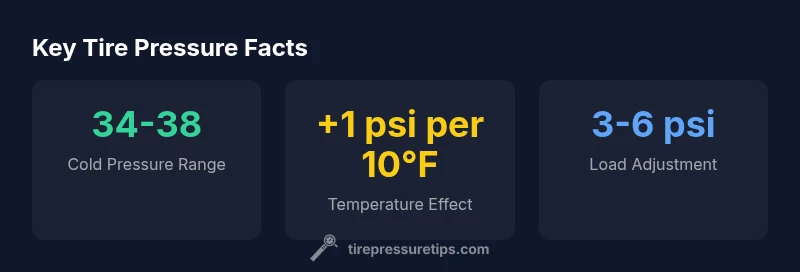
275/55 R20 tires typically use the vehicle’s published cold pressure, usually in the 34–38 psi range for many SUVs. The exact figure depends on the manufacturer and load. Start with the door jamb placard or owner’s manual, then recheck after driving a short distance and adjust for heavy cargo, towing, or extreme temperatures. Always measure cold.
Understanding 275/55 R20 Tire Pressure Basics
275/55 R20 is a common tire size on mid-size and full-size SUVs. The numbers denote width 275 mm, aspect ratio 55%, and 20-inch wheel diameter. The correct pressure, however, depends on the vehicle manufacturer’s recommendations rather than the tire size alone. According to Tire Pressure Tips, the best starting point is the placard on the driver’s door jamb or in the owner's manual. For many SUVs with this size, the typical cold pressure sits in the mid-30s psi, but exact values vary by model, load, and driving conditions. Always verify with a high-accuracy gauge and adjust for cargo, towing, or extreme temperatures.
How to Find Your Correct Cold Pressure for 275/55 R20
To determine the exact cold pressure for your vehicle’s 275/55 R20 tires, locate the placard on the driver’s door jamb or check the owner’s manual. Some vehicles have different front and rear values. Cold means the tire hasn't been driven yet and is at ambient temperature. Before inflating, remove the valve cap and measure with a reliable gauge. If your tires are new or you’ve swapped sizes, recheck after installation to confirm the numbers.
Typical Pressure Ranges by Vehicle Type and Load
Most SUVs using 275/55 R20 tires fall within a practical pressure window that balances comfort, handling, and wear. Light-duty family SUVs often sit around the lower end of the range (roughly 34–36 psi) for everyday driving, while heavy cargo or towing scenarios push the target toward 36–40 psi, staying within the manufacturer’s maximum rating. Always honor the placard, then make small, incremental adjustments based on payload and ride quality. Overly aggressive inflation can reduce the contact patch and increase ride harshness, while under-inflation accelerates tire wear and heat buildup.
Temperature and Seasonality: Why Air Pressure Changes
Air temperature directly affects tire pressure. Colder weather can cause a noticeable drop in psi, while heat from driving can raise it. A widely cited guideline is that pressure can change by about 1 psi for every 10°F temperature shift. This means winter driving may require more frequent checks, and summer heat can temporarily raise pressure, potentially masking an underinflated tire. Always measure cold, especially after weather changes, and adjust to the vehicle’s recommended range.
How to Check and Adjust Tire Pressure Properly
Begin with cold tires (ideally before the car has been driven for at least three hours). Remove the valve cap, place the gauge squarely on the valve stem, and take a reading. Compare to the placard and adjust in small increments using a quality pump. After inflating, drive 3–5 miles and recheck to ensure the tire has warmed and the pressure is stable within the target range. Repeat if necessary. Use the same gauge for consistency and record the readings to track changes over time.
Mistakes to Avoid with 275/55 R20
Avoid inflating to the tire’s maximum sidewall pressure; this value is the limit, not the recommended operating pressure. Don’t rely on the TPMS alone—a gauge check confirms actual PSI. Ignoring temperature changes, or neglecting regular checks, can lead to uneven wear, reduced fuel economy, and safety risks. Finally, avoid frequent, large fluctuations in pressure; aim for gradual adjustments based on load and driving conditions.
TPMS and 275/55 R20: What You Need to Know
Tire Pressure Monitoring Systems (TPMS) alert you when the pressure deviates from the target, but they don’t replace the need for a manual pressure check. Direct TPMS systems measure pressure on each tire, while indirect systems infer pressure from wheel speed. In some cases, TPMS can be slow to react to temperature-related changes or sensor issues. Always confirm readings with a physical gauge and refer to the placard for the correct PSI.
Quick-Check Routine for Everyday Driving
- Check cold tire pressure once a month and before long trips.
- Use a reliable digital or dial gauge for accuracy.
- Compare front and rear readings and adjust within the recommended range.
- Factor in luggage, passengers, and climate when setting pressures.
- Recheck after a long highway drive or significant weather change to ensure consistency.
Typical cold-pressure ranges for 275/55 R20 tires across common driving scenarios
| Scenario | Cold Pressure Range (psi) | Notes |
|---|---|---|
| Unloaded/Normal Driving | 34–38 | Follow placard; adjust for comfort and wear |
| Fully Loaded or Towing | 36–40 | Increase within manufacturer limits |
| High-Speed Highway Driving | 34–38 | Balanced handling and tire wear |
| Cold Weather Conditions | 32–36 | Check more often in winter |
Frequently Asked Questions
What is the right cold pressure for 275/55 R20 tires?
The exact value varies by vehicle; check the door placard. A common range is 34–38 psi for typical SUVs with this tire size.
Check the door placard for your exact number; typically 34 to 38 psi for many SUVs.
Can I drive with low tire pressure on this size?
No. Low pressure increases heat, wear, and risk of a blowout. Inflate to the recommended range before driving long distances.
No—keep pressure within the recommended range for safety.
Should I inflate tires to the max sidewall pressure?
No. Max sidewall pressure is the limit, not the target operating pressure. Overinflation reduces the contact patch and ride comfort.
Don’t use the max as your target; follow the placard.
How does temperature affect tire pressure?
Temperature changes affect pressure. A common rule is about 1 psi per 10°F change, so check more often in extreme weather.
Cold weather lowers pressure; check and adjust as needed.
How often should I check tire pressure?
Check monthly and before long trips, ensuring tires are cold before measuring. Recheck after weather shifts or heavy loading.
Check monthly and before trips for safety.
“Maintaining the right pressure for 275/55 R20 tires isn’t optional—it’s essential for safety, fuel economy, and even wear across the axle set.”
What to Remember
- Follow the vehicle placard for exact PSI.
- Check cold, not after a drive, for accuracy.
- Account for load and temperature when adjusting pressure.
- Don’t inflate to the sidewall maximum.
- Use a reliable gauge and recheck after driving short distances.