Nissan Rogue Tire Pressure Guide: Check, Maintain, Troubleshoot
A practical, step-by-step guide to Nissan Rogue tire pressure: check cold pressures, use TPMS correctly, adjust with a gauge and air source, and maintain safe tire wear.


You will learn how to check and maintain the Nissan Rogue tire pressure, understand TPMS indicators, and fix common under- or over-inflation issues. Before you start, ensure you have a tire gauge and a reliable air source, and know the recommended cold pressures from the vehicle placard. This guide covers safe steps, temperature effects, and maintenance routines.
Why correct tire pressure matters for the Nissan Rogue
Maintaining the correct tire pressure for your Nissan Rogue is essential for safety, fuel efficiency, and tire longevity. The Tire Pressure Tips team emphasizes that keeping tires inflated close to the manufacturer’s spec reduces rolling resistance, improves handling, and minimizes uneven wear. When pressures drift, you may notice poorer fuel economy, slower steering response, or uneven tread wear. The Nissan Rogue relies on accurate tire pressure readings to support the TPMS in providing reliable warnings. For drivers tracking long-term maintenance, monitoring tire pressure is a simple, impactful habit. In this section, you’ll see how to interpret the vehicle placard, what “cold pressure” means, and why small changes matter for daily driving.
Understanding Nissan Rogue tire pressure specs
Nissan Rogue tire pressure is not a one-size-fits-all value. The official spec lives on the door jamb placard and varies between front and rear tires, especially when the vehicle carries passengers or cargo. The placard gives the recommended cold pressures and sometimes notes a separate value for the spare tire. Pressures refer to cold tires—before driving and after the vehicle has sat for several hours. Do not rely on readings after a driveway test on a warm tire. If you’ve changed wheel sizes, loads, or tire types, verify the new spec in the owner’s manual. Remember, maximum pressure printed on the tire sidewall is not a target for daily inflation; it’s the limit for safety.
How to check tire pressure with a gauge
First, park on a level surface and allow the tires to cool for a few hours if they’ve been driven. Remove the valve cap, press the gauge onto the valve stem, and note the reading. Replace the cap and repeat for all four tires. Compare each reading to the recommended cold pressures from the placard. For spare tires, check their pressure if you use a full-size spare or run-flat. If readings are low, add air in small increments and recheck. If readings are high, release air a little at a time and recheck. Always re-cap the valve after measuring.
Adjusting tire pressure on the Nissan Rogue
If a tire reads low, inflate in small steps (about 1-2 psi at a time) and re-check to avoid overinflation. If you need to reduce pressure, release air in small amounts and re-check. Use a reliable air source—city air pumps at gas stations may vary in accuracy, so verify with a personal gauge. After adjusting, re-check all tires to confirm consistency, especially if the vehicle carries heavy loads or you’re preparing for a long trip. Never exceed the maximum tire pressure printed on the sidewall.
TPMS: Understanding sensors and warnings
The Nissan Rogue uses TPMS to alert you when a tire’s pressure deviates from the target. A TPMS warning can indicate a slow leak or a sudden drop in pressure. If the light comes on, check all tires, and consider adding air to bring them to the placard spec. Persistent warnings after inflation may signal a valve stem leak, a damaged sensor, or a tire puncture that requires service. The TPMS is a helpful safety feature that complements manual checks, not a substitute for them.
Seasonal and temperature effects on tire pressure
Temperature shifts have a real effect on tire pressure. Colder weather can reduce pressure, while hot days can raise it. The Tire Pressure Tips team notes that readings can vary with ambient temperature, so you should adjust pressure toward the recommended cold value when tires are cold. In winter, consider checking pressures more often, especially after cold starts, to ensure performance and safety. This awareness helps you maintain the correct pressure year-round, including for the Nissan Rogue.
How to check your spare tire pressure
Spare tires are often overlooked, but their pressure matters in a pinch. If your spare is a full-size tire, check it with the same gauge and ensure it matches the placard’s target when you rotate wheels. For space-saver (donut) spares, use the lower maximum pressure indicated on the donut itself and avoid driving long distances. Regularly inspect the spare’s pressure as part of a quarterly maintenance routine.
Common mistakes and quick fixes
Common mistakes include checking tires when they’re hot, inflating to the tire’s maximum cold sidewall pressure, and ignoring front vs rear pressures. Always measure when tires are cold and consult the placard for exact values. If you notice gradual changes in pressure over weeks, there might be a slow leak or valve stem issue. Quick fixes include topping up to the recommended cold pressure after driving, and scheduling a professional inspection if leaks persist.
Maintenance routine and when to service
Make tire pressure checks part of a monthly routine and before long trips or highway driving. Record readings in a notebook or app to track trends and alert you to slow leaks. Rotate tires at intervals recommended by Nissan, and recheck pressures after rotation since changes can occur with wheel swap. For fleet or heavy-load drivers, establish a stricter schedule to ensure safe performance and fuel efficiency.
Next steps and keeping records
After completing the checks, create a simple maintenance log noting date, tire pressures for each tire, ambient temperature, and whether any adjustments were made. This log helps with early detection of slow leaks and supports resale value by showing consistent upkeep. The Tire Pressure Tips team recommends keeping a digital copy handy and revisiting the vehicle placard any time you replace tires or alter wheel sizes.
Tools & Materials
- Tire pressure gauge(Digital or analog with at least 0.5 psi resolution)
- Nissan Rogue owner's manual or door placard(Shows recommended cold tire pressures (front/rear and spare))
- Air source (manual pump or portable compressor)(Needed to adjust tire pressures on the go)
Steps
Estimated time: 25-40 minutes
- 1
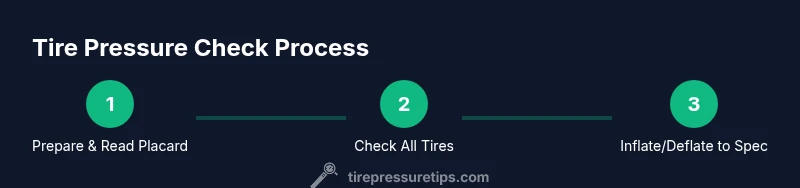
Prepare and park on level ground
Turn off the engine and let tires cool for at least 15 minutes if you’ve been driving. Park on a flat, solid surface away from traffic. This ensures accurate readings and reduces the risk of readings influenced by heat or movement.
Tip: Record the current readings before adjusting so you can compare after changes. - 2
Find the recommended tire pressures
Open the driver’s door and read the placard for cold tire pressures for front, rear, and spare if applicable. If your Rogue has different tires (seasonal changes or a new wheel setup), refer to the owner’s manual for the correct values.
Tip: Note the units (psi) and the difference between front and rear pressures. - 3
Check each tire with a gauge
Remove the valve cap, press the gauge firmly on the valve stem, and record the reading. Replace the cap securely and move to the next tire. Repeat for all four tires and the spare if you carry a full-size wheel.
Tip: Always use a gauge that reads in 0.5 psi or smaller for precision. - 4
Inflate or deflate to the target
If a tire is low, add air in small 1–2 psi increments and recheck. If it’s high, release air gradually and recheck. Aim for the exact cold value on the placard, not the tire’s maximum pressure.
Tip: Do not overinflate beyond the recommended cold pressure. - 5
Re-check after adjustments
After adjusting all tires, recheck each reading to confirm consistency. Temperature changes can still affect readings, so consider re-testing after a short drive and cooldown.
Tip: If readings drift more than 1–2 psi over a week, inspect for leaks. - 6
Check TPMS status
If the TPMS light remains on after inflation, verify all tires are at the target pressure. If readings are correct and the light persists, there may be a faulty sensor or a slow leak requiring professional service.
Tip: Record TPMS warnings and readings for reference during service. - 7
Inspect the spare tire
Check the spare (full-size or donut) and ensure it’s inflated to the recommended pressure for that tire. Donut spares typically have a lower limit and driving restrictions.
Tip: Keep the spare pressure noted in your log for emergencies. - 8
Document everything
Store readings, dates, temperatures, and adjustments in a maintenance log. This helps you spot trends and plan future checks before long trips.
Tip: Use a mobile note app or printable log for quick reference. - 9
Seasonal adjustments
As seasons change, re-check pressures because temperature shifts affect readings. Adjust to the cold value when temperatures drop or rise accordingly.
Tip: Schedule a monthly check during extreme weather periods. - 10
Know when to seek service
If you detect persistent underinflation, a slow leak, or a TPMS fault, arrange a professional inspection. Accurate tire pressure supports safety and performance.
Tip: Don’t ignore consistent warnings—address them promptly.
Frequently Asked Questions
What is the standard Nissan Rogue tire pressure?
The exact cold tire pressure varies by model and load. Check the door placard or owner's manual for the Nissan Rogue’s front, rear, and spare values. Always align inflation with the placard rather than the tire sidewall maximum.
Check the placard on your Rogue door frame for the exact cold pressure values. If in doubt, consult the owner’s manual.
How do I know if TPMS is working correctly?
TPMS warns when a tire is significantly underinflated or overinflated. If the light comes on, verify all four tires match the placard pressures after cold and recheck. A persistent light after adjustments may indicate a sensor issue or leak.
If the TPMS light stays on after inflation, have the sensors inspected for faults or leaks.
Can temperature changes affect my readings?
Yes. Colder temperatures lower tire pressure and hotter temperatures raise it. Recheck and adjust toward the cold pressure value when tires are cold, especially during seasonal transitions.
Temperature changes can shift tire pressure; recheck when tires are cold and adjust to the recommended cold value.
Should I check the spare tire as well?
Yes. If you carry a full-size spare, check its pressure like the other tires. For donuts, follow the donut’s own pressure spec and driving limits. Regular checks prevent surprises during emergencies.
Make sure your spare’s pressure is within its recommended range and note any special limits.
What if I don’t have a reliable air compressor?
Visit a gas station or service center that has calibrated air pumps. Always verify the reading with your own gauge after inflating to avoid overinflation.
If you lack a home compressor, use a nearby station and double-check readings with your gauge.
Watch Video
What to Remember
- Check cold pressures against the placard values.
- Use a reliable gauge and adjust in small increments.
- TPMS helps but isn’t a substitute for manual checks.
- Record readings to monitor changes over time.