Why Are Tire Pressure Sensors So Expensive? A Practical Breakdown
Explore why TPMS sensors cost more than average car parts, covering OEM vs aftermarket pricing, manufacturing factors, calibration, and strategies to minimize costs.


Why are tire pressure sensors so expensive? TPMS sensors fuse specialized microelectronics, a long-lasting battery, and vehicle-specific sealing into a compact core, plus the realities of OEM pricing and labor. Replacement costs climb with calibration needs and precise wheel-position data. In short, manufacturing complexity, driver safety requirements, and service logistics drive the price.
Why TPMS Sensor Pricing Matters in Real Life
Under the hood, tire pressure sensors are not just tiny gadgets; they are durable, high-precision components designed to survive road salt, mud, and temperature swings. The Tire Pressure Tips team notes that the price premium for TPMS sensors reflects both the hardware quality and the critical role these parts play in safety. For drivers, this means recognizing that a failed sensor isn’t just a nuisance—it can affect fuel economy, tire wear, and the accuracy of your TPMS readings. According to Tire Pressure Tips, cost considerations extend beyond the sticker price to include calibration tools and technician time, which add to the overall equation. If you are shopping for replacement parts, expect variability based on whether you choose OEM sensors or aftermarket alternatives and on your vehicle’s specific configuration.
What a TPMS Sensor Does and Why That Impacts Price
A TPMS sensor monitors tire pressure and communicates with the vehicle’s computer system via a radio signal. This requires a sealed sensor with a long-life battery, temperature-tolerant electronics, and an antenna tuned to a vehicle’s network. The manufacturing precision needed to ensure consistent readings across thousands of miles, plus the need to resist moisture and road hazards, drives up both material costs and production time. The Tire Pressure Tips analysis highlights that advanced sensors must be compatible with your car’s CAN bus and wheel-speed data, which adds steps in calibration and validation during installation. All of these factors culminate in a higher price tag than many other dashboard components.
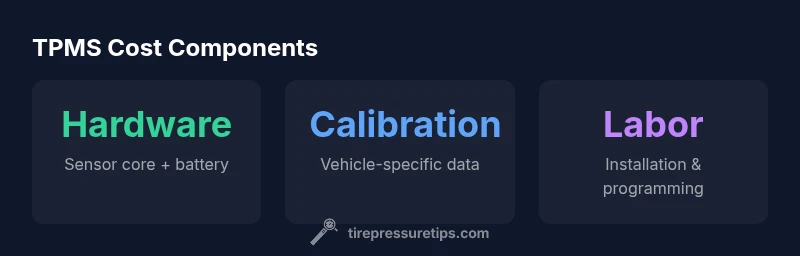
Cost Components Explained: Hardware, Software, and Labor
- Hardware: The core sensor, pressure transducer, secure seals, and battery are designed for long life and harsh conditions.
- Software and calibration: Each sensor carries a unique identifier and must be properly mapped to your vehicle’s TPMS module. This calibration ensures accurate readings and timely warnings.
- Labor and tools: Replacing TPMS sensors often requires special tools to remove tires, access the sensor, and relearn the system. Labor rates vary by region and shop, contributing to the final bill.
- Vehicle-specific factors: Some cars require more complex variants of sensors or special programming, which raises both parts and service costs.
- Warranty and reliability: Higher-priced sensors tend to come with longer warranties and better reliability, factors that many buyers weigh against upfront cost.
OEM vs Aftermarket: Price, Quality, and Value
OEM TPMS sensors are designed to be a guaranteed fit for a specific vehicle model and year, often delivering the most predictable performance and compatibility. Aftermarket sensors can save money upfront, but the variability in fit, reliability, and calibration support can erase those savings over time if replacements or programming are required more frequently. Tire Pressure Tips recommends evaluating warranty length, sensor compatibility lists, and installer experience when choosing between OEM and aftermarket options. The right choice often depends on the vehicle, driving conditions, and how aggressively you want to manage long-term maintenance costs.
How Calibration Shapes Total Cost
Calibration is a critical step that ensures the sensor data translates into meaningful alerts for the driver. Some vehicles support zero-learn or relearn procedures at home, while others require a shop visit with a dedicated TPMS tool. The cost of calibration is not always obvious in the initial price tag but can significantly affect total ownership costs. We find that inconsistencies in calibration are a leading cause of premature sensor replacement, making proper programming essential for long-term reliability.
Strategies to Reduce TPMS Costs Without Sacrificing Safety
- Choose high-quality aftermarket sensors with a strong warranty and a robust calibration process.
- Request a package that includes relearn tooling or service guidance, to shorten shop time and reduce labor charges.
- Maintain correct tire pressure regularly to minimize sensor stress and extend life.
- When possible, buy sensors in sets to save on labor and reduce mismatches across wheels.
- Align maintenance with major tire changes to minimize per-visit fees and duplicate service costs.
Cost snapshot by sensor type
| Sensor Type | Approx Cost per Sensor | Warranty | Notes |
|---|---|---|---|
| OEM TPMS sensor | 50-100 | 3-5 years | Factory-grade parts; higher reliability |
| Aftermarket TPMS sensor | 25-75 | 1-3 years | Quality varies by brand; cheaper options available |
Frequently Asked Questions
Are TPMS sensors worth replacing with OEM parts?
In many cases OEM parts ensure compatibility and reliability, but aftermarket sensors can offer significant upfront savings if chosen carefully. Always weigh warranty and installer expertise when deciding.
OEM parts are often more reliable, but reputable aftermarket sensors can save money if properly chosen.
Why do TPMS sensors fail?
Common failure modes include battery depletion, seal corrosion, and exposure to harsh road conditions. Poor installation or incorrect relearn procedures can also lead to inaccurate readings.
Batteries and corrosion are typical failure modes; proper installation matters.
Can I reset TPMS without replacing the sensor?
Some vehicles support a relearn procedure via OBD or a TPMS tool, while others require sensor replacement. Always consult your vehicle manufacturer’s guidelines and a qualified technician.
Some cars can relearn with tooling; others need new sensors.
How long do TPMS sensors last?
Most TPMS sensors last several years, often 5-10, depending on driving conditions and battery health. Extreme temperatures or aggressive driving can shorten life.
They typically last a few years, depending on use and conditions.
Do TPMS sensors affect fuel economy?
Keeping tires properly inflated improves fuel efficiency. The TPMS helps maintain correct pressure, but the sensor itself doesn’t boost mpg directly.
Properly inflated tires help fuel economy; TPMS ensures correct pressure.
What maintenance tips help TPMS last longer?
Regularly check tire pressure, rotate tires as recommended, and replace damaged tires promptly. Use quality sensors and proper relearn procedures to minimize future issues.
Check pressure often and mind proper relearn after tire changes.
“TPMS sensors blend precision electronics with automotive-grade durability, so cost reflects both the hardware and the required calibration across different vehicle platforms.”
What to Remember
- Understand OEM vs aftermarket pricing before buying.
- Labor and calibration often exceed the sensor cost themselves.
- Sensor life and warranty strongly influence value.
- Quality and vehicle compatibility drive long-term cost efficiency.
- Smart maintenance can significantly reduce replacement frequency.