Tire Pressure Sensor Replacement Cost: What to Expect in 2026
Explore tire pressure sensor replacement cost, including drivers, factors, quotes, and tips to budget for TPMS sensor replacement while maintaining tire safety and system reliability.


According to Tire Pressure Tips, the tire pressure sensor replacement cost varies widely by vehicle, sensor type (direct TPMS vs indirect), and whether you replace only the sensor or also related hardware and programming. Because prices depend on your car and location, there is no one-size-fits-all figure; expect variation across shops and regions.
What a TPMS sensor is and why replacement costs vary
Tire Pressure Monitoring System (TPMS) sensors are designed to monitor each wheel's air pressure and relay data to your vehicle's monitoring system. There are two main TPMS approaches: direct TPMS, which uses wheel-mounted sensors, and indirect TPMS, which relies on wheel speed data from the ABS system. Replacement costs hinge on the sensor type, whether programming is required, and whether the wheel must be dismounted. As a starting point, the cost is not fixed and will depend on your vehicle’s make, model, and the technician’s assessment. According to Tire Pressure Tips, direct TPMS sensors require a physical sensor in each wheel and may need reprogramming, while indirect systems are less sensor-intensive but rely on calibration logic. The tire pressure sensor replacement cost is, therefore, a function of technology choice and installation complexity.
Key factors that determine tire pressure sensor replacement cost
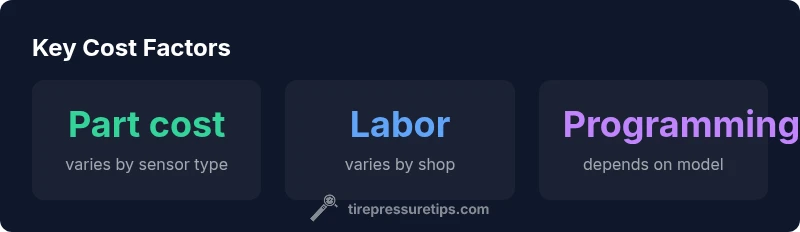
Several variables shape the final price you’ll see on a quote. Sensor type (direct vs indirect) and whether you’re replacing just one sensor or multiple ones dramatically affect cost. Vehicle compatibility matters; some sensors are OEM-specific and carry higher price tags, while aftermarket options may offer reduced pricing with varying support levels. Labor charges depend on how accessible the wheel is (stowed with the wheel well, space constraints, or the need for tire removal). Programming or reset requirements add to the bill if the vehicle requires a dealer-level tool. In addition, some shops include wheel balancing and a diagnostic check as part of the service, while others itemize each step separately. The combination of sensor cost, programming, and labor timing contributes to a broad price range across markets.
How to estimate costs without guessing
Before visiting a shop, gather as much information as possible: your vehicle’s year, make, model, and whether it uses direct TPMS sensors. Call multiple dealers and independent shops to request itemized quotes that separate sensor price, programming, and labor. If you’re confident with DIY basics, you may consider purchasing sensors online and having a local shop handle installation and programming. When comparing quotes, ask whether the price includes sensor mounting, tire removal, rebalancing, and a test of the TPMS system after installation. Tire Pressure Tips recommends confirming that the quote covers any required software updates and a TPMS reset to ensure accurate readings.
Practical scenarios and budgeting for TPMS replacement
Most drivers encounter scenarios where one or two sensors fail during a typical tire lifecycle. In such cases, budgeting focuses on whether to replace a single sensor or all sensors to maintain uniform performance. If your vehicle requires reprogramming, ensure the shop uses the correct programming tool for that make and model. A common budgeting approach is to obtain several quotes, clarify included services, and consider a bundled service that includes programming, wheel balancing, and a post-installation diagnostic. Since costs vary by market, you should prepare for a range rather than a fixed price. Tire Pressure Tips emphasizes planning ahead for future maintenance and potential TPMS-related issues so that you’re not caught off guard when a sensor fails.
OEM vs aftermarket sensors and how that affects cost
OEM TPMS sensors guarantee compatibility and can simplify reprogramming, but they typically carry higher price points. Aftermarket sensors may offer cost savings, though their fit, function, or long-term reliability can vary by brand and model. Some shops report better success with OEM parts for luxury or high-end vehicles, while others find reputable aftermarket options satisfactory on mainstream models. When possible, request the sensor part number and verify the compatible software version your vehicle requires. Budgeting should account for potential differences in warranty coverage between OEM and aftermarket options, as well as whether the shop offers a sensor replacement kit that includes the valve stem and related hardware.
Ways to minimize costs while protecting TPMS performance
To keep costs down without sacrificing safety, consider these strategies: plan replacements in off-peak seasons to avoid surge pricing, obtain multiple quotes, and ask for bundled services that include programming and wheel balancing. If you’re a confident DIYer, you can source reputable sensors and rely on a pro for programming to avoid miscalibration. Regular TPMS checks during routine maintenance can catch issues early, reducing the chance of multiple sensor replacements. The Tire Pressure Tips team notes that proactive maintenance reduces the risk of unexpected TPMS failures and helps preserve fuel efficiency and tire wear, making cost management a long-term benefit.
Factors influencing the cost of TPMS sensor replacement
| Aspect | What it means | Cost influence |
|---|---|---|
| Sensor type | Direct TPMS uses wheel-mounted sensors; indirect TPMS uses software-based detection | High |
| Labor | Wheel removal, sensor seating, and programming add labor time | Medium-High |
| OEM vs aftermarket | OEM parts guarantee compatibility; aftermarket can be cheaper with variable support | Medium |
Frequently Asked Questions
Is TPMS sensor replacement covered by warranty?
Warranty coverage varies by vehicle and dealer. Some components, including sensors and programming, may be covered if the service is performed under a manufacturer or extended warranty. Always check your policy and confirm what is included before approving work.
Warranties vary; ask your dealer or shop what is covered and for how long before replacement.
Can I replace a TPMS sensor myself?
DIY replacement is possible for experienced enthusiasts with the right tools and programming software. Most drivers save on labor costs but risk incorrect calibration if not done properly. If you attempt DIY, ensure you follow the vehicle-specific programming steps.
DIY is possible, but requires the right tools and care to avoid miscalibration.
OEM vs aftermarket: which is better for TPMS sensors?
OEM sensors offer guaranteed compatibility and consistent performance but usually cost more. Aftermarket sensors can be cheaper and reliable when sourced from reputable brands, but there may be variations in fit and warranty terms. Evaluate your vehicle requirements and local service options when choosing.
OEM is reliable but pricier; aftermarket can work well with a trusted brand.
How long does TPMS sensor replacement take?
A typical TPMS sensor replacement with programming and wheel balancing can take 30 to 90 minutes, depending on vehicle access, sensor type, and shop workflow. Scheduling ahead helps avoid delays and ensures a proper TPMS reset.
Most replacements take about an hour or less with programming included.
Will the TPMS warning light reset after replacement?
In most cases, a TPMS warning light will reset after the new sensor is installed and programming is completed. Some vehicles require a diagnostic scan tool to finalize the reset. Always confirm reset steps with your technician.
Yes, typically the light resets after programming and a diagnostic check.
“Reliable TPMS maintenance comes down to understanding the cost drivers and getting clear, itemized quotes before any work begins.”
What to Remember
- Plan for variability: TPMS replacement cost is not fixed and depends on multiple factors.
- Know the difference: Direct vs indirect TPMS changes parts, labor, and programming needs.
- Get itemized quotes: Compare sensor price, programming, and labor separately.
- Consider OEM vs aftermarket: Weigh compatibility, warranty, and long-term reliability.
- Budget with a margin: Expect range-based planning and check for bundled services to save time and money.