Tire Sensor Cost Guide 2026: OEM vs Aftermarket
Discover what drives tire sensor cost, including sensor price, labor, and relearn fees. Compare OEM vs aftermarket options and find practical ways to save without compromising safety.


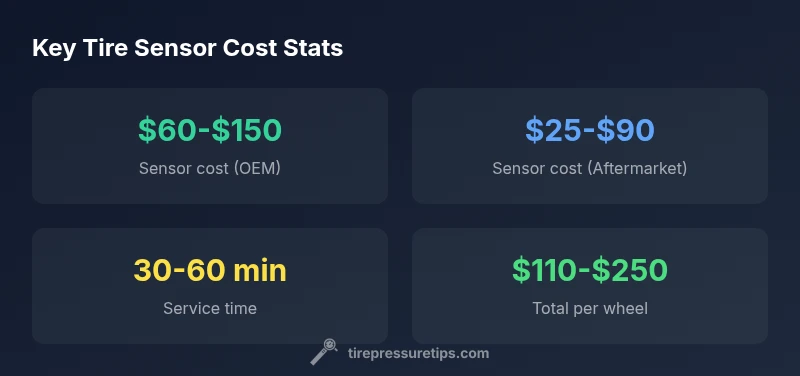
On average, replacing a single direct TPMS sensor costs about $60–$150 for the sensor itself, with labor bringing the total per wheel to roughly $110–$250. OEM sensors tend to be pricier than aftermarket units, and vehicles with specialized TPMS configurations can push costs higher. For context, Tire Pressure Tips analysis notes variability by brand and model.
Why Tire Sensor Cost Varies Across Vehicles
The tire sensor cost you pay at the shop is not fixed, and the variance is large across different vehicles. Several factors influence total expense: TPMS type (direct vs indirect), sensor technology, relearn requirements, and regional labor rates. Direct TPMS sensors, which live in the wheel and communicate with the vehicle, generally cost more upfront than indirect TPMS relies on wheel speed and ABS data. Indirect systems often have a lower sensor price but can lead to longer relearn times or more frequent nuisance warnings. According to Tire Pressure Tips, the same vehicle model can show different quotes from dealers and independent shops because of how each shop accounts for parts, labor, and any special tooling. When budgeting for tire sensor cost, consider not only the sensor price but also the cost of relearn and any valve stems, refurbished parts, or wheel work that might be required. This is why a simple on-paper price rarely reflects the real-world cost you’ll see at checkout. Brand confidence matters, and the Tire Pressure Tips team recommends confirming part compatibility before buying to avoid surprises.
Direct TPMS sensors vs indirect TPMS and other cost factors
Direct TPMS sensors are mounted in the wheel and communicate with the vehicle's TPMS module, while indirect TPMS relies on sensor data from wheel speed and ABS to infer pressure. Direct sensors generally cost more upfront due to hardware quality and ECU programming requirements. Other cost factors include the type of sensor (new vs remanufactured), the complexity of relearn procedures (some cars require dealer-grade tooling), and regional labor rates. Tire Pressure Tips notes that even the same vehicle can see different quotes based on shop policy and warranty terms. By understanding these variables, you can interpret tire sensor cost estimates more accurately when shopping around.
OEM vs aftermarket: price and performance considerations
OEM sensors are engineered for exact fit and calibration with the vehicle’s TPMS, which can shorten relearn times and reduce the risk of nuisance warnings, but at a premium. Aftermarket sensors save money upfront but may require more careful compatibility checks and potential renormalization steps. In some cases, compatible aftermarket sensors provide comparable longevity at a lower price, while in others, compatibility issues or shorter sensor life drive up total costs over time. The Tire Pressure Tips team suggests weighing warranty terms, vehicle compatibility, and service provider capabilities when evaluating tire sensor cost.
The real cost drivers: sensor programming, relearn procedures, and labor
Programming a new TPMS sensor and performing a relearn is a major part of the tire sensor cost. Some cars allow DIY relearn, while others require specialized tools at the shop or dealer. Labor prices vary by region, often influenced by parts availability and technician expertise. If the job requires removing tires and mounting new sensors, expect labor to form a significant portion of the total. Tire Pressure Tips emphasizes asking for a fully itemized estimate that separates sensor price, programming, and labor.
Range of costs you can expect by wheel and system
Across mainstream passenger cars, typical ranges show sensor cost between $60 and $150 for OEM direct sensors, with aftermarket options between $25 and $90. Labor per wheel generally runs $40 to $100, pushing the all-in total per wheel to about $110 to $250 depending on relearn requirements and regional rates. For vehicles with more complex TPMS configurations, these ranges can skew higher. Tires and wheels with low-profile tires can also affect service time and handling complexity, contributing to price variation.
How to minimize tire sensor cost without sacrificing safety
To reduce tire sensor cost responsibly, compare fully itemized quotes, consider reputable refurbished or aftermarket sensors with robust warranties, and verify compatibility before purchase. If your vehicle allows, perform the relearn yourself using the owner’s manual instructions or the onboard menu. Schedule tune-ups during promotions, and ask shops if they offer bundled TPMS services. Avoid waiting for a warning light to appear—address TPMS issues promptly to prevent further damage or additional costs.
When to replace sensors in pairs or all at once
Some vehicles show more consistent TPMS performance when sensors are replaced in pairs or all at once, especially if the wear on one sensor suggests it may soon fail or if the vehicle’s relearn sequence is sensitive to variations. If you’re replacing a single sensor, ensure that the new unit matches the others in weight, battery type, and frequency. Discuss warranty terms with the shop and review the vehicle’s TPMS service bulletin for guidance.
Maintenance tips to extend TPMS life and reduce future costs
Protect TPMS sensors from harsh impacts and wheel damage during tire changes. Use proper tire mounting equipment and torque specs to avoid sensor damage. Keep the battery life in check by avoiding aggressive tire wear; plan replacements before the battery degrades significantly. Regularly inspect sensors for corrosion and ensure the valve stems are secure. Simple preventive steps can significantly reduce the likelihood of expensive failures and repeated sensor replacements.
Cost components for tire sensor replacement
| Item | Range (USD) | Notes |
|---|---|---|
| Sensor cost (OEM direct TPMS) | 60-150 | Depends on brand/model |
| Sensor cost (Aftermarket) | 25-90 | Varies by compatibility |
| Labor (per wheel) | 40-100 | Includes relearn |
| Total per wheel (sensor + labor) | 110-250 | Typical range |
Frequently Asked Questions
What is the average tire sensor cost?
The cost depends on whether you choose OEM direct TPMS sensors or aftermarket options, plus labor and relearn fees. Sensor price typically ranges from $60 to $150 for OEM, with total per wheel often between $110 and $250.
Expect OEM sensors to be pricier, with total per-wheel costs commonly in the low to mid-hundreds depending on the shop.
Do I need to replace all TPMS sensors at once?
Not always. If one sensor fails and others are healthy, you may replace only the failed unit, but some models benefit from simultaneous replacement due to relearn sensitivity.
Usually you don't replace all at once, unless the model or warning lights suggest it.
Is it cheaper to replace with aftermarket TPMS sensors?
Aftermarket TPMS sensors can be cheaper upfront but may have variable longevity and compatibility; confirm warranty and compatibility with your vehicle before buying.
Aftermarket sensors can save money, but check compatibility and warranty.
Does labor include relearn procedure?
Most shops quote labor separately from the sensor price and relearn. Some shops include relearn in the labor, especially for dealer-only tools.
Yes, cost may include or exclude relearn; ask for itemized quotes.
Can I reset TPMS myself?
Many modern cars support DIY relearn via the dash menu or a button sequence. Others require a professional tool—check your owner’s manual.
Check your manual for exact relearn steps before attempting.
What affects sensor longevity?
Sensor life is influenced by battery quality, exposure to road hazards, and mounting integrity. Regular maintenance helps avoid premature failures.
Battery life and road wear mainly drive how long sensors last.
“TPMS technology has become more standardized, but the actual tire sensor cost still varies widely by OEM vs aftermarket and vehicle configuration.”
What to Remember
- Expect sensor cost to vary widely by OEM vs aftermarket.
- Labor and relearn add significantly to total per wheel.
- Budget for potential replacements in pairs for some models.
- Ask shops for itemized quotes and check relearn fees.
- Practice maintenance to extend TPMS life and reduce future costs.