Where Is a Tire Pressure Sensor Located: TPMS Guide
Learn where tire pressure sensors sit on modern vehicles, how TPMS works, and practical steps to locate, inspect, and service sensors safely for better tire maintenance.


Where is a tire pressure sensor located? In modern vehicles, the TPMS sensor is mounted inside each wheel in the wheel assembly. Direct TPMS uses a sensor attached to the valve stem or mounted to the wheel hub, while indirect TPMS uses wheel-speed data to estimate pressure without a physical sensor in the tire. This distinction helps you understand warnings and needed checks.
Understanding TPMS basics
TPMS stands for Tire Pressure Monitoring System, a safety feature that alerts you when tire pressure falls outside the recommended range. The system uses sensors in the wheels, a receiver in the vehicle, and software that interprets readings. Understanding these basics helps you respond quickly to warnings and plan maintenance. If you’re curious, where is a tire pressure sensor located is a common question—and the answer depends on whether you have direct or indirect TPMS.
According to Tire Pressure Tips, understanding how TPMS works helps you interpret warnings and plan maintenance. When you know the basics, you’ll better grasp why certain sensors are located where they are and how to react when the light comes on.
- Direct TPMS: a physical sensor is mounted inside each wheel, often attached to the valve stem or integrated into the wheel hub. Each sensor has a battery and transmits a unique ID to the car’s receiver.
- Indirect TPMS: there is no physical sensor in the tire. Instead, the system estimates pressure by comparing wheel speeds, rotation, and tire circumference.
Because TPMS data is tied to each wheel, you’ll see warnings for individual tires, not a single system warning.
Direct vs indirect TPMS: sensor locations and differences
Direct TPMS sensors are installed in the wheel assembly and communicate through a radio link to the vehicle. These sensors are either mounted on the valve stem or integrated into the wheel itself, often near the rim. Indirect TPMS uses the ABS wheel speed sensors to infer pressure changes by analyzing tire rotation and perimeter changes. This method does not rely on a physical sensor in the tire. Both approaches aim to ensure each tire’s pressure is within the manufacturer’s recommended range, with the direct system generally offering more precise per-tire readings.
How to identify the sensor location on your vehicle
To determine where the sensor sits on your car, start with the owner’s manual or the vehicle’s TPMS guide. Look for diagrams showing wheel components and valve stems. If your car uses direct TPMS, you’ll typically find a small metal or plastic sensor mounted to the wheel, either at the valve stem or inside the wheel hub. For indirect TPMS, there’s no sensor inside the tire, but the system still relies on wheel-speed data from the ABS sensors. You can also verify by using a TPMS scan tool to read the sensor IDs associated with each wheel, which confirms the sensor type and location.
Verifying sensor readings and potential issues
The best way to verify sensor location and status is with a handheld TPMS tool or an OBD-II scanner that supports TPMS. Readings should match the tire’s actual pressure when measured cold. If you observe discrepancies or a warning light that doesn’t reflect the real tire pressures, there may be a faulty sensor, a dead battery, or a relearn needed after a tire rotation. In some cases, heat cycling or long-term storage can affect sensor performance, so periodic checks help maintain accuracy. Remember that a sensor’s location is normally fixed, but the method of sensing may vary by system.
Safety and care when inspecting TPMS sensors
Handling TPMS components requires care. When inspecting wheels, ensure the vehicle is parked on a flat surface and the parking brake is engaged. Do not service tires or sensors while the car is on a lift unless you have proper jack stands. Use a torque wrench if you remove wheels, and never apply excessive force to sensor components. If you’re unsure about sensor type or sensor placement, consult the service manual or a qualified technician to avoid damaging rims, valve stems, or the sensor itself.
Practical steps to keep TPMS accurate
Regular maintenance helps keep sensors reliable. Always read cold tires for accurate readings, and verify tire pressures against the vehicle’s recommended values. If you rotate tires, remember that direct TPMS sensors may need a relearn procedure so the system recognizes their new positions. Inspect valve stems for cracks or leaks, and replace damaged sensors promptly. By following a routine, you minimize false warnings and extend sensor life.
Tools & Materials
- Tire pressure gauge (digital or analog)(Use a cold tire for an accurate reading; check all four tires)
- Owner's manual or manufacturer TPMS guide(Reference manufacturer-specific sensor location and relearn steps)
- Flashlight(Inspect wheel wells and valve stems in low light)
- Soap and water spray (optional)(Bubble test to identify slow leaks around valve stems)
- TPMS relearn/reset tool (if applicable)(Some vehicles require a specific relearn sequence)
- Lug wrench or wheel removal tools (optional depending on access)(Needed if you plan to remove wheels for inspection)
Steps
Estimated time: 30-60 minutes
- 1
Identify TPMS type for your vehicle
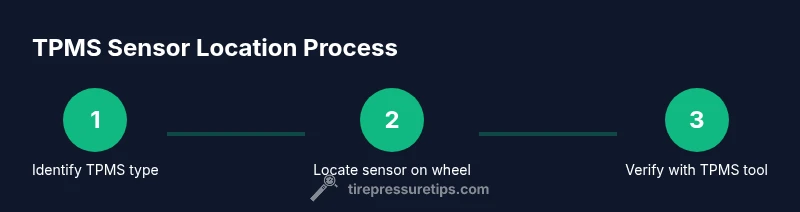
Consult the owner’s manual to determine if your car uses direct or indirect TPMS. Direct TPMS has wheel-mounted sensors; indirect TPMS relies on ABS wheel-speed data. This determines how you’ll locate and verify the sensor.
Tip: Check the VIN or model year; some vehicles switch TPMS types between generations. - 2
Inspect the wheel for a sensor
Look at the valve stem area on each wheel. If you see a small cap or a sensor unit near the stem, that’s a direct TPMS sensor. If the wheel appears untouched around the stem, you may be dealing with an indirect TPMS.
Tip: Use a flashlight and magnifier to spot tiny sensor housings behind the valve stem. - 3
Confirm with a TPMS tool
Connect a TPMS scanner and read the sensor IDs for each wheel. Direct TPMS will present a unique sensor ID per wheel; indirect TPMS will show no wheel sensor IDs but will indicate pressure status via ABS data.
Tip: If you don’t have a tool, a local tire shop can read sensor IDs for you. - 4
Check actual tire pressures
Measure pressures with a cold tire gauge and compare against the vehicle’s recommended values. Record any discrepancies to determine if a sensor is faulty or if a tire truly needs inflation.
Tip: Make sure tires are cold and there has been no driving for at least 3 hours prior to measurement. - 5
Relearn or reset the TPMS if needed
If you rotated tires or replaced sensors, follow the manufacturer’s relearn procedure to reassign sensor IDs to the correct wheels. This ensures warnings reflect the actual tires.
Tip: Some cars require a service mode; others perform relearn automatically after driving a short distance.
Frequently Asked Questions
What is a TPMS and why does it matter?
TPMS stands for Tire Pressure Monitoring System. It alerts you when tire pressure drops, helping prevent blowouts and improve fuel economy. Understanding TPMS helps you respond correctly when the warning light appears.
TPMS monitors tire pressure and warns you when it’s low, so you can check and inflate as needed.
How can I tell which wheel has a faulty sensor?
Use a TPMS scan tool to read per-wheel sensor IDs and pressures. A single wheel showing abnormal pressure with an ID is often the suspect; a warning light that doesn’t match measurements may indicate a faulty sensor.
A TPMS scan tool helps identify which wheel sensor is reporting incorrectly.
Can I replace a TPMS sensor myself?
Yes, with the right tools and knowledge. Direct TPMS sensor replacement requires wheel removal and proper relearn procedures. Indirect TPMS generally needs no sensor replacement since it uses wheel-speed data.
You can replace direct TPMS sensors yourself if you have the right tools and follow the relearn steps.
Why does TPMS sometimes read low when the tire isn’t leaking?
Temperature changes, recent inflation, or sensor battery degradation can cause readings to drift. Always verify with a cold-pressure check and consider sensor health if discrepancies persist.
Temperature changes and sensor wear can cause readings even when there’s no leak.
Do all cars use direct TPMS sensors?
No. Some cars use indirect TPMS, which relies on wheel-speed data rather than a wheel-mounted sensor. Your manual will specify which system your vehicle uses.
Not all cars have direct TPMS; some use indirect systems.
Watch Video
What to Remember
- TPMS uses wheel sensors or wheel-speed data to monitor pressure.
- Direct TPMS sensors live in the wheel; indirect rely on ABS data.
- Always verify readings with cold-tire measurements before diagnosing.
- Relearn procedures ensure TPMS accuracy after service.