Tire Pressure Sensors Location: Direct TPMS vs Indirect TPMS
Discover where tire pressure sensors are located and how direct and indirect TPMS differ, plus maintenance tips for sensor location during tire changes.


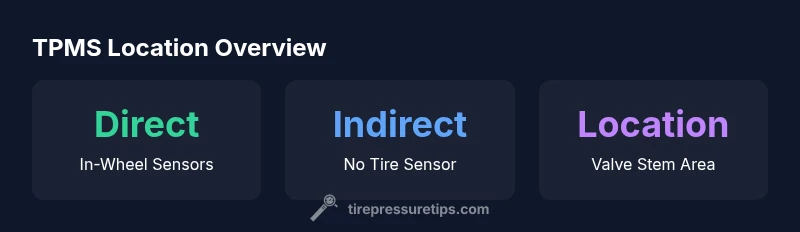
According to Tire Pressure Tips, direct TPMS sensors are mounted inside each wheel, usually near the valve stem, and four sensors per vehicle are common on most passenger cars. Indirect TPMS uses no tire sensor, instead estimating pressure via wheel-speed data from the ABS/ESP system. Both systems report to the vehicle’s TPMS controller, triggering dashboards alerts when pressures fall outside the safe range.
Understanding tire pressure sensors location
Understanding where tire pressure sensors location comes from requires looking at the two main TPMS architectures: direct and indirect. In direct TPMS, a sensor is mounted inside each tire, typically attached to the rim near the valve stem. These sensors measure real-time pressure (and sometimes temperature) and wirelessly transmit data to the TPMS control module in the vehicle. Indirect TPMS, by contrast, uses wheel-speed data from ABS or ESC systems to infer low or high pressure. There is no physical sensor inside the tire in this setup, which can reduce upfront hardware but may affect sensitivity to slow leaks or rapid pressure changes. The result is a practical distinction in maintenance, tire changes, and diagnostic approaches that affect how you service your tires over time.
Direct TPMS: Where the sensors live and how they work
Direct TPMS sensors are physically mounted inside the tire, commonly on the wheel rim near the valve stem or integrated with a valve stem assembly. Each wheel typically has its own sensor, providing a direct pressure reading for precise alerts on under-inflation. The sensors communicate with a central TPMS controller via radio frequency, and the dashboard will illuminate if any tire drops below the recommended pressure. Because the sensors reside in the tire, they are exposed to road hazards and can be damaged by curb strikes, potholes, or improper tire mounting. When a sensor fails, the typical remedy involves replacing the sensor unit and, in many cases, reprogramming the TPMS module.
Indirect TPMS: How it detects pressure without a physical sensor
Indirect TPMS does not place a physical sensor inside the tire. Instead, it leverages wheel-speed sensors and ABS/ESC signals to estimate tire pressure. When a discrepancy is detected between wheel speeds and vehicle dynamics, the system flags a potential under-inflation condition. This approach reduces hardware inside the tire but can be less responsive to abrupt pressure loss and may require calibration or software updates to maintain accuracy. Drivers should be aware that indirect TPMS relies on vehicle sensors and software health rather than tire-mounted hardware.
How to identify your vehicle's TPMS type
To determine which TPMS your car uses, start with the owner’s manual and service guidelines. Look for explicit mentions of direct TPMS or indirect TPMS in the maintenance/TPMS sections. Your tire shop can confirm by inspecting the wheel assemblies or scanning the car’s TPMS system with diagnostic tools. In some vehicles, a badge or screen message will indicate that TPMS is direct (showing per-tire pressures) or indirect (showing a general warning when pressure is low). Knowing your TPMS type helps you plan tire maintenance and sensor service more effectively.
Maintenance implications of sensor location during tire changes
Sensor location directly affects how you service tires. With direct TPMS, technicians must remove the wheel to access and service or replace the tire-mounted sensors, which can impact service time and cost. Indirect TPMS requires less hardware handling during tire changes, since there is no tire-mounted sensor to manage. Regardless of type, always ensure the TPMS reset or relearn procedure is completed after changing tires or wheels. This ensures the system correctly matches the new configuration and avoids spurious alerts.
TPMS types and their typical locations
| TPMS Type | Location | Typical Sensor Count | Notes |
|---|---|---|---|
| Direct TPMS | Inside the wheel near the valve stem | 4 sensors typical | Wheel removal often required for service |
| Indirect TPMS | No tire sensor; uses ABS/wheel-speed data | 0 sensors in tire | ECU-based estimates; may lag with leaks |
| Hybrid TPMS | Combination of direct sensors and indirect signals | Varies by model | Redundancy; model-dependent behavior |
Frequently Asked Questions
Where are tire pressure sensors located on most vehicles?
Most modern vehicles with direct TPMS have sensors mounted inside each wheel, near the valve stem. Indirect TPMS uses no tire-mounted sensor and relies on wheel-speed data from the ABS system. Both feed a TPMS controller that triggers alerts when pressures are outside the recommended range.
Direct TPMS sensors sit inside each wheel near the valve stem. If your car uses indirect TPMS, there are no tire sensors—the system uses wheel-speed data to monitor pressure.
Do all tires have TPMS sensors?
If your vehicle is equipped with direct TPMS, all four wheels have sensors. Some older or budget models may rely on indirect TPMS, which has no tire-mounted sensor. Confirm your model’s TPMS type with the owner’s manual or your dealer.
Most newer cars with direct TPMS have sensors in all four tires. Some vehicles use indirect TPMS without tire-mounted sensors.
Can TPMS sensors be located in spare tires?
In most direct TPMS setups, the spare tire does not carry a sensor. Some niche or specialty vehicles may include a spare with TPMS, but this is not universal. Always verify your specific vehicle configuration.
Usually, the spare tire doesn’t have a TPMS sensor, but check your model to be sure.
How can I check sensor location when changing tires?
Ask your tire technician to confirm whether the vehicle uses direct or indirect TPMS. For direct TPMS, sensors are wheel-mounted and require careful handling during mounting/dismounting. For indirect TPMS, ensure the relearn procedure after mounting is completed.
Ask the shop whether you have direct or indirect TPMS, and have them perform the relearn after mounting.
What maintenance is recommended for TPMS sensor location?
Follow the vehicle manufacturer’s guidelines for TPMS relearn after tire service. Inspect wheels for damaged valve stems and sensor housings during tire changes, and replace damaged sensors promptly to avoid inaccurate readings.
Keep up with relearn procedures after tire service and watch for damaged sensors.
“Direct TPMS sensors provide precise, tire-by-tire pressure readings and quick alerts, which helps prevent under-inflation. Indirect TPMS is a cost-efficient alternative that relies on vehicle sensors rather than tires.”
What to Remember
- Identify whether your vehicle uses direct or indirect TPMS.
- Know that direct TPMS sensors mount on each wheel.
- Understand indirect TPMS relies on wheel-speed data rather than a tire sensor.
- Handle tires carefully during changes to avoid sensor damage.