TPMS Sensor vs Tire Pressure Sensor: An Analytical Comparison
An analytical comparison of direct TPMS sensors and tire pressure sensors, covering how they work, installation needs, maintenance, and which option suits your vehicle and budget.


According to Tire Pressure Tips, the terms tpms sensor vs tire pressure sensor describe related but distinct concepts. A direct TPMS sensor is a physical device mounted in each tire that reports real-time pressure data to the vehicle, while tire pressure sensor is a broader label that can refer to indirect methods or to the sensor hardware itself. Understanding this helps drivers choose maintenance steps, replacements, and how warnings are interpreted.
What TPMS is and why it matters
Tire Pressure Monitoring Systems (TPMS) are safety-oriented features that alert you when a tire is underinflated or overinflated. The core goal is to prevent underinflation, which can affect handling, fuel efficiency, tire wear, and braking distance. When people talk about tpms sensor vs tire pressure sensor, they’re usually distinguishing between a direct sensing device and the broader concept of tire pressure measurement. The Tire Pressure Tips team emphasizes that understanding this distinction helps you interpret warnings accurately, maintain optimal tire pressure, and ensure your vehicle remains safe on the road. In practice, a properly functioning TPMS helps you catch creeping leaks early and plan maintenance before pressures drop below recommended levels.
The two core approaches in one glance
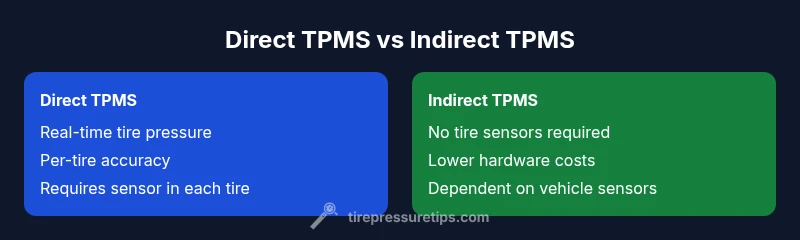
There are two broad approaches to monitoring tire pressure in vehicles. Direct TPMS uses sensors mounted inside the wheel or valve stem to measure the actual pressure in real time and transmit data to the car’s control modules. Indirect methods estimate pressure by analyzing wheel speed, tire diameter, and rotation rates, relying on baseline tire characteristics rather than a dedicated sensor in every tire. When comparing tpms sensor vs tire pressure sensor, the key takeaway is that direct systems loan accuracy, while indirect systems rely on existing vehicle sensors and software models.
Quick anatomy: direct TPMS sensors
Direct TPMS sensors are battery-powered modules installed in each tire. They measure pressure with a small sensor die and communicate via a radio frequency link to the vehicle’s TPMS control unit. They may sit in the valve stem or be mounted inside the wheel. Because they monitor actual pressure in each tire, they provide precise warnings for underinflation and allow per-tire diagnostics. Battery life and sensor replacement become a practical maintenance consideration, especially on older vehicles.
What constitutes tire pressure sensors beyond direct hardware
The phrase tire pressure sensor can refer to a few things. It can denote the actual direct sensors themselves, or it can describe the broader monitoring approach used by indirect TPMS. In practical terms, if your vehicle lacks a direct sensor in a tire, it relies on indirect cues from ABS/ESP wheel-speed data to infer pressure changes. This broader wording—tpms sensor vs tire pressure sensor—helps clarify expectations when talking about maintenance, resets, or aftermarket upgrades.
Direct TPMS: advantages in plain language
Direct TPMS sensors deliver real-time, per-tire pressure data with clear warnings. They are less susceptible to temperature-driven calibration drift and provide consistent cross-tire comparisons. For drivers who prioritize accuracy, safety, and quick diagnostic feedback after tire changes, direct sensors are often the preferred choice. The Tire Pressure Tips guidance consistently highlights the value of direct sensing for precision and rapid responsiveness.
Indirect TPMS: what you should know
Indirect TPMS relies on existing wheel-speed and ABS data rather than each tire having its own sensor. It can be cheaper upfront and simpler to service in some scenarios. However, indirect systems may lag behind real-time pressure changes, struggle with accuracy on certain tire sizes, and can require reset procedures after tire rotations or replacements. When evaluating tpms sensor vs tire pressure sensor, many drivers weigh cost savings against potential delays in warning times.
Installation, maintenance, and calibration considerations
Direct TPMS installation and replacement typically require professional service, especially for mounted sensors and valve stems. Calibration or relearn procedures are common after tire rotation, replacement, or alignment work. Indirect systems demand less hardware work but may still require software resets or re-learning the baseline pressures, depending on the vehicle. In either case, periodic checks with a reliable gauge and periodic system verification are prudent.
Real-world scenarios: warnings, fixes, and expectations
A rising number of drivers encounter TPMS-related warnings after long highway trips, leaks, or dramatic temperature shifts. If you see a warning light, begin with a visual tire inspection and verify pressures against manufacturer specs. For direct TPMS, you may need sensor replacement if the message persists. With indirect TPMS, you might need a system reset or software update. The tpms sensor vs tire pressure sensor distinction helps you decide where to focus troubleshooting.
Choosing for aftermarket contexts: what to consider
If you’re upgrading or replacing sensors, assess compatibility with your vehicle’s year, make, and model. Direct TPMS sensors require matching hardware and relearn procedures; indirect systems rely on the vehicle’s existing sensing strategy. Budget, maintenance tolerance, and how you use the vehicle (city versus highway, load carrying, or frequent tire changes) should guide your choice. The overarching takeaway is that reliable tire pressure monitoring supports safety and efficiency across all driving conditions.
Maintenance schedule and risk management for TPMS systems
Establish a simple maintenance rhythm: check tire pressures monthly or before long trips, inspect sensors during tire changes, and confirm that TPMS warnings function correctly. Record any sensor replacements, battery life considerations, and relearn events. By aligning maintenance with your driving patterns and regional climate, you minimize pressure-related risks and extend tire life.
Comparison
| Feature | Direct TPMS sensor | Indirect tire pressure sensor (indirect TPMS) |
|---|---|---|
| Technology | Physical sensor in each tire (valve stem or wheel) that measures actual pressure | Estimates pressure using wheel-speed data and tire characteristics |
| Measurement Method | Real-time, per-tire temperature-compensated pressure reading | No dedicated tire sensors; relies on ABS/ESP data and rotations |
| Power Source | Battery-powered sensor that may require replacement | No extra battery; uses vehicle electrical/sensor suite |
| Installation/Replacement | More involved; sensor replacement often requires professional service and relearn | Typically cheaper to install; no tire-mounted hardware to replace |
| Calibration/Reset | Relearn procedure after tire rotation or replacement | Reset or relearn may be needed after changes but hardware-free |
| Cost Range | $50-$150 per sensor (parts + service as needed) | $0-$100 upfront (depends on existing vehicle systems and resets) |
| Best For | Accurate, immediate per-tire warnings; reliability in varied conditions | Cost-conscious setups or vehicles without a dedicated sensor network |
Strengths
- Direct TPMS offers accurate, real-time tire pressure data
- Per-tire warnings improve safety and maintenance timing
- Indirect TPMS reduces hardware costs and simplifies service
- Both improve fuel efficiency and tire longevity when used correctly
- TPMS data enhances diagnostic clarity during tire changes
Drawbacks
- Direct TPMS requires sensor replacement when battery or hardware fails
- Direct sensors can be more expensive and require relearn procedures
- Indirect TPMS may be less accurate and more prone to drift after rotations
- Indirect systems depend on vehicle software and proper baseline setup
Direct TPMS sensors are generally the more reliable choice for accurate, real-time monitoring; indirect TPMS offers a budget-friendly alternative with fewer hardware needs.
Choose direct TPMS when precision and immediate warnings are critical. Opt for indirect TPMS if you prioritize lower upfront costs and simpler maintenance, accepting potential trade-offs in accuracy.
Frequently Asked Questions
What is the main difference between a TPMS sensor and a tire pressure sensor?
The main difference is that a TPMS sensor typically refers to the direct, wheel-mounted device measuring actual tire pressure, while tire pressure sensor can describe either the direct hardware or an indirect monitoring method that estimates pressure from vehicle sensors. Both aim to protect you from underinflation, but their data sources differ.
Direct TPMS uses a wheel-mounted sensor for real-time readings. Indirect TPMS estimates pressure from the car’s existing sensors.
Do I need to replace TPMS sensors when I replace tires?
When you replace tires, direct TPMS sensors often need a relearn procedure to re-sync with the vehicle’s computer. Some vehicles require sensor initialization or programming. Indirect systems usually don’t require hardware changes but may need a software reset.
Direct sensors may need relearn after tire changes. Indirect systems usually just need a reset.
Can indirect TPMS warn correctly without direct sensors?
Indirect TPMS can warn about improper pressures, but its accuracy depends on tire size, wear, and baseline assumptions. For critical safety uses, direct TPMS generally provides more dependable, tire-by-tire data.
Indirect monitoring can warn, but direct TPMS is usually more reliable for each tire.
How often should TPMS be calibrated or relearned?
Calibration or relearn is typically triggered by tire rotations, sensor replacements, or certain tire services. Some vehicles perform automatic relearns, while others require a manual procedure. Consult your owner’s manual for the exact steps.
Relearn is often needed after tire work; check the manual for steps.
Are TPMS sensors covered by warranty?
Warranty coverage varies by manufacturer and region. Many new vehicles include TPMS coverage under bumper-to-bumper or powertrain warranties for the sensor hardware, but battery life and wear may have separate conditions. Check your specific policy for details.
Warranty varies by vehicle and region; verify coverage terms.
What are common TPMS failure signs?
Common signs include a constant warning light, inconsistent readings across tires, or a TPMS fault message. If the light stays on after inflating tires properly, a sensor issue or relearn requirement may be present.
Watch for a persistent warning light or inconsistent tire readings.
What to Remember
- Understand tpms sensor vs tire pressure sensor terminology
- Direct TPMS provides per-tire accuracy with real-time data
- Indirect TPMS uses ABS/wheel-speed signals to infer pressure
- Maintenance and relearn steps are common for direct systems
- Choose based on your safety needs and budget