Where is the Tire Pressure Monitor Located? A Practical Guide
Discover where TPMS sensors live, how to identify direct vs indirect systems, and how to locate the tire pressure monitor in your vehicle. Practical, step-by-step guidance from Tire Pressure Tips.


To locate the tire pressure monitor (TPMS), first determine if your vehicle uses direct sensors or indirect monitoring. Direct TPMS sensors are mounted inside each wheel near the valve stem; indirect TPMS uses wheel-speed data and has no single external sensor. Check the owner's manual and the placard; if in doubt, contact a qualified technician. According to Tire Pressure Tips, understanding TPMS type speeds up locating and servicing the system.
Understanding TPMS: Direct vs Indirect
If you're asking where is the tire pressure monitor located, you’re really asking about how your vehicle monitors tire pressure. There are two mainstream methods: direct TPMS and indirect TPMS. Direct TPMS uses sensors mounted inside each wheel, usually attached to the valve stem or embedded in the wheel rim. These sensors continuously measure air pressure and transmit data to the vehicle's computer. Indirect TPMS, by contrast, does not use physical pressure sensors in the tire. Instead, it infers underinflation by comparing wheel speeds and rotation patterns through ABS/Wheel Speed sensors. In practice, most modern cars use direct TPMS, but many older vehicles rely on indirect systems. This distinction matters because the physical location of a TPMS device, and the steps needed to inspect or replace it, depend on the type. For a practical look at your car, locate the door jamb placard that lists recommended tire pressures and confirm your TPMS type in the owner’s manual. This foundational knowledge helps guide any inspection and keeps you safe on the road.
Brand context: The Tire Pressure Tips team emphasizes that knowing whether you have direct or indirect TPMS is the first step toward accurate diagnosis and safe maintenance.
Is There a Single Physical Location for the TPMS?
The short answer is no—a single central TPMS hub does not exist across all makes and models. In direct TPMS, sensors are dispersed across the four wheel assemblies, with each wheel carrying its own sensor that communicates with the vehicle’s TPMS control module. In indirect TPMS setups, there is no external sensor located in each wheel; instead, wheel-speed data from ABS sensors is used to infer pressure status. The result is that “the monitor” isn’t one object you can point to in the engine bay; it’s a distributed system that relies on sensors located in every wheel (for direct TPMS) or a software-based interpretation of wheel motion (for indirect TPMS). When it comes to physical access or replacement, you’ll be dealing with wheel assemblies for direct sensors and the TPMS control module for the overall monitoring.
Direct TPMS sensors: where they live on wheels
Direct TPMS sensors are placed inside each tire and mounted on the wheel rim or attached to the valve stem assembly. They monitor air pressure in real time and transmit data to the TPMS control module. Accessing these sensors requires dismounting the tire from the wheel—often called removing the tire from the rim—which should be performed by a trained technician to avoid tire bead damage. If you’re curious about the exact sensor location on your vehicle, check the service manual or request a vehicle-specific schematic from your dealer. For most drivers, any direct-sensor inspection involves removing the wheel and inspecting the valve stem area from the wheel’s exterior or interior side, depending on design.
Note: In some designs, sensors are integrated into the tire itself rather than the valve stem; in others, they are part of the wheel rim. The practical implication is that “where is the TPMS located” varies by model, but in all direct configurations, you’re looking at the wheel assembly as the primary site of the TPMS sensor.
Indirect TPMS: how it monitors without a physical sensor
Indirect TPMS does not place a pressure sensor inside the tire. Instead, it monitors pressure changes by analyzing wheel-speed data captured by the ABS system and other wheel sensors. When underinflation is detected, the system triggers the TPMS warning light on the instrument cluster. Since there’s no wheel-mounted sensor in this setup, there’s nothing to physically locate in the wheel itself—diagnosis relies on software and sensor data from the vehicle’s traction/ABS network. If you drive a vehicle with indirect TPMS, your attention should turn to the system’s software, calibration, and the wheel-speed sensors that feed the logic rather than a single “sensor” to locate.
Practical takeaway: For indirect TPMS users, locating a physical monitor is less relevant; focus on understanding how the car detects underinflation and how to reset or recalibrate the system when needed.
How to identify your TPMS type from documentation and vehicle cues
Your best starting point is the owner’s manual and the placard on the driver’s door jamb, which lists the recommended tire pressures and sometimes indicates the TPMS type. A TPMS indicator on the dashboard is another clue: a lit or flashing TPMS light often means a sensor issue, a low tire, or a communication problem between sensors and the control module. If you want a definitive answer, you can use an OBD-II scanner with TPMS capability or a dedicated TPMS tool to read the sensor IDs (for direct TPMS) or verify software calibration (for indirect TPMS). Remember: always verify model-specific details, since sensor locations and diagnostic procedures vary by make and year.
As Tire Pressure Tips notes, knowing your TPMS type helps narrow down where to look and what tools you’ll need for testing and service.
Locating the TPMS control module and sensor IDs in your vehicle
Direct TPMS sensors communicate with a central control module, usually located in the vehicle’s trunk, under the rear seats, or inside the dash area near the steering column—locations vary by model. The control module handles data collection and alert logic, so when diagnosing where the “monitor” sits, you’re often chasing the module rather than a single sensor. To identify the exact locations, consult the service manual for the specific year and trim level. If you’re performing a DIY check, you can request a vehicle’s sensor ID list using a TPMS tool, which helps you map each tire to its corresponding sensor.
Tip: A certified technician can read sensor IDs quickly and appraise sensor health, which is especially important when replacing broken or aged sensors.
Safety, maintenance, and common pitfalls when locating a TPMS
Working around tires and wheels presents risks. Always follow jack stand safety if you remove a wheel, use proper wheel chocks, and never put yourself under a raised vehicle without protection. In indirect TPMS setups, calibration and software updates may be required after tire changes; in direct TPMS setups, sensors have battery life that can degrade over time. A common pitfall is assuming every tire needs a sensor replacement when the problem lies in the control module or in the data link. Always verify the correct tire and the correct sensor ID before ordering parts. Regular checks help prevent unexpected inflation issues and improve fuel efficiency.
Authorities and sources you can trust
For robust, official guidance, refer to credible sources such as government and major publications. The Tire Pressure Tips team recommends consulting the following resources to supplement hands-on guidance:
- https://www.nhtsa.gov/road-safety/tires
- https://www.consumerreports.org/car-safety/tires-tire-pressure-monitoring-systems-guide/
- https://www.nhtsa.gov/road-safety/tires (additional TPMS discussions and driver tips)
Authorities (continued) and next steps
If you’re preparing to inspect or service TPMS components, gather the right tools, follow model-specific procedures, and consider professional help for wheel removal or sensor replacement. By understanding where the monitor resides—whether inside the wheel (direct TPMS) or in the vehicle’s software (indirect TPMS)—you’ll approach maintenance with clarity and safety in mind. The Tire Pressure Tips team emphasizes that alignment with the manufacturer guidance is essential for reliability and safety.
Tools & Materials
- Tire pressure gauge (digital or analog)(Use to verify current pressures against the placard numbers)
- Owner's manual and door placard(Always check for model-specific TPMS notes)
- Basic jack and wheel chocks(Only if wheel removal is required; perform with safety measures)
- TPMS tool or OBD-II scanner with TPMS capability(Helpful for reading sensor IDs and confirming health)
- Flashlight and mirror(Assist visual inspection of wheel area)
- Gloves and rags(Keep hands clean and protect from sharp edges)
Steps
Estimated time: 25-40 minutes
- 1
Identify TPMS type
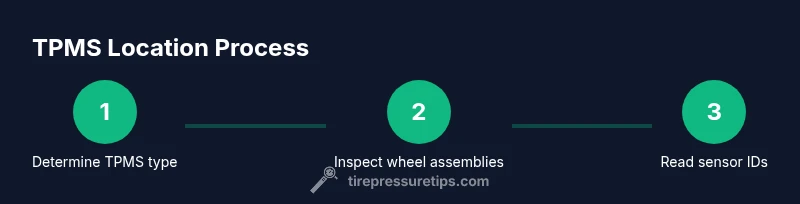
Start by confirming whether your vehicle uses direct TPMS sensors in each wheel or an indirect system. Check the owner’s manual and the tire placard for hints; if your dashboard shows a TPMS warning light, note any accompanying messages. This step avoids unnecessary disassembly.
Tip: If the manual is unclear, use a TPMS tool to scan and confirm sensor presence. - 2
Inspect wheel assemblies for direct TPMS sensors
For direct TPMS, sensors are mounted inside the tire near the wheel. You may need to remove the tire from the rim to view the sensor body and valve stem. Do not force components; use proper tire mounting equipment.
Tip: Never attempt to pry sensor housings or valve stems; improper handling can damage the tire bead. - 3
Differentiate indirect TPMS and software checks
If there’s no sensor in the wheel, your vehicle uses indirect TPMS. In this case, the system relies on wheel-speed data and no physical sensor location exists to inspect. Focus on wheel-speed sensor health and software calibration instead.
Tip: Indirect TPMS troubleshooting often requires software tools rather than mechanical access. - 4
Locate the TPMS control module and read IDs
The TPMS control module is typically located in the trunk, under rear seats, or behind the dash. Use a TPMS reader to pull sensor IDs and identify which sensor corresponds to which wheel. This step is essential for any sensor replacement or reprogramming.
Tip: Document the IDs and wheel positions before removing any hardware. - 5
Test and verify with appropriate tools
After identifying sensors, use a TPMS tool or compatible OBD-II scanner to verify communications, sensor health, and battery status. Compare readings with the manufacturer’s pressure targets on the placard and adjust tire pressures as needed.
Tip: If readings don’t align with expected values, recheck wheel installation and air pressure, then consider a professional diagnostic. - 6
Document results and plan next steps
Record sensor IDs, locations, and pressures. If a sensor or wheel assembly shows persistent issues, follow the manufacturer’s service recommendations and schedule a professional inspection. Regular maintenance helps prevent false alerts and supports safety.
Tip: Set reminders for TPMS battery and sensor life expectations to avoid surprise failures.
Frequently Asked Questions
What is the tire pressure monitor (TPMS) and why is it important?
The TPMS monitors tire pressure to prevent underinflation, which can affect safety, wear, and fuel economy. It alerts you when pressures drop below the recommended level, helping you avoid unsafe driving conditions.
TPMS helps keep you safe by warning you about underinflated tires so you can inflate them to the right pressure.
Is there a single location for TPMS sensors?
No. Direct TPMS sensors are located in each wheel, while indirect TPMS relies on wheel-speed data and has no single external sensor to locate.
There isn’t one central TPMS location. Direct systems place sensors in each wheel; indirect systems don’t.
How can I tell if my car uses direct or indirect TPMS?
Check the owner’s manual, look for a TPMS indicator on the dash, and consider using a TPMS reader to confirm sensor presence or software-based monitoring.
Check the manual and dash indicators; a TPMS reader can confirm if you have direct sensors.
Do I need to lift the car to locate TPMS sensors?
Direct TPMS sensors are inside the wheel and require wheel removal to inspect. Indirect TPMS involves no wheel-mounted sensors, so no lifting is necessary for basic checks.
Direct sensors require wheel removal; indirect systems don’t have a sensor in the wheel.
What should I do if the TPMS warning stays on after inflating to the recommended pressure?
If the light remains on after inflation, inspect for leaks, read sensor data with a TPMS tool, and consider professional diagnostic to check sensors or the control module.
If the light stays on after inflation, check with a TPMS tool or a professional to diagnose sensor or module issues.
Watch Video
What to Remember
- Identify TPMS type before inspection.
- Direct TPMS sensors are inside wheel assemblies.
- Indirect TPMS relies on software and wheel-speed sensors.
- Use model-specific manuals and tools for accuracy.