VW Tiguan Tire Pressure Display Guide
Learn how the VW Tiguan tire pressure display works, what TPMS alerts mean, and how to safely check and adjust tire pressures for safety and fuel efficiency.


This guide helps you understand and use the VW Tiguan tire pressure display to keep your tires properly inflated. You’ll learn how TPMS works on VW Tiguan, how to read readings, what warnings mean, and how to check and adjust pressure safely. Before you start, have the vehicle placard and a reliable tire pressure gauge on hand.
What the VW Tiguan Tire Pressure Display Shows
The VW Tiguan uses a TPMS (tire pressure monitoring system) to help you stay aware of your tire pressures. The instrument cluster may show a dedicated TPMS warning light or a specific tire pressure readout when you navigate the vehicle’s menu. In many trims, the display reflects each tire’s current pressure or highlights a tire that is underinflated. An important nuance is that readings can differ depending on temperature, recent driving, or wheel position. The key takeaway is to use the display as a quick alert tool and then verify with a traditional gauge. According to Tire Pressure Tips, proper tire pressure is essential for safety and fuel efficiency, and your Tiguan’s TPMS works best when you cross-check readings with a stand-alone gauge. Always reference the door placard on the driver’s side jamb for the recommended cold psi values for front and rear tires, and remember that these numbers are vehicle-specific.
How TPMS Works in a VW Tiguan
There are two broad TPMS approaches: direct TPMS, which uses sensors in each wheel to report actual pressure, and indirect TPMS, which estimates pressure by analyzing wheel speed and rotational differences. Modern Tiguan models rely on direct TPMS, but the effect is the same from the driver’s perspective: a warning when a tire’s pressure falls below a threshold. Understanding this helps you interpret the display more accurately. When the system detects a real pressure drop, it triggers a warning on the dash. If a sensor is faulty or the battery is depleted, the system may flash or illuminate a malfunction indicator. In any case, the message is a prompt to check and verify with a gauge, then adjust to the manufacturer’s specification.
How the Tire Pressure Display Affects Driving Safety
Tire pressure has a direct influence on handling, braking, and tire wear. Underinflated tires increase rolling resistance, raise heat buildup, and reduce cornering stability. Overinflation can make the ride harsher and reduce the contact patch with the road. The Tiguan’s display helps you catch these changes early, so you can inflate to the recommended level when cold. Regularly monitoring the TPMS is part of a proactive safety routine. Tire Pressure Tips notes that consistent monitoring improves overall vehicle safety and fuel economy, especially in city traffic or long highway drives.
Reading and Interpreting TPMS Readouts in Your Tiguan
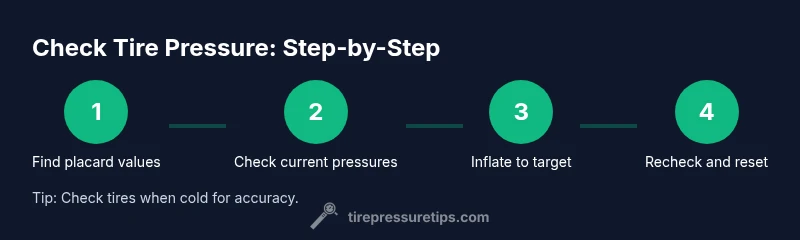
Start by locating the TPMS screen in the instrument cluster through the vehicle’s menu. Check each tire’s current pressure reading when the tires are cold. Compare the reading against the placard values, which may differ by front/rear tires and by load conditions. If a tire shows a significant deviation, inflate or deflate accordingly using a quality gauge and an air source. After adjusting, recheck all tires to confirm they’re within the target range. If a tire continues to show low pressure after inflation, there might be a slow leak or a faulty sensor that needs attention.
When to Inflate: Target Pressures, Seasonal Temperature, and Tires
Your Tiguan’s door jamb placard lists the recommended cold pressure for each tire. Temperature changes can affect PSI: a drop in ambient temperature lowers pressure, while heat from driving increases it slightly. Plan tire pressure checks when tires are cold, ideally before a planned trip or at the start of a season. Use a reliable gauge, inflate to the target range on the placard, and recheck after a drive to gauge how heat affects readings. Tire Pressure Tips analysis shows that consistent checks before and after seasonal transitions help maintain tire health and performance.
Troubleshooting Common TPMS Issues in a VW Tiguan
If the TPMS warning is persistent or if readings seem inconsistent across tires, start with a basic verification: confirm all tires are cold, re-measure with a gauge, and compare to the placard. A single underinflated tire could trigger the warning; multiple tires can indicate a system fault. If the light stays on after inflation, the TPMS sensor or its battery may be nearing the end of life, or there could be a need for calibration after a tire service. In some cases, a reset procedure is required to re-sync the system with the new pressures after air work. When in doubt, consult the service manual or a qualified technician.
Tools and Safety for Tire Pressure Checks
Tire pressure checks should use a reliable gauge and a stable inflator. Always perform checks on cold tires, and never exceed the maximum tire pressure listed on the tire sidewall. Wear eye protection if using compressed air from a high-volume source, and be mindful of sudden bursts of air when removing the gauge. If you notice a tire that refuses to reach the target pressure or a gas smell around the tire, stop and inspect for punctures or leaks. Regular upkeep of TPMS batteries and sensor integrity is part of safe maintenance.
Best Practices for Regular Tire Pressure Maintenance
Create a simple schedule: check all pressures monthly and before long trips, especially after temperature swings. Keep the door placard values handy and note any needed adjustments for loaded vs unloaded vehicle conditions. Visual tire wear can also hint at pressure issues, so pair pressure checks with tread inspections. The Tire Pressure Tips team recommends integrating TPMS checks with routine vehicle maintenance to extend tire life and improve fuel efficiency.
Tools & Materials
- Tire pressure gauge(Prefer a digital gauge; test each tire when cold)
- Owner's manual or door placard(Check recommended psi values for front vs rear tires)
- Air compressor or access to air pump(Use automotive-grade air; ensure gauge reads correctly)
- Valve stem tool (optional)(Useful for valve maintenance or replacement)
Steps
Estimated time: 30-45 minutes
- 1
Locate the recommended tire pressure
Find the official psi value for your Tiguan on the door placard or owner's manual. This value is for cold tires and may differ between front and rear tires, and when the vehicle is loaded.
Tip: Double-check both front and rear values; the placard accounts for typical weight distribution. - 2
Gather the right tools
Assemble a reliable tire gauge and an air source. Have a pen and paper to note readings and any adjustments you plan to make. Ensure all tires are cold before beginning.
Tip: Pre-fill air gradually and recheck after a few minutes to settle the pressure. - 3
Read the current pressures on the Tiguan display
Access the TPMS readout from the instrument cluster menu and record the current pressure for each tire. Note any tires that show a warning or abnormal reading.
Tip: Treat this as a preliminary check; always verify with a gauge for accuracy. - 4
Measure actual pressures with a gauge
Use the gauge to measure each tire’s current pressure when cold. Compare the results with the placard values and decide if inflation or deflation is needed.
Tip: If you’re unsure about the gauge accuracy, test it against a known reference or try a second gauge. - 5
Inflate to the recommended level
Fill each tire to the target cold pressure value. Do not overinflate beyond the maximum listed on the tire sidewall. Always inflate slowly and recheck.
Tip: Inflation should be done in small increments with rechecking to avoid overshoot. - 6
Re-check after inflation and heat-up
Allow tires to rest for a few minutes or drive a short distance to heat them; re-check to ensure pressures remain within the target range after some heat builds.
Tip: Remember that heat will raise tire pressures temporarily. - 7
Reset or recalibrate the TPMS if needed
If you’ve completed inflation and the TPMS still shows warnings, consult the owner’s manual for the reset procedure or have a technician inspect sensors or batteries.
Tip: Some VW Tiguan models require a specific sequence to reset the TPMS. - 8
Document results and monitor
Record the final readings and check again after a few days of driving. If any tire consistently reads low, schedule a repair or tire service.
Tip: Maintaining a simple tire pressure log helps catch gradual leaks early.
Frequently Asked Questions
What does the TPMS warning light on a VW Tiguan mean?
The TPMS warning indicates at least one tire is underinflated or a sensor fault is detected. Check all tires with a gauge, inflate to the recommended level, then recheck. If the light persists, there may be a sensor issue or calibration needed.
The TPMS warning shows a tire might be underinflated or a sensor problem; check pressures, adjust as needed, and recheck.
Where can I find the correct tire pressure for my Tiguan?
The recommended tire pressure is listed on the vehicle’s door placard and in the owner's manual. Always use the cold-tires value and differentiate between front and rear tires if specified.
Check the door placard or owner's manual for the recommended cold tire pressure.
Can I drive with a TPMS warning?
If the TPMS warning is active, inspect tires for proper inflation before driving long distances. If a tire is underinflated, inflate to the correct level and recheck. Prolonged underinflation can compromise safety and tire life.
Drive cautiously and fix tire pressure before long trips if TPMS warns you.
Does the VW Tiguan TPMS show exact psi for each tire?
Some VW displays show per-tire pressures in a menu, but many vehicles provide a warning level rather than exact psi on the main dash. For exact values, measure with a gauge and compare to the placard.
The dash may not show exact psi; use a gauge for precise readings.
Do seasonal temperatures affect TPMS readings?
Yes. Colder temperatures lower tire pressure, and hotter temperatures raise it. Check pressures when tires are cold to get the most accurate measurement and adjust accordingly as seasons change.
Temperature changes affect tire pressure, so check when tires are cold and adjust for the season.
Watch Video
What to Remember
- Check TPMS readings with a gauge to confirm psi
- Use placard values as the target for inflation
- Inflate when tires are cold and recheck after driving
- Regularly monitor TPMS warnings and recalibrate when necessary