Tyre Pressure Sensor Replacement: Step-by-Step Guide
Replace a tyre pressure sensor (TPMS) safely with a clear, step-by-step guide, essential tools, and troubleshooting tips from Tire Pressure Tips.


By following this guide, you will safely replace a tyre pressure sensor and restore TPMS accuracy. You’ll remove the wheel, access the sensor, install a new sensor, and re-code or reset the TPMS. You'll need basic hand tools, a torque wrench, and a replacement sensor compatible with your vehicle. Safety first: secure the vehicle and avoid tire damage.
Understanding tyre pressure sensor replacement
Replacing a tyre pressure sensor (TPMS) is a common maintenance task for modern vehicles. The sensor monitors air pressure inside each tire and communicates with the vehicle's central computer to alert you if pressure is too low. When a TPMS warning persists after inflation checks, or if the sensor battery is degraded, tyre pressure sensor replacement becomes necessary. According to Tire Pressure Tips, staying proactive with TPMS maintenance not only helps avoid uneven tire wear and poor fuel efficiency, but also enhances road safety by ensuring accurate tire readings. This section lays the groundwork: you’ll learn about sensor types, how to diagnose a failing unit, and the general flow from removal to relearn. The goal is to empower you to perform a successful swap with confidence and minimal downtime.
Sensor types: direct vs indirect and compatibility
There are two main TPMS approaches: direct TPMS sensors mounted on each wheel via the valve stem, and indirect TPMS readings inferred from wheel speed sensors. Direct sensors are physical devices that monitor actual air pressure and are typically replaced when faulty. Indirect systems, by contrast, rely on the tire pressure relationships detected by ABS/ESP signals and are less common as a replacement task. For a tyre pressure sensor replacement, you will most often deal with direct sensors. Compatibility hinges on valve type (snap-in vs clamp-in), sensor battery, and the vehicle’s year/model. Always verify sensor part numbers and fitment with the manufacturer’s guidelines before purchase. Tire Pressure Tips emphasizes choosing a sensor with the correct valve stem length and thread size for reliable sealing and accurate readings.
Signs you need a replacement
A failing TPMS sensor can show several telltale signs. If the TPMS warning light stays on after inflation checks, or if you notice intermittent readings between valves, it may indicate a faulty sensor or a weak battery. Physical signs like corrosion around the valve stem, sluggish readings after tire rotation, or air leaks around the valve can also point to replacement needs. Some vehicles require a learn or relearn process after sensor replacement to re-synchronize the new unit with the vehicle’s computer. If you frequently see incorrect pressures on the dashboard or a pressure value that drops abnormally quickly, consider testing or replacing the TPMS sensor. Remember that sensor valves can degrade over time due to temperature changes, road salt, and wear.
Tools, parts, and prep work
Having the right tools and parts on hand minimizes frustration and keeps you safe. The list below outlines essential items and sensible optional aids. Start with a clean workspace, gather the parts, and review the vehicle’s service manual for any model-specific steps. Keep a magnetic tray or small containers handy to hold screws and small components. While the exact procedure can vary by vehicle, the core steps involve removing the wheel, accessing the TPMS sensor, installing the replacement, and performing a relearn of the TPMS system. Planning ahead reduces the risk of losing fasteners and ensures a smooth swap.
Step-by-step overview: what you’ll do
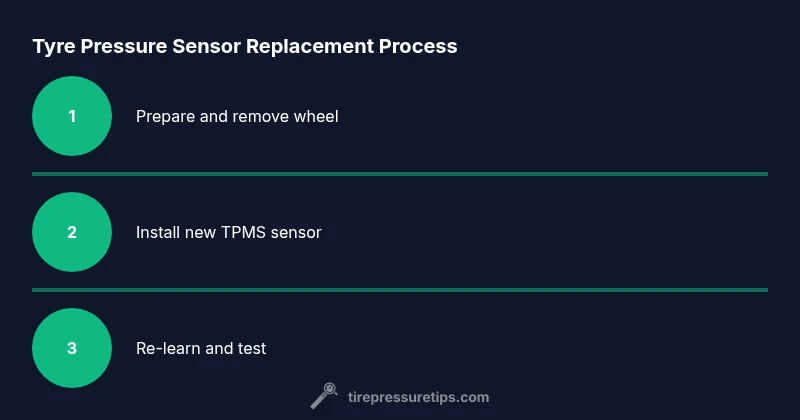
This section outlines the key phases of tyre pressure sensor replacement. It serves as a roadmap to help you understand the flow before you start turning wrenches. You will verify tire condition, detach the wheel, depressurize the tire if needed, remove the old TPMS sensor, install the replacement, reseal the tire, remount the wheel, inflate to correct pressure, and perform the TPMS relearn. Take photos of the sensor orientation and any hardware for reference. If you encounter a stuck valve core or a stubborn bead, pause and reassess rather than forcing components, to avoid damage.
Choosing the right sensor and compatibility
Selecting the correct TPMS sensor is critical for reliable performance. Begin by confirming whether your vehicle uses a valve stem direct sensor or a wheel-assembly sensor, then check the stem length, thread size, and battery type. Some sensors come pre-programmed for a specific vehicle or require a relearn procedure after installation. Check the vehicle’s manual or consult the dealer for OEM compatibility. Non-OEM or universal sensors can be cheaper but may demand extra programming or calibration to ensure accurate readings. Tire Pressure Tips notes that correct fitment improves seal integrity and prolongs sensor life, reducing nuisance warnings and maintenance costs.
Installation considerations and safety
Before you start, secure the vehicle, apply wheel chocks, and disconnect the battery if you’re working near electronic components. Carefully remove the wheel, deflate if necessary, and use a tire machine or appropriate tools to avoid bead damage. When installing the replacement TPMS sensor, follow the torque specifications exactly to avoid leaks or broken stems. Inspect the rim, valve stem holes, and bead area for damage before reinstalling. Take care to re-seal the tire bead properly and test for leaks with a soapy water solution. If a leak is detected, stop and reseat the tire.
TPMS reset and learning processes
After installing the new sensor, most cars require a relearn or learning process to teach the ECU the new unit’s ID. Some vehicles allow automatic relearn by driving a set distance, while others require a specific sequence of steps in the infotainment system or an OEM scan tool. Your owner’s manual will provide model-specific instructions. In many cases, the TPMS warning light will flash or stay steady during the relearn; verify completion by checking the live tire pressures on the display. If the system doesn’t relearn within a reasonable time, consult a professional to avoid false warnings.
Troubleshooting common issues after replacement
Common post-replacement issues include TPMS warning lights that stay on, inconsistent readings, or slow pressure changes. If the warning persists, double-check the sensor’s seating, seal integrity, and valve core. Relearn procedures that didn’t complete on the first try can fail due to sensor ID mismatch; re-perform the relearn exactly as specified. If you still encounter errors, verify wheel torque, inspect for air leaks, and confirm sensor battery status. In some cases, the problem might be a damaged wheel or a faulty ECU, requiring professional service. Regular monitoring of tire pressures improves safety and prolongs tire life.
Maintaining TPMS and long-term maintenance tips
Proactive TPMS care reduces the frequency of sensor failures. Keep valve stems clean and free from corrosion by inspecting for grime and moisture after cleaning the wheels. Check tire pressures every two to four weeks and after long trips, extreme heat, or cold snaps, as temperature changes can affect readings. If you see persistent inconsistencies, schedule a TPMS check with a trusted technician. Replacing both sensor batteries when needed and using high-quality sensors designed for your vehicle can improve reliability and extend service life. Tire Pressure Tips emphasizes ongoing maintenance as a practical habit that pays dividends in safety and fuel efficiency.
Authoritative sources and further reading
For more in-depth guidance and proven standards, consult authoritative sources. The U.S. National Highway Traffic Safety Administration (NHTSA) provides official information on TPMS safety and requirements. University-level research on tire pressure sensing and calibration can be found through academic resources like UMTRI. Industry standards and best practices are discussed by SAE International. See the following links for reference:
- https://www.nhtsa.gov/equipment/tires
- https://www.umtri.umich.edu/
- https://www.sae.org/
These sources complement the practical steps outlined here and support responsible vehicle maintenance.
Quick reference checklist
- Verify vehicle compatibility and sensor type before purchase.
- Use the correct tools and wear safety gear.
- Follow torque specs and sealing procedures to prevent leaks.
- Complete the TPMS relearn exactly as instructed by your vehicle manufacturer.
- Test the system with a drive and verify readings on the TPMS display.
Tools & Materials
- Replacement TPMS sensor (valve stem type compatible with vehicle)(Ensure the sensor matches your wheel type (snap-in or clamp-in) and stem length)
- Torque wrench(Use the vehicle's specified torque for the valve stem and wheel lug areas)
- Lug wrench or impact wrench(To remove and reinstall the wheel safely)
- Wheel chocks(Place on both sides of the wheel opposite the one being serviced)
- Valve core tool(To remove/install valve cores if needed during sensor change)
- Soap water spray bottle(Test for air leaks around the valve stem after reseating the tire)
- Magnetic tray or small containers(Keep small parts organized during the swap)
- TPMS relearn method (OEM tool or vehicle procedure)(Some vehicles relearn automatically; others require a specific procedure)
Steps
Estimated time: 60-90 minutes
- 1
Prepare the vehicle and wheel area
Park on a flat surface, engage parking brake, and chock the wheels diagonally to prevent movement. Gather tools and ensure you have the exact sensor type your vehicle requires. This pre-check reduces surprises and keeps you safe while you work.
Tip: Take a photo of the sensor orientation before removal to aid correct reinstallation. - 2
Loosen wheel fasteners and remove wheel
Loosen lug nuts slightly while the wheel is still on the ground, then lift the vehicle and remove the wheel. Place the wheel on a soft surface and secure it. This step provides safe access to the TPMS sensor area.
Tip: Use a torque wrench to avoid overtightening lug nuts during reassembly. - 3
Depressurize the tire and access the TPMS sensor
If your setup requires, carefully deflate the tire, then access the valve stem area to reach the TPMS sensor. Remove the valve cap and core if needed. Ensure you follow the vehicle’s service manual for the exact removal method.
Tip: Work with the tire bead supported to avoid bead damage during sensor removal. - 4
Remove the old TPMS sensor
Disconnect the sensor from its mounting, unscrew the valve stem nut, and carefully extract the sensor without damaging the rim or tire. Keep track of small parts and note any corrosion signs on the stem.
Tip: Do not force the sensor; if it binds, recheck for obstructions or damaged threads. - 5
Install the new TPMS sensor
Thread the new sensor into the valve stem and tighten to the manufacturer’s torque specification. Re-seat the tire bead if necessary and check for any leaks around the valve stem using soapy water.
Tip: Lubricate the stem threads lightly to ensure a clean seal and ease of installation. - 6
Remount the wheel and restore tire pressure
Place the wheel back on the hub, hand-tighten lug nuts, then torque to spec. Re-inflate the tire to the recommended pressure shown on the placard. Recheck the wheel for leaks around the valve area.
Tip: Double-check the tire pressure after the wheel is mounted and torqued. - 7
Perform TPMS relearn
Follow your vehicle’s relearn procedure—either automatic by driving or via a specific sequence using the vehicle menu or an OEM tool. Confirm sensors are registered by driving a short distance and reading the live pressures.
Tip: If the light stays on, repeat the relearn steps exactly as described in the manual. - 8
Test and verify
Drive for several miles and monitor the TPMS display. Ensure readings are stable and match the tire gauge. If any discrepancies appear, recheck the sensor seating and the relearn status.
Tip: Take a final pressure check with a reliable gauge to validate accuracy.
Frequently Asked Questions
Do I need a professional to replace a TPMS sensor, or can I do it myself?
You can replace a TPMS sensor yourself if you have the right tools and follow the manufacturer’s instructions. Some vehicles require specialized relearn tools or dealer access. If you’re uncertain, a professional service ensures correct relearn and sealing.
You can do it yourself with the right tools, but some cars need a dealer relearn. If unsure, a professional can ensure proper relearn and sealing.
What are the common signs that a TPMS sensor needs replacement?
Common signs include persistent TPMS warnings after inflation checks, inconsistent readings across tires, corrosion around the valve stem, and frequent leaks at the sensor. If you notice rapid pressure loss or a stubborn warning light, inspect the sensor for replacement.
Look for persistent warnings, inconsistent readings, or visible corrosion near the valve stem. If in doubt, inspect or replace the sensor.
How long does tyre pressure sensor replacement typically take?
A typical replacement, including relearn, takes about 60 to 90 minutes, depending on vehicle model and whether a relearn can be done automatically. Plan for some extra time if you’re learning the process for the first time.
Most replacements take about an hour to an hour and a half, depending on the car and relearn method.
Will TPMS light go off automatically after replacement?
In many cases, the TPMS light will go off after a successful relearn and driving cycle. If it remains on, recheck sensor seating, tire pressures, and relearn steps; consult the manual or a technician if needed.
Usually yes after a correct relearn and drive; if not, recheck steps or seek help.
Do all TPMS sensors need battery replacement at the same time?
TPMS sensors contain batteries with a finite life, but battery replacement is not typically user-serviceable. In many cases, the sensor is replaced as a complete unit when the battery degrades or the seal leaks.
Batteries aren’t usually user-replaceable; sensors are often replaced as a unit when the battery degrades.
Watch Video
What to Remember
- Choose the correct sensor type and fitment for your vehicle.
- Follow torque specs and seal properly to prevent leaks.
- Perform TPMS relearn exactly as instructed by the vehicle manual.
- Test readings after replacement to ensure accuracy.
- Regularly monitor tire pressures to maximize safety and efficiency.