TPMS Service: A Practical Guide to Safe Tire Monitoring
A comprehensive guide to tpms service: inspect sensors, relearn after tire changes, and keep your TPMS accurate for safe driving and longer tire life.


tpms service helps ensure your tire pressure monitoring system accurately reports pressure, alerts for underinflation, and reduces blowouts. A complete service includes inspecting sensors, checking for leaks, recalibrating the system, and reprogramming after tire changes. Regular TPMS service can improve fuel efficiency and tire life while enhancing safety for everyday driving and emergency readiness.
What TPMS is and how it works
TPMS stands for tire pressure monitoring system. It uses direct sensors or indirect wheel-speed data to monitor tire pressure and warn you when a tire drops below the recommended level. Direct TPMS sensors are mounted inside each tire and powered by small batteries, sending real-time pressure data to the vehicle computer. Indirect TPMS relies on wheel-speed sensors to infer pressure based on rotation differences between tires. Both systems aim to prevent underinflation, which can cause uneven wear, reduced fuel efficiency, and increased risk of a blowout. According to Tire Pressure Tips, regular tpms service helps maintain accuracy, ensure safety, and extend tire life. The dashboard warning light is not just a nuisance—it signals a real pressure change that can affect handling. A proper tpms service also accounts for seasonal temperature changes that influence readings, so readings should be verified after long trips or temperature swings. The goal is to keep the monitor aligned with actual tire pressure, vehicle load, and driving conditions.
Why a dedicated tpms service matters
A dedicated tpms service ensures the system remains responsive and reliable, which is critical for safety. TPMS is your last line of defense against underinflated tires and potential tire failure. A professional service checks sensor health, battery status, and wiring integrity, reducing the chance of nuisance warnings and unnecessary tire rotations. When a tire is replaced or tires are rotated, a relearn procedure is often required so the system recalibrates to the new configuration. Tire Pressure Tips notes that accurate TPMS readings improve fuel economy, stabilize handling, and extend tire life by ensuring the correct contact patch and even wear. Regular service also helps identify a failing sensor early, avoiding sudden warning lights on the road.
Common TPMS issues and symptoms
Common TPMS problems include persistent warning lights, inconsistent readings, and sudden drops in pressure without a visible leak. You may notice slow or fluctuating readings, or a tire that appears at a different pressure than the gauge shows. Corroded valve stems, damaged sensors, or a dead car battery can disrupt TPMS signals. Environmental factors like extreme heat or cold can also affect readings, leading to nuisance warnings. In some cases, the system may fail to relearn after tire changes, resulting in a constant alert. Diagnosing these issues requires a combination of visual inspection, sensor testing, and a scan with a TPMS-enabled tool.
What to expect during a tpms service
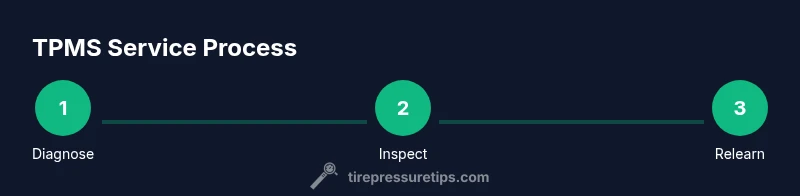
During a tpms service, a technician will typically perform a diagnostic scan to pull fault codes from the TPMS module. They will visually inspect sensors for damage, corrosion, or battery leakage and check valve stems for leaks. If a sensor is failing, replacement will be necessary; otherwise, a relearn or recalibration may be performed to synchronize the system with the current tire configuration. After replacement or relearn, the technician will verify readings using a calibrated gauge and conduct a road test to ensure the display reflects real pressures under typical driving conditions. The entire process can vary in duration depending on whether sensors need replacement or if a simple relearn suffices.
DIY checks you can perform safely
You can perform several safe checks at home to assess TPMS health without disassembling wheels. Start by checking all tires with a reliable digital gauge and compare pressures to the vehicle’s recommended settings found on the door jamb sticker or owner’s manual. Inspect the valve stems for cracks or corrosion and ensure tire valve caps are present and tight. If a warning light stays on after adjusting pressures, avoid attempting sensor repair yourself; instead, schedule a professional tpms service. Keep a log of readings and warning lights to share with your technician.
How to choose a TPMS service provider
Look for technicians trained to work with both direct and indirect TPMS systems. Verify they use OEM or compatible sensors and have a relearn tool that matches your vehicle’s make and model. Ask about post-service verification steps, such as a road test or an on-diagnosis readout to confirm all sensors report correctly. A trustworthy provider will explain whether any sensors require replacement and outline the relearn procedure, expected timelines, and aftercare steps.
Cost considerations and maintenance tips
TPMS service costs can vary based on vehicle type, sensor availability, and whether a relearn or special relearn procedure is required. In many cases, replacing a defective sensor is more expensive than a simple relearn, but the long-term value—accurate readings, safer driving, and better tire wear—justifies the investment. To optimize TPMS health, pair TPMS checks with regular tire service, maintain proper pressures, and avoid driving with a warning light active for extended periods.
TPMS maintenance as part of tire care
Maintenance for TPMS should be part of your overall tire-care routine. Regular pressure checks, sensor inspections during tire changes, and timely relearns after tire rotations all contribute to system reliability. When you replace tires, ensure your TPMS sensors are compatible and that the relearn sequence is completed correctly. Keeping the system healthy helps maximize tire life, fuel efficiency, and vehicle safety across seasons and driving conditions.
Authority sources
For trusted guidance on tire pressure and TPMS, refer to official sources and major publications. The National Highway Traffic Safety Administration (NHTSA) provides consumer guidance on tire maintenance and safety. Consumer Reports reviews TPMS performance and reliability, offering practical shopper advice. Industry-standard practices from organizations like SAE International also inform sensor standards and relearn procedures.
Tools & Materials
- Direct TPMS sensors (replacement if needed)(OEM or aftermarket equivalents compatible with vehicle model)
- TPMS relearn tool / scan tool(Must support vehicle year, make, and model)
- Digital tire pressure gauge(Calibrated for accuracy)
- Valve cores and caps(Keep on hand when replacing sensors)
- Torque wrench(Use to torque wheel lug nuts to spec after tire work)
- Leak detector spray(Helpful to confirm leaks around valves or sensors)
- Replacement batteries (for direct sensors)(Only if sensor design permits)
Steps
Estimated time: 1–2 hours
- 1
Run initial diagnostic
Plug in the TPMS scanner and retrieve fault codes from the system. Note which wheel or sensor is implicated and whether the issue is sensor failure, battery, or wiring. This establishes a focused plan for service.
Tip: Document any warning lights and your vehicle’s mileage when the error first appeared. - 2
Inspect tires and sensors visually
Check each tire for proper inflation and examine valve stems for cracks or corrosion. Look at sensor housings for cracks, damaged seals, or signs of moisture. A quick visual check often reveals the obvious culprit.
Tip: Look for signs of corrosion around wheel rims that can affect signal transmission. - 3
Replace faulty sensors if needed
If a sensor shows low battery, corrosion, or physical damage, replace it with an OEM or compatible direct TPMS sensor. Do not attempt field repair on damaged sensors.
Tip: Use the vehicle-compatible sensor kit to avoid compatibility issues. - 4
Relearn or recalibrate the system
After sensor work, perform the relearn procedure using the scan tool. This step teaches the vehicle to recognize current sensor IDs and correct pressures.
Tip: Some vehicles require a specific sequence or drive cycle after relearn; follow the tool prompts. - 5
Verify readings and perform a test drive
Read the pressures on all tires with a gauge and compare to the TPMS readouts. Take a 5–10 minute drive to ensure the system updates correctly and the warning light stays off.
Tip: If a warning returns, re-check connections and sensor orientation before calling support. - 6
Document service and reset reminders
Record the sensor part numbers, installation date, and relearn method. Confirm your vehicle’s maintenance screen or owner’s manual reminder is updated.
Tip: Keep the service receipt and sensor IDs for future service intervals.
Frequently Asked Questions
What is TPMS and how does it work?
TPMS stands for tire pressure monitoring system. It uses sensors inside tires or indirect data to monitor inflation and warn of underinflation. Proper servicing keeps readings accurate and helps prevent tire damage.
TPMS monitors tire pressure and warns you if a tire is underinflated. Servicing it keeps readings accurate and can prevent tire damage.
Do TPMS sensors ever need replacement?
Yes, sensors can fail due to battery depletion, corrosion, or physical damage. Replacement with compatible sensors is required for reliable readings.
Sensors can fail from battery or corrosion; replacement with the right parts is often necessary.
How long does a tpms service take?
A typical TPMS service takes about 1–2 hours, depending on whether sensors need replacement and the relearn procedure required by the vehicle.
Most TPMS services take about one to two hours, depending on sensor replacement and relearn steps.
Will TPMS lights reset automatically after service?
Not always. A relearn or code clearing step is often required to reset the warning light and confirm correct sensor readings.
Usually a relearn or reset step is needed to clear the light and confirm accuracy.
How does temperature affect TPMS readings?
Temperature changes can cause tire pressure fluctuations. A TPMS service should account for seasonal variations to maintain accuracy.
Temperature can cause pressure changes, so readings may vary with seasons.
Can I perform TPMS maintenance myself?
Basic checks are safe, like using a gauge and inspecting valves. Sensor replacement and relearn should be done by a professional.
Some checks you can do, but sensor work and relearn should be done by a pro.
Watch Video
What to Remember
- Understand TPMS types and benefits
- Identify when a TPMS service is needed
- Follow correct relearn procedures after any sensor work
- Choose a qualified provider and request a formal diagnosis
- Maintain regular tire pressures to support TPMS accuracy